
Most homes in the US, UK, and EU use between 8,000–12,000 kWh of electricity per year — but usage varies based on home size, climate, and appliances. Here’s how to calculate your home’s energy use and what those numbers mean when planning solar, wind, or battery systems. Figuring out how much energy your home uses is a smart place to start when you’re thinking about adding solar panels, wind turbines, or battery storage. I’ve found this step saves plenty of headaches later, not to mention money. Understanding your electricity consumption helps you pick the right system size, keep installation costs under control, and get solid returns on your investment. I’m going to break down what the average household electricity use looks like, what factors matter most, how to calculate your needs, and how this info connects to choosing renewable energy systems.
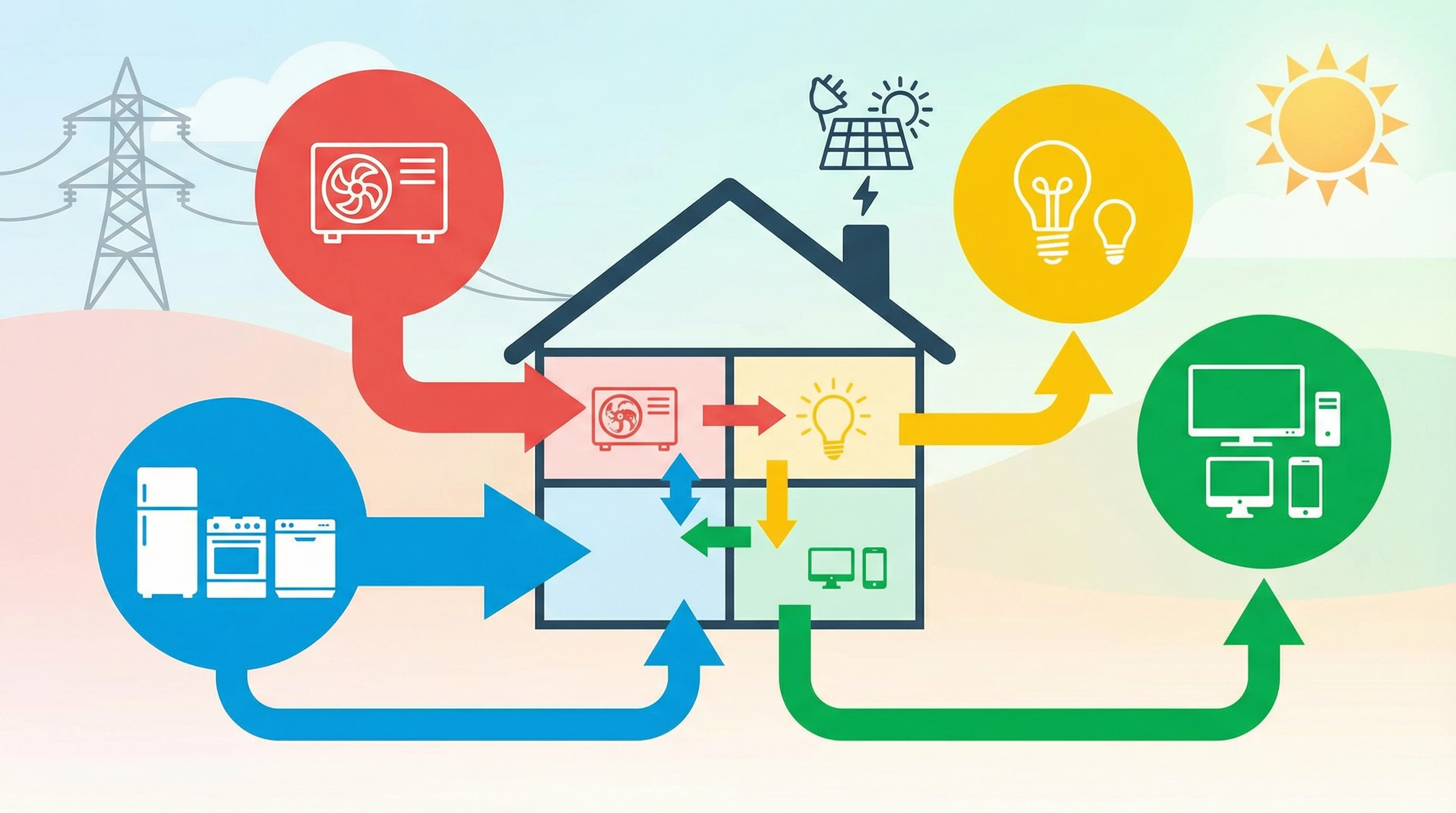
What Is Average Household Electricity Consumption?
When you’re just starting to look into your energy use, knowing what’s normal can help set a benchmark. In the United States, the average home uses about 900 to 1,000 kilowatt hours (kWh) per month. That’s roughly 30 to 33 kWh per day. Over the course of a year, that adds up to somewhere around 10,500 to 12,000 kWh. Of course, these numbers will mix it up depending on where you live, the size of your house, climate, and your lifestyle.
Here’s how it breaks down in a few different regions:
- US: 10,500 to 12,000 kWh/year (EIA data, 2023)
- UK: Around 3,600 kWh/year for a typical household (Ofgem)
- EU Average: 3,500 to 5,000 kWh/year, depending on country (Eurostat)
The gap is mostly due to house size, climate, and heating methods. US homes tend to be bigger, and a lot of heating or cooling is done with electricity, pumping those numbers up.
Small apartments sometimes use only 300 to 400 kWh per month, while medium houses might use around 800 to 1,200 kWh/month. Large homes and estates can push 2,000 to 3,000 kWh/month or even more, especially if you’ve got things like a swimming pool, lots of tech, or an electric vehicle.
Your daily electricity use swings with your habits, weekend activities, and even the weather. In winter, heating bumps usage. In summer, air conditioning does the same. It all stacks up over time, and tracking your patterns can help you spot ways to save. Don’t forget that lifestyle changes and new electronics or vehicles can mix in some variety to your energy needs too.
What Uses The Most Electricity In A Home?
Some things draw a lot more power than others. I always find it helpful to know what’s hogging the most electricity, so you know where to focus if you want to cut back. Here’s a typical breakdown for US homes:
- Heating and Cooling: 40 to 50%. This includes your furnace, central AC, heat pumps, and even space heaters. It’s usually the biggest chunk, no matter where you live.
- Water Heating: 15 to 20%. Showers, dishwasher cycles, and laundry loads all feed into this.
- Kitchen Appliances: 10 to 15%. Refrigerators, ovens, dishwashers, and microwaves count here.
- Laundry Machines: 5 to 8%. Washers and especially electric dryers can be sneaky big users.
- Lighting: 8 to 10%. This drops fast if you swap to LEDs.
- Electronics: 8 to 12%. TVs, game consoles, laptops, smart home gear, and chargers all add up.
- EV Charging: 10 to 20% (if you charge at home). An electric car can double household use, so that’s worth noting.
The exact share will be different for each home, but heating, cooling, and water heating almost always top the list. Watch for big appliances that stay on standby or run long cycles—they quietly add to the bill. If you have a home workshop or run power tools regularly, those can boost your use as well.
How To Calculate Your Home’s Energy Use
Calculating your own electricity use is pretty easy once you know where to find the info. I usually recommend checking a full year of electricity bills. Most bills show “total kWh used this month.” Add up twelve months, and you’ve got your actual annual usage.
Here’s a step-by-step:
- Check your electricity bills: Look for the section listing total kWh used each month. Add up for the year, then divide by 12 for your monthly average.
- Calculate kWh usage manually: If you can’t track down your bills, grab your electric meter readings. The difference between two readings (over a period, say a week or a month) tells you the kWh used.
- Use the appliance wattage method: For a more detailed estimate, list all the main appliances. Find their wattage (often on a label or in the manual). Multiply each appliance’s wattage by the hours used per day, then divide by 1,000 to get kWh.
Example:
A fridge rated at 150 watts running for 24 hours a day: 150W x 24h = 3,600Wh = 3.6 kWh per day. - Try smart energy monitors: Devices like the Sense monitor, Emporia, or smart plugs let you see real time energy use for the whole house or by appliance.
- Estimate peak demand: This is how much power you draw at the busiest time, usually evenings or when heating/cooling is running. For most homes, peak demand sits between 3 and 10 kilowatts.
If you try all these approaches, you’ll get a super detailed idea of your overall and peak consumption. Comparing your manual tally to the bill can help double check if everything looks right.
Energy Consumption By Home Size
Home size changes usage a lot, so check out some rough averages:
- Studio Apartment: 300 to 450 kWh/month; great for singles or couples who don’t cook much or run a lot of machines.
- Small Home (1 or 2 bedrooms): 500 to 800 kWh/month; maybe a family of two with basic appliances.
- Medium Family Home (3 or 4 bedrooms): 900 to 1,200 kWh/month; the typical “average” in much of the US and Europe.
- Large Home (5+ bedrooms, luxury, or rural): 1,500 to 3,000+ kWh/month; includes extras like pools, central AC, more electronics, or outbuildings.
Rural homes sometimes use even more if there are detached garages, workshops, or well pumps. Urban homes can get by with less, especially in apartment buildings with fewer big appliances. Bigger homes usually lead to more lighting, more electronics, and increased heating or cooling loads. If your house has a hot tub, pool, or even heated floors, you definitely want to include that in your calculations.
How Climate Affects Energy Usage
Where you live is a major factor. I grew up in a place with cold winters, and heating almost doubled our bills from November through March. Now I’m in a warm region, and summer AC is the main cost.
Here’s how climate comes into play:
- Cold Climates: Heating is the top expense. Electric heat is common in the northeast US, Canada, and parts of northern Europe. Bills rise in winter. Water heating uses more, too.
- Warm Climates: Air conditioning can be 50% of your usage from May through September. Ceiling fans, dehumidifiers, and pool pumps make it go higher.
- Seasonal Swings: Even in moderate climates, seasons mix up how much lights, heating, or cooling you run.
- Weather: Cloudy, rainy spells make you turn on extra lights. Heat waves or cold snaps spike usage fast.
Keeping an eye on season to season changes helps you spot patterns and plan for bigger renewable systems or backup power if needed. If your region faces frequent storms or power outages, understanding these cycles helps with battery storage planning, too.
Why Energy Usage Matters For Solar, Wind & Batteries
If you’re planning to install solar panels, wind turbines, or battery storage, knowing your actual usage is the #1 thing you need. I get questions from people who want a solar array but don’t know what size they really need. Basing your plans on average numbers risks installing a system that’s too small or way too big.
Solar System Sizing: If you use 1,000 kWh/month, you’ll need a system that produces close to that amount each month. Add extra to cover cloudy days and seasonal dips. Your roof’s angle and local sun exposure are big factors as well, and may bump up or lower your panel count.
Wind Turbine Sizing: Similar idea; average and peak demand help you pick the right number of turbines or size per turbine. Make sure to account for local wind speeds and possible lulls during calm periods.
Battery Capacity Planning: Your daily usage tells you how much backup power you’ll get from a battery bank. Covering 1 to 3 days of typical use is smart at the very least.
ROI Calculation: If your system is too big, you’ll wait longer to get your money back. If it’s too small, you might still have hefty power bills. Tools online can help track down the sweet spot for payback time and efficiency.
Check out my resources on solar panel sizing, wind turbine home guide, and battery storage options for more super detailed planning tips.
How To Reduce Home Energy Consumption
Before you size up a renewable system, cutting your home electricity use gives big benefits. Every kWh saved means fewer panels, smaller batteries, and less up front cost.
- Efficiency Upgrades: Swap in Energy Star appliances, high SEER HVAC or heat pumps, and LED bulbs. These are easy wins.
- Better Insulation: Sealing windows and adding attic insulation keeps heat and cool air inside, reducing heating and cooling needs.
- Efficient Appliances: When it’s time to replace fridges, washers, or dryers, go for the lowest wattage models that fit your needs.
- Smart Thermostats: These learn your habits and can cut AC or heating use by 10 to 20% without you noticing.
- Simple Behavior Changes: Turn off lights, unplug chargers, wash clothes with cold water, and use dishwashers or dryers during off peak times if your area has smart meters. Even small habits add up fast.
All these options usually pay for themselves within a couple of years and can shrink your future solar or wind setup nicely. Remember, insulation and sealing cracks often bring comfort, too. If you’re doing a remodel, this is the ideal time to make it easy on yourself by upgrading to more efficient materials.
Examples: Typical Annual & Monthly Usage
Home Type | Monthly kWh | Annual kWh
- Small apartment | 500–800 kWh | 6,000–9,600 kWh
- Medium house | 800–1,200 kWh | 9,600–14,400 kWh
- Large home | 1,200–2,000 kWh | 14,400–24,000 kWh
Once you know your typical kWh per month, finding the right renewable system size becomes much simpler. Here are some basic examples to give you a ballpark:
- Average US Home (1,000 kWh/month):
- Needs about a 7 to 10 kW solar array (roughly 20 to 25 panels), depending on local sunshine hours.
- Wind turbines: One 5 to 15 kW turbine in a windy area can cover most or all of this use.
- Battery storage: About 10 to 20 kWh of battery capacity can give backup power for 12 to 24 hours. Higher use or several day backup needs more storage.
- Small Apartment (400 kWh/month):
- A 2 to 3 kW solar array (6 to 8 solar panels) is often enough.
- Battery bank: 6 to 8 kWh capacity can cover several hours of essential use.
- Homes With EV Charging: Add 250 to 400 kWh/month for every electric vehicle. Your solar, wind, or battery setup needs to grow to handle the extra demand. Plan for if you might get another EV in the future, so you’re not caught off guard.
Lots of calculators online let you plug in monthly kWh to estimate the system size. Energy.gov’s solar guide is a handy starting place. Your installer can help fine tune the plan if your pattern has big peaks or seasonal swings.
Is It Worth Reducing Usage Before Installing Renewables?
My short answer: yes, it almost always pays off. Here’s why:
- Lower upfront cost: If you cut your electricity use by 20%, your solar or wind system can be 20% smaller.
- Faster return on investment: Lower system costs mean you break even sooner and can pocket savings faster.
- Easier battery backup: Smaller daily usage lets you get by with less battery storage, or you can cover longer outages for the same budget.
Even basic fixes, like swapping out a few old appliances or sealing up the attic, can cut hundreds of dollars off your system cost. Checking for leaks, adding weatherstripping, and upgrading old lighting are quick tasks with a big impact. By dialing down energy waste before you set up renewables, you make the most of your future green investments.
Wrapping Up
Getting a handle on your home’s energy use is a really important first step if you’re thinking about adding solar, wind, or batteries. Knowing your real numbers helps you make smarter decisions and avoid spending too much. Before shopping for any renewable system, sit down with your bills, run some numbers, and see where you can save. It’s well worth your time, and your future self will thank you. Tracking your habits and tweaking your home before investing in big equipment is the way to lock in savings and avoid surprises. Time spent on this today sets you up for smooth sailing with your renewable setup tomorrow.
Frequently Asked Questions
Here are some questions I hear a lot from people looking into their home energy use:
How many kWh does a typical home use?
Answer: In the US, most homes use about 900 to 1,000 kWh per month. Apartments can use less, and large homes or homes with electric vehicles can use much more. UK and European averages are closer to 300 to 450 kWh per month due to smaller homes and different heating methods.
What appliance uses the most electricity?
Answer: Heating and cooling equipment are usually the biggest power users in a home, making up 40 to 50% of the bill. After that, water heaters, clothes dryers, ovens, and refrigerators are next in line.
How do I calculate my home energy consumption?
Answer: Check your electricity bill for total monthly kWh usage. Add up a year for your average. You can also use smart monitors or list appliance wattages and hours of use to estimate. It’s easiest to start with your utility bills for accuracy.
How much energy does a house use per day?
Answer: A “typical” house in the US uses about 30 to 33 kWh per day. Smaller homes or apartments are often in the 10 to 20 kWh range, while larger houses or those with electric heating or cooling can hit 50 to 100 kWh or more on busy days.
How much electricity do solar panels need to power a home?
Answer: Solar system size depends on your monthly kWh use and sunlight. For 1,000 kWh/month, you’ll usually need a 7 to 10 kW solar system. You can use tools like PVWatts or the EnergySage calculator to get local estimates based on your roof and sun exposure. Talking with installers gives the best idea, as they help match panel output to your real data.