
Geothermal heating is often described as one of the greenest home heating solutions available today. With rising energy prices and growing concern about climate change, more homeowners are asking whether ground source heat pumps are truly eco-friendly or just marketed that way. I wanted to look beyond the buzzwords and break down the real environmental impact of geothermal heating—both the benefits and the limitations—based on research and real-world use.
Why More Homeowners Are Looking at Eco-Friendly Heating
Home heating plays a huge role in household carbon emissions. In the UK especially, gas boilers still dominate, and they burn fossil fuels every day throughout the colder months. As energy bills rise and climate targets tighten, interest in sustainable home heating options has surged.
Geothermal heating stands out because it doesn’t burn fuel. Instead, it uses the stable temperature beneath the ground to provide consistent warmth year-round. For many homeowners, the appeal lies in reducing emissions, lowering long-term costs, and future-proofing their homes against changes in energy policy.
Climate Change, Energy Costs, and Heating Choices
The environmental conversation is no longer abstract. More frequent heatwaves, colder winters, and volatile fuel prices are affecting daily life. Traditional heating systems contribute directly to greenhouse gas emissions, while renewable systems offer a path toward lower impact living.
Switching to geothermal heating reduces dependence on fossil fuels and helps stabilise energy costs. While no system is completely impact-free, geothermal consistently ranks among the lowest-emission heating options for residential use.
Quick Answer: Is Geothermal Heating Really Green?
In short: yes, geothermal heating is genuinely one of the greenest heating systems available for homes. Once installed, it produces very low emissions and relies on renewable ground heat. Some emissions occur during manufacturing, installation, and electricity use, but over its lifespan, geothermal heating has a far smaller environmental footprint than gas or oil heating.
What Makes Geothermal Heating a Renewable Energy Source?
How Geothermal Heating Works (Simply Explained)
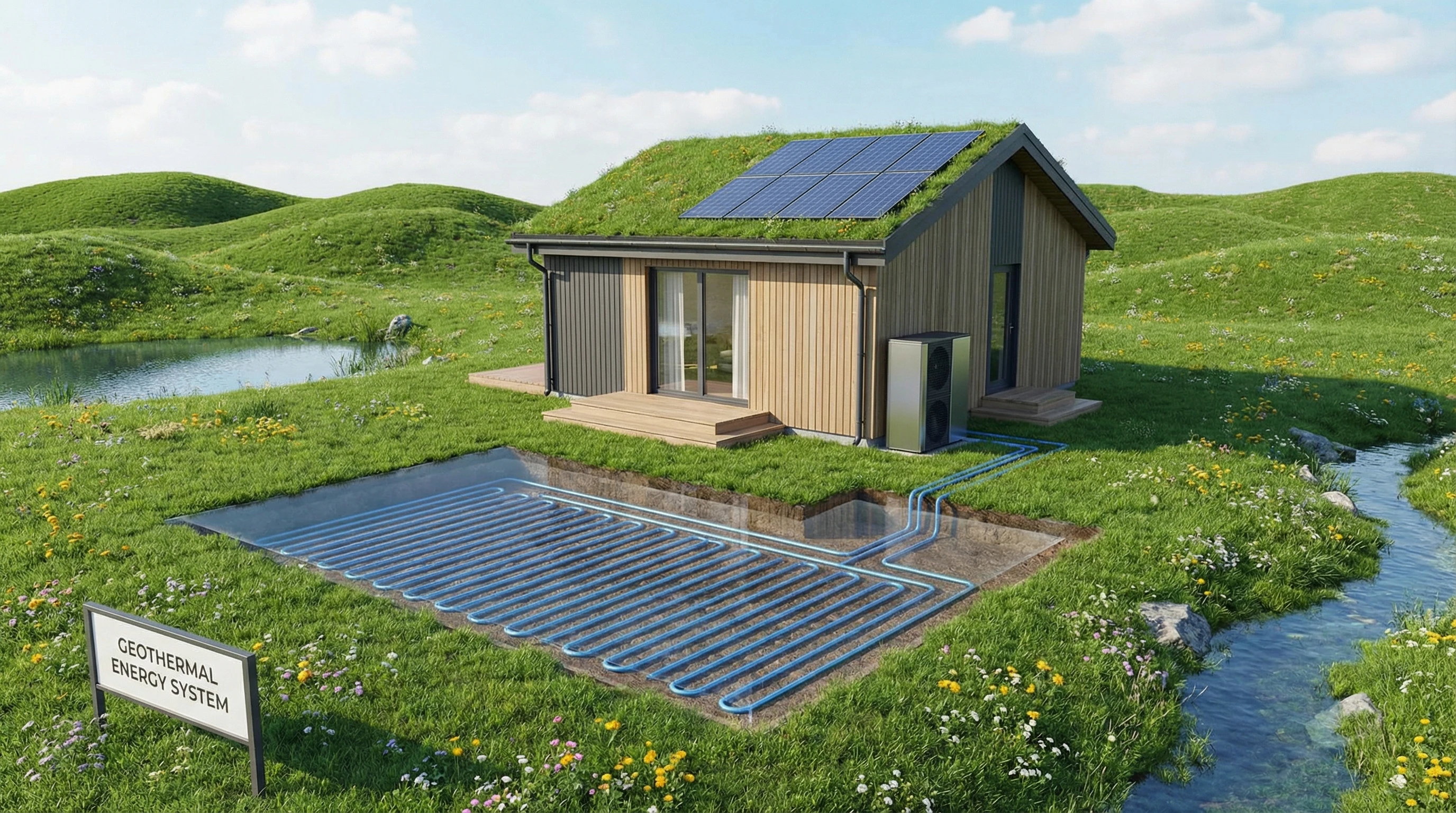
A ground source heat pump uses underground pipes filled with fluid to absorb heat from the earth. This heat is then upgraded by the heat pump and transferred into your home for space heating and hot water. Because the ground temperature stays relatively constant year-round, the system operates efficiently even in cold weather.
Using Stored Solar Energy from the Ground
The heat stored underground comes from the sun, accumulated over time. This makes geothermal heating a form of renewable energy. Unlike fossil fuels, this heat source doesn’t deplete and is naturally replenished.
Renewable vs Low-Carbon Heating
Some heating systems are labelled “low-carbon” but still rely partly on fossil fuels. Geothermal heating is different because its primary energy source—the ground—is renewable. The only non-renewable factor depends on how the electricity powering the heat pump is generated.
Carbon Footprint: Geothermal vs Gas Boilers
CO₂ Emissions Compared
A typical UK gas boiler emits around 2–3 tonnes of CO₂ per year. Ground source heat pumps emit far less, especially as the electricity grid becomes greener. Even on the current UK grid, geothermal heating can cut carbon emissions by around 60% compared to gas.
Electricity Use and Grid Impact
Geothermal systems do require electricity to run compressors and pumps. However, they produce three to four units of heat for every unit of electricity used. Pairing geothermal heating with a green energy tariff or solar panels can reduce operational emissions close to zero.
Life Cycle Environmental Impact
Manufacturing and Materials
Geothermal systems use plastic piping, metals, and refrigerants, all of which carry an environmental cost during production. However, these are one-time impacts. Over decades of operation, the emissions saved far outweigh the emissions created during manufacturing.
Installation Impact
Installation involves digging trenches or drilling boreholes, which temporarily disrupts land and creates short-term emissions from machinery. This disruption is temporary and typically limited to days or weeks.
Long-Term Operation (20–50 Years)
Once installed, geothermal systems operate with minimal emissions for decades. Underground ground loops can last 50 years or more, while heat pumps typically last 20–25 years. Over their lifespan, geothermal systems deliver one of the lowest environmental impacts of any heating technology.
Local Environmental Effects
- Soil & Land: After installation, gardens and surfaces recover fully.
- Groundwater: Closed-loop systems are sealed and pose minimal risk.
- Wildlife: No air pollution, smoke, or vibration.
-
Noise: Extremely quiet—often quieter than a refrigerator.
Geothermal vs Other Renewable Heating Options
- Air Source Heat Pumps: Cheaper upfront but less efficient in cold weather and noisier.
- Biomass Heating: Renewable but involves combustion and fuel transport.
-
Solar Thermal: Useful for hot water but limited for full home heating.
For long-term efficiency, reliability, and environmental impact, geothermal heating consistently comes out on top where installation is possible.
Can Geothermal Heating Be Carbon Neutral?
Yes. When combined with:
- solar panels,
- battery storage,
-
and green electricity tariffs,
geothermal heating can achieve near-zero or fully carbon-neutral operation.
Is Geothermal Heating Worth It for the Planet?
From an environmental perspective, geothermal heating is one of the strongest choices a homeowner can make. While the upfront cost and installation disruption are real considerations, the long-term reduction in emissions and energy use makes it a powerful climate-positive investment.
Common Myths About Geothermal Heating
- “It damages the ground.” Temporary disruption only.
- “It uses lots of electricity.” Highly efficient systems multiply input energy.
-
“It’s not really renewable.” The ground heat source is naturally replenished.
Frequently Asked Questions
Is geothermal heating truly eco-friendly?
Yes. It uses renewable ground heat and produces very low emissions during operation.
How much CO₂ can geothermal heating save?
Around 60% compared to gas boilers, and even more with renewable electricity.
Does geothermal heating harm the environment?
Environmental risks are minimal when systems are properly installed.
Is geothermal better than air source heat pumps?
For homes with sufficient space, geothermal offers higher efficiency and quieter operation.
Can geothermal heating be carbon neutral?
Yes, especially when paired with solar panels and green electricity.