
Some of the links on this page are affiliate links, which means I may earn a small commission if you make a purchase through them, at no extra cost to you. This helps support the site and allows me to continue creating helpful content.
Power outages in apartments are more frustrating than most people expect. No lights, no WiFi, and a fridge full of food slowly warming up. The problem? Gas generators aren’t an option for apartment living. They’re noisy, unsafe indoors, and usually not allowed by building rules. That’s where solar generators come in. They’re quiet, safe to use inside, and powerful enough to keep your essentials running during outages. In this guide, I’ll break down the best solar generators for apartments, what to look for, and which models are actually worth buying.
If you’re limited on space, compact solar generators like those from ALLPOWERS can be a great fit.
Check the latest price on Allpowers (US store)
For EU customers, you can view the EU store here with local shipping and pricing.
Can You Use A Solar Generator In An Apartment?
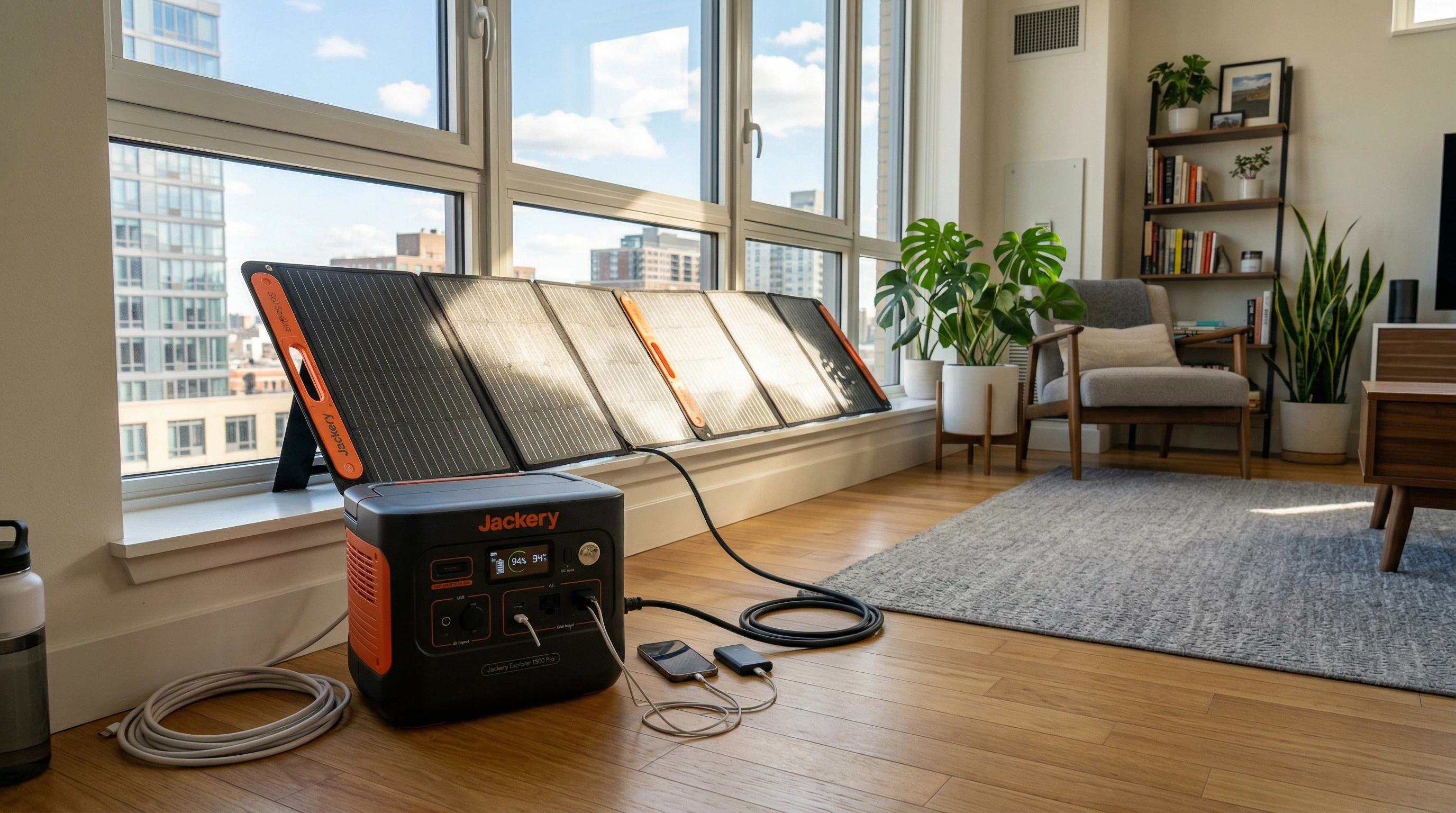
I’ve been asked more than a few times if solar generators can actually be used inside apartments. The answer is a clear yes. Solar generators don’t burn fuel, so there are no fumes, carbon monoxide, or fire hazards that you’d get with gas powered options. They’re basically large rechargeable batteries that can power your essentials. I use mine with zero concerns about ventilation since they don’t give off smoke or heat up much, so they’re safe even in smaller rooms or crowded spaces. Because a solar generator makes hardly any noise, that annoying hum or vibration from a gas engine just isn’t an issue. This matters if you have neighbors close by or thin walls. Most apartment rules are fine with solar power banks and generators, so you won’t get called out by property management. They also store easily under a desk or kitchen counter, taking up way less space than traditional portable generators. For anyone worried about safety, every top brand I mention has built-in protection features such as short circuit, overload, and overheating sensors. So the risk of an electrical fire is extremely low even when you run them indoors.
Some apartment-friendly power stations are designed to be quiet, compact, and easy to store.
Check the latest price on Allpowers (US store)
For EU customers, you can view the EU store here with local shipping and pricing.
What To Look For In A Solar Generator For Apartments
Picking the right solar generator comes down to a handful of practical things. Here’s what I check every time I recommend one for apartment dwellers or anyone working with tight space.
- Noise Level: The best solar units are almost silent. Usually, I notice only a soft fan noise while charging or using a lot of power, but it’s quiet enough to keep running overnight without bothering your sleep. Anything below 50 decibels works well for apartments.
- Battery Size (Watt-hours or Wh): How big the battery is tells you how much energy you can store. For apartment use, I suggest 500Wh to 2,000Wh depending on what you need to keep running during an outage (lights, wifi, fridge, devices).
- Portability: I really value a unit that’s compact and easy to lug around. Wheels are handy on bigger models, but handles and keeping the weight low (less than 25 lbs for small models, under 50 lbs for larger ones) make daily use or storage much easier for apartments.
- Charging Options: Having multiple ways to recharge is super important if the power goes out for a while. I like generators that you can charge via wall outlet, solar panels (foldable panels fit best in apartments), and even your car if you need to.
- Safety Features: I only go for models with overcharge and short circuit protection. A bunch of them include battery health monitoring, auto shutdown, and battery certifications that make indoor use way safer.
If you’re unsure how to size your system, check out my guide on how to choose the right solar generator size for different appliances.
Quick Picks (If You Don’t Want To Read Everything)
Best overall: EcoFlow Delta 2 – best balance of power, size, and fast charging
Best budget option: Bluetti EB70S – great for basic needs and small spaces
Best for larger apartments: Jackery Explorer 2000 Pro – longer runtime for fridges and multiple devices
Best heavy-duty option: Anker SOLIX F2000 – for maximum backup power
If you just want a reliable pick, the EcoFlow Delta 2 is the safest choice for most apartments.
Quick Comparison Of The Best Solar Generators For Apartments
Here’s a quick side-by-side comparison to help you choose faster:
| Model | Battery Capacity | Output Power | Best for | Price Range | Rating (out of 5) |
|---|---|---|---|---|---|
| Bluetti EB70S | 716 Wh | 800W (1400W surge) | Budget, Basic Needs | $500–$600 | 4.6 |
| Jackery Explorer 1000 | 1002 Wh | 1000W (2000W surge) | General Apartment Use | $800–$1100 | 4.7 |
| EcoFlow Delta 2 | 1024 Wh | 1800W (2700W surge) | Powering Multiple Devices | $900–$1100 | 4.8 |
| Jackery Explorer 2000 Pro | 2160 Wh | 2200W (4400W surge) | Large Backup, Multiple Days | $1700–$2300 | 4.8 |
| Anker SOLIX F2000 | 2048 Wh | 2300W (3000W surge) | Heavy Duty, Extended Power | $1700–$2100 | 4.7 |
Best Solar Generators For Apartments (Top Picks)
If you’re looking for the best solar generator for an apartment, these models offer the best mix of safety, quiet operation, and power.
Bluetti EB70S
Key Specs:
- Battery: 716Wh Lithium Iron Phosphate (LiFePO4)
- Output: 800W (1400W surge)
- Weight: 21.4 lbs
- Charging: AC wall outlet, solar panel (up to 200W), car
- Outputs: 4 AC outlets, USB A, USB C, DC, wireless charging pad
Pros:
- Lightweight and portable, fits easily under a desk or in storage
- Very quiet. The fan is barely noticeable.
- Safe LiFePO4 battery chemistry, rated for thousands of cycles
- Good value for price (under $600 most of the time)
Cons:
- Limited capacity for large appliances (not for fullsize fridges or AC units)
- Solar charging speed is okay but not super fast
Best for: Essential device backup (lights, WiFi, charging phones and laptops) if you want to spend less and save space.
Not for: Running high draw appliances more than a few hours.
Jackery Explorer 1000 / 2000 Series
Key Specs (Explorer 1000):
- Battery: 1002Wh Lithiumion
- Output: 1000W (2000W surge)
- Weight: 22 lbs
- Charging: Wall outlet, solar panels (up to 200W), car
- Outputs: 3 AC, multiple USB (A and C), DC carport
Key Specs (Explorer 2000 Pro):
- Battery: 2160Wh
- Output: 2200W (4400W surge)
- Weight: 43 lbs
- Outputs: 3 AC, USB A, USB C, DC carport
Pros:
- Simple controls and display, easy to set up right away
- Reliable, proven battery technology
- Battery pack is compact for its output, fits in a closet
- Quiet fan operation
Cons:
- Jackery uses lithiumion (not LiFePO4), so shorter lifespan and less margin for safety than newer chemistries
- The Explorer 2000 Pro needs a sturdy grip to move, but the handles help a lot
- Solar charging works best with Jackery’s own panels for the fastest speed
Best for: Keeping a fridge and multiple small devices running through several hour outages. The 2000 Pro will cover a family’s needs over several days, kind of like a big backup battery.
Not for: Deep longterm backup or frequent high power use.
EcoFlow Delta 2
- Battery: 1024 Wh LiFePO4
- Output: 1800W continuous (2700W surge)
- Weight: 27 lbs
- Recharges in 80 minutes from AC outlet (super fast), also charges by solar up to 500W
- Outputs: 6 AC, USB A, USB C, DC, and carport
Pros:
- Super quick AC charging (full in under 90 minutes)
- Big variety and number of outlets, ideal for several devices at once
- Expandable with extra batteries, if you want more capacity later
- Uses long lasting LiFePO4 battery chemistry
- Compact design for the power it delivers
Cons:
- A bit higher priced than the Jackery Explorer 1000, but it adds more flexibility and lifespan
- Fan noise under big loads can be a bit louder, but still much less than any gas generator
Best for: People who need fast recharging, flexibility (laptops, TV, lights, fridge), and a very long battery lifespan.
Not for: Dragging room to room often due to weight, or the strictest budget shoppers.
Anker SOLIX F2000 (optional)
- Battery: 2048 Wh LiFePO4
- Output: 2300W (3000W surge)
- Weight: 67 lbs (has wheels for easier moving)
- Charging: 1500W AC (under 2 hours), solar up to 1000W
- Outputs: 6 AC, 2 USB C, 4 USB A, 2 car outlets
Pros:
- Wheels make shifting it easier even with the high weight
- Very high output; works with large fridges, microwaves, and even some power tools
- Good for apartment emergencies or as a power source for demanding devices
- Strong safety features
Cons:
- Large and weighty for the smallest apartments (store close to where it will get used)
- Higher price point than the others
Best for: Whole apartment backup for families or people who want zero worries about running out of juice during long outages.
Not for: Tightest spaces or budget buyers. Probably way more than you need for just a router and lamp.
For smaller setups, quiet solar generators with lower capacity can still cover essential needs like WiFi, lights, and charging devices.
Check the latest price on Allpowers (US store)
For EU customers, you can view the EU store here with local shipping and pricing.
How Long Can They Run Essentials In An Apartment?
I use my solar generator mainly to keep my food from spoiling, charge devices, and power lights and the router during an outage. Check out how long you should expect to power typical apartment essentials with the models above:
- Mini/Apartment Fridge (About 60–80W): With a 1000Wh generator (like Jackery 1000 or EcoFlow Delta 2), you can get around 10-12 hours of continuous fridge runtime, or 24+ hours cycling on/off like during regular use (fridges need less power after they’re cold).
- WiFi Router (About 10–15W): These generators can keep your router going for 60+ hours, so you don’t lose internet even in a long blackout.
- Laptop (50W average): Charging and using a laptop drains about 50 watts per hour. The 1000Wh models will let you recharge a laptop 15-18 times, making working from home during an outage possible.
- LED Lights (10W per bulb): You can run five LED bulbs for at least 20 hours easily using a 500–800Wh generator.
Jump up to a 2000Wh model and you can double these runtime estimates, run a midsize fridge or freezer for a full day or more, and worry less about stretching your available battery. Smart usage goes a long way—cycle your devices, unplug power hogs, and top up with solar while the sun’s out to really stretch your backup power.
Tips For Using A Solar Generator In Small Spaces
- Space Saving: I tuck my generator under a desk or behind a chair. For wheeled models, the closet by the kitchen is perfect. Foldable solar panels can slip behind a sofa or under the bed without taking over your space.
- Charging Plan: I leave my generator plugged in when storms aren’t in the forecast, so my battery stays full and ready. Before a storm, I make sure to top off and move panels near a sunny windowsill if I need backup charging. While some panels will collect a little sunlight through a window, for real recharging you’ll want to set them outside or on a fire escape, provided your apartment rules allow it.
- Noise Control: All the generators I recommend are way quieter than any gasoline or propane backup. I keep mine away from where I sleep when possible. Turning off the AC output when I don’t need it helps make them nearly silent at night.
For households with pets or kids, choose a unit with a locking cover for outlets or simply teach everyone not to touch the buttons when it’s running—this avoids accidental shutdowns and headaches during an outage.
Solar Generator vs Power Banks vs Gas Generators
A lot of people in apartments ask me: why not just use a regular power bank or try a gas generator out on the patio? Here’s how they stack up:
- Solar Generator: Built for running bigger appliances, not just phones or tablets. Rechargeable by plug or solar, quiet, safe, can handle higher watt loads, and fits in apartments easily.
- Power Bank: Great for charging your phone or tablet, but doesn’t have enough capacity for a fridge or TV. Larger “portable power stations” are a different story, though most lack AC outlets or large enough batteries to keep bigger things going during real outages.
- Gas Generator: Not safe inside due to carbon monoxide and fumes. Most apartment buildings ban them completely. Bulky, need fuel, and even “quiet” inverter models can irritate neighbors, even when used out a window or on the fire escape. Simply put, they aren’t practical for apartment dwellers.
If you need more emergency juice than a standard power bank, a solar generator fills the gap and dodges the downsides of gas entirely.
Explore portable indoor-safe solar generators here
Check the latest price on Allpowers (US store)
For EU customers, you can view the EU store here with local shipping and pricing.
Wrapping Up
Solar generators are a practical choice for anyone renting or owning in an apartment who wants backup power without the hassle, noise, and danger of gas models. I love that they take up little space and let me keep essentials running without drama from neighbors or managers. As prices have dropped and safer, longer lasting batteries have become common, it’s an ideal moment to pick one up for peace of mind come storm season or power cuts. Choosing the right solar generator for your apartment isn’t just about convenience — it’s about staying prepared. Even a small unit can keep your essentials running and make outages far less stressful. If you live in an apartment, having a reliable backup like this is one of the smartest upgrades you can make.
Frequently Asked Questions
Are solar generators safe indoors?
Absolutely. They don’t make fumes or emissions and just use batteries to safely store and deliver energy, so fire or carbon monoxide danger isn’t there. Every top brand adds solid safety features so you can relax.
Can I run a fridge in an apartment with a solar generator?
Most apartment or compact fridges use 60–120 watts. A midsized solar generator (around 1000Wh) is enough to keep a fridge running for several hours, preventing food spoilage during moderate outages.
How loud are solar generators?
Practically silent. You may hear a soft fan, but it’s less than what a laptop makes. Since there’s no engine noise, they’re ideal for apartments and neighbors won’t complain.
What size solar generator do I need for an apartment?
If you just want to handle small devices (lights, wifi, smartphone), choose a 500–800Wh model. If you need to keep a fridge or run more things (multiple laptops, longer outages), consider 1000–2000Wh models for flexibility and peace of mind.
Can I charge a solar generator using only indoor sunlight?
You might get some charging through a sunny window with small panels, but it’s really slow. For full or quick charging, panels need to be outdoors or on a balcony or fire escape, if that’s allowed. Otherwise, plan to recharge via your wall outlet while power’s on.
Do solar generators need any maintenance?
Other than keeping the battery charged every 3–6 months and storing it in a cool, dry spot, there’s not much needed. Unlike gas models, you don’t need to change oil or fuel or worry about cleaning.