
Some of the links on this page are affiliate links, which means I may earn a small commission if you make a purchase through them, at no extra cost to you. This helps support the site and allows me to continue creating helpful content.
Home battery storage systems can be useful for homeowners who want backup power, better solar energy use or more control over electricity costs. The right system depends on your home size, solar setup, essential loads, installation requirements, local rules and budget.
Popular residential battery options include systems from Tesla, Enphase, LG, Bluetti and EcoFlow, but there is no single best choice for every home. A battery that works well for a solar-powered family home may not be the right fit for a small backup setup, an off-grid cabin or a home with limited installation space.
This guide explains how to compare home battery storage systems, what features matter most, and what to check before choosing a residential battery backup solution.
Quick Answer: What Is the Best Home Battery Storage System?
The best home battery storage system depends on what you need it to do. For many homeowners, the most important factors are usable capacity, power output, solar compatibility, warranty, installer support, safety certification and total installed cost.
Tesla Powerwall, Enphase IQ Battery, LG Chem RESU, Bluetti EP900 and EcoFlow PowerOcean are all well-known options, but availability, specifications and pricing can vary by region. Before choosing any system, compare the battery size, backup capability, inverter compatibility, installation requirements and local support.
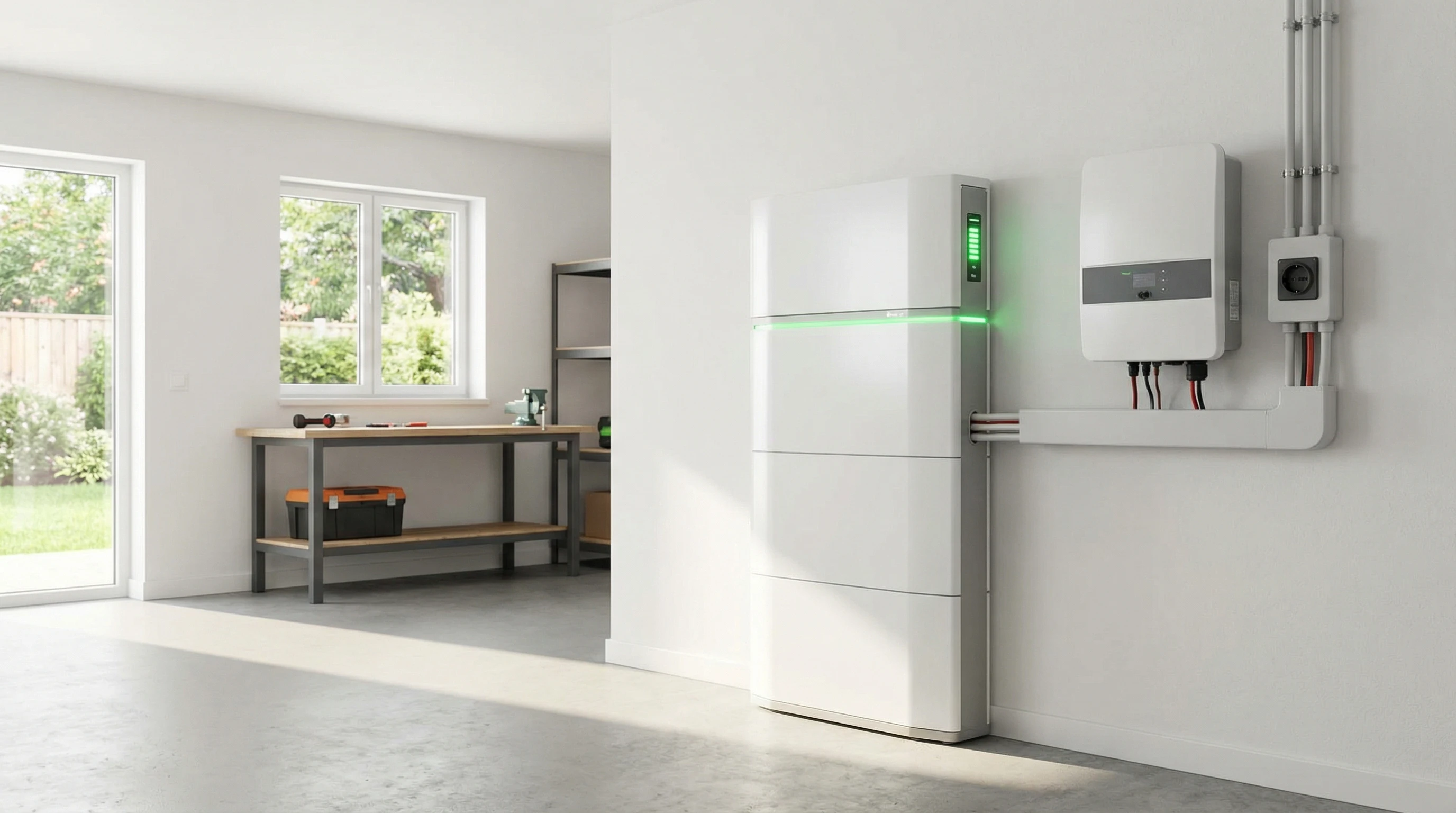
If you are new to solar storage, start with our beginner guide to understanding solar battery storage systems.
Quick Comparison Table (Top Picks Summary)
Here is a simple comparison of popular home battery storage systems. Specifications, pricing and availability can vary by region, so always check the latest details with the manufacturer or a qualified local installer before choosing a system.
|
Home Battery System |
Typical Use Case |
Key Strength |
What To Check Before Buying |
|---|---|---|---|
|
Tesla Powerwall |
Solar homes and general backup power |
Well-known system with strong app-based monitoring and broad installer familiarity |
Local availability, total installed cost, backup configuration and solar compatibility |
|
Enphase IQ Battery |
Homes with Enphase solar or microinverter systems |
Modular design and strong solar ecosystem integration |
Compatibility with your existing solar setup, battery size options and installer support |
|
LG Chem RESU |
Compact residential backup and solar storage setups |
Established battery brand with broad inverter compatibility in many setups |
Exact model availability, inverter compatibility, warranty terms and installer experience |
|
Bluetti EP900 |
Modular backup power and expandable home storage |
Expandable capacity and flexible backup-focused design |
Local code requirements, professional installation needs, long-term support and service availability |
|
EcoFlow PowerOcean |
Larger smart home energy storage systems |
Modular storage with smart energy management features |
Regional availability, installation requirements, app support, expansion options and total system cost |
This table is a starting point only. The best home battery storage system depends on your solar setup, essential loads, available space, local rules, backup goals and total installed cost.
Popular Home Battery Storage Systems to Compare
Tesla Powerwall 3
Overview: Tesla Powerwall is a well-known home battery system often chosen for solar integration, backup power and app-based monitoring. Before choosing it, homeowners should check local availability, installer support, backup configuration, total installed cost and compatibility with their solar setup.
Key specs: 13.5 kWh capacity, 5 kW continuous power, up to 10-year warranty, lithium-ion chemistry, 6,000+ cycles.
- Pros: Reliable, easy to expand for big families, works in outages, smart time-of-use optimisation, compatible with many systems.
- Cons: Waitlist is common, price keeps going up, no DC coupling for solar-only setups.
- Good fit for: Homeowners who already use Tesla products, have solar panels, or want a widely known battery system with app-based monitoring.
- Check before buying: Confirm local availability, installer support, backup configuration, solar compatibility and total installed cost.
- Possible drawbacks: It may not suit homeowners who want more inverter flexibility, a different solar ecosystem or a lower-cost setup.
Check current Tesla Powerwall availability in your region.
Enphase IQ Battery
Overview: The Enphase IQ Battery is an excellent choice for homes that already use micro-inverters or plan to add solar using Enphase. The modular design lets you start small (even with a 3.5 kWh unit) and add as you grow. The long 15year warranty is a real confidence booster. The software is user-friendly and lets you track solar, battery, and backup levels at a glance.
Key specs: 10 or 15 kWh (modular), 3.84 kW output per 10 kWh, 6,000 cycles, long warranty, lithium-iron phosphate (LFP) battery chemistry.
- Pros: Modular design, strong solar ecosystem integration and useful monitoring features.
- Cons: It may be more suitable for homes already using Enphase equipment, and compatibility should be checked carefully with older or mixed solar systems.
- Good fit for: Homes with Enphase solar or micro-inverter systems.
- Check before buying: Confirm the exact battery model, usable capacity, warranty terms, battery chemistry and compatibility with your existing solar setup.
- Possible drawbacks: It may be less flexible if your solar system uses a different inverter platform.
LG Chem RESU
Overview: The LG Chem RESU line skips the extra flash, focusing on solid backup and off-grid storage. LG Chem RESU batteries are known as established residential storage options, but exact compatibility depends on inverter choice, model version and installer support.
Key specs: Choices between 9.8 and 16 kWh, 5 kW continuous discharge, about 6,000 cycles, 10-year warranty, battery chemistries include lithium-ion and new LFP versions.
- Pros: Dependable backup, works with many inverter brands, established residential battery option, decent off-grid performance at a fair price.
- Cons: Fewer smart features, older models use NMC chemistry, warranty processes can be more formal.
- Good fit for: Homeowners who want a compact residential battery option for solar storage or backup power.
- Check before buying: Confirm the exact model version, inverter compatibility, warranty terms, installer experience and local availability.
- Possible drawbacks: Some models may offer fewer smart features than newer energy management systems, and compatibility can depend heavily on the inverter and installation design.
Bluetti EP900
Overview: Bluetti is becoming the go-to for budget-focused homeowners who still want solid energy independence. The EP900 starts as a single 9 kWh pack and you can stack units up to roughly 19 kWh. Managing the system is straightforward, may appeal to buyers looking for modular backup, but installation requirements and local code compliance should still be checked carefully. Its price per kWh undercuts many other brands.
Key specs: 9–19 kWh (modular), LFP chemistry, 6,000+ cycles, 10-year warranty, 5 kW per unit, handles both off-grid and grid-tied modes.
- Pros: Very affordable, modular, can hit high capacity without breaking the bank, works with different inverter brands.
- Cons: Not as many local installers, app could be better, company is newer so long-term support is still being proven.
- Good fit for: Budget-conscious homeowners looking for modular backup power, provided the system is professionally installed and compliant with local rules.
- Check before buying: you’re happy troubleshooting minor stuff and want great value per dollar.
- Possible drawbacks: You want professional installation support and a best-in-class app.
EcoFlow PowerOcean
Overview: EcoFlow PowerOcean is a modular home battery system designed for expandable storage and smart energy management. It may suit homeowners who want a larger system, but availability, installer support and total installed cost should be checked carefully by region.
Key specs: 10 kWh per module, stack up to 30 kWh, LFP chemistry, 7,000 cycles, 10–15 year warranty, 5 kW per module, advanced management software.
- Pros: EcoFlow PowerOcean is a modular home battery system aimed at homeowners who want expandable storage and smart energy management.
- Cons: Costs more than entry-level systems, can be more than needed for average homes, installation may take extra time.
- Good fit for: Tech-savvy homeowners, EV owners, or those planning a full smart home buildout.
- Check before buying: You want to invest in top tech or need flexibility for future upgrades.
- Possible drawbacks: You prefer a simple backup system without advanced features.
👉 Compare home battery storage options in your area here
Which Home Battery Is Best Overall?
There is no single best home battery storage system for every home. The right choice depends on your solar setup, essential loads, available space, local installer support, budget and backup goals.
Tesla Powerwall may suit homeowners who want a well-known battery system with app-based monitoring and broad installer familiarity. Enphase IQ Battery may be a strong option for homes already using Enphase solar equipment. LG Chem RESU can be worth comparing for compact solar storage or backup setups. Bluetti EP900 and EcoFlow PowerOcean may appeal to homeowners looking for modular storage, but installation requirements, local support and long-term service should be checked carefully.
Before choosing any home battery system, compare usable capacity, continuous output, warranty terms, inverter compatibility, safety certification, expansion options and total installed cost.
How To Choose The Right Home Battery Storage System
Choosing a battery storage system gets easier when you focus on a few simple questions. Here are the main factors to compare:
- Capacity (kWh): This is how much energy the battery holds. Think about your regular electricity use during an outage or how much solar power you want to store for evening use. Bigger isn’t always better—it’s about matching the battery to your lifestyle.
- Power output (kW): The amount of power you can use at once. It matters for running big appliances. Check the continuous output to see if it fits your essential needs, like running an AC unit or a well pump.
- Depth of discharge: Most systems let you use almost all their stored energy. The higher the usable percent, the more you get for your money.
- Warranty & lifespan: Look for warranties covering the most years and charge cycles. Longer warranties and higher cycle ratings mean more confidence.
- Grid-tied vs off-grid: If you want to use your battery with the utility grid, make sure it’s grid-friendly. For cabins or remote homes, see that it supports true off-grid use and backup by generator.
Installation Requirements & Home Compatibility
Practical installation requirements should be checked before buying any home battery system. Not all houses are battery-ready and some prep might be needed.
- Space requirements: Wall or floor mounting in a garage, basement, or shaded outdoor spot is standard. Measure your area and leave space for air and future maintenance.
- Electrical panel upgrades: Old panels may need a boost to safely handle the battery’s power or to enable entire-home backup. This can add costs to your project.
- Indoor vs outdoor installation: Some batteries are indoors-only while others are good for outside. Outdoor installs can be safer; check your weather and the system’s protection rating.
- Permits and regulations: Permits are required almost everywhere, often handled by installers. Some towns have extra fire safety rules or more inspections. Plan some extra time for approvals.
Battery Storage Costs In 2026
Home battery storage costs can vary widely depending on the country, battery brand, usable capacity, inverter setup, installation complexity, electrical panel condition, permit requirements and local installer pricing. For this reason, it is better to compare total installed cost rather than looking only at the battery unit price.
Battery size and system design: A smaller battery used for essential backup circuits will usually cost less than a larger system designed for whole-home backup. Modular systems may also cost more as extra battery modules are added.
Installation and electrical work: Installation costs depend on your home’s wiring, electrical panel, backup configuration, permits and whether extra equipment is needed. Some homes may also require panel upgrades or additional safety equipment before a battery can be installed.
Maintenance and monitoring: Many modern home batteries are designed for low maintenance, with app monitoring and software updates included. Even so, it is still sensible to follow the manufacturer’s maintenance guidance and have the system checked by a qualified installer when needed.
Replacement and long-term cost: Home batteries do not last forever. Lifespan depends on battery chemistry, cycle life, temperature, usage patterns and warranty terms. When comparing systems, check whether replacement modules, warranty support and future expansion are available in your region.
Before choosing a system, ask for several local quotes and make sure each quote includes the battery, inverter or gateway equipment, installation, permits, electrical work, backup configuration and any future expansion options.
👉 Compare home battery storage systems and get free installation quotes in your area
Payback Time & Long-Term Savings
Homeowners often ask how quickly a battery pays for itself. Based on recent cases, it depends on your power rates and how much solar you can put to use.
- ROI estimate: Payback time varies widely and depends on electricity rates, solar production, incentives, battery size, installation cost and how the battery is used. In many cases, backup value and energy independence are just as important as direct bill savings.
- Energy bill savings: By storing solar during the day and using it at night or during peak pricing, you save more. TOU (time-of-use) areas see the biggest savings.
- TOU benefits: TOU plans let you charge your battery midday and use it when rates are high. Many utility companies offer incentives or credits for battery customers, shaving time off your payback.
Most batteries don’t totally pay for themselves in bill savings unless they’re paired with good solar and smart use. But for homes that put a premium on backup or peace of mind, the value goes far beyond finances.
Is Home Battery Storage Worth It?
People ask this quite a bit. It really comes down to how much you care about having backup power and energy independence. Home battery storage may be worth it for homeowners who experience outages, have solar panels, face time-of-use electricity rates or want backup for essential circuits. It may be less compelling for homes with low electricity rates, few outages or no solar system. For solar owners, adding a battery boosts savings and lets you make the most of your own power any time. If you don’t have solar yet, the numbers aren’t as convincing—but as battery prices drop and electricity rates climb, more homes will reach the tipping point soon.
If you only need backup for smaller devices, compare the differences in our portable power station vs home battery backup guide.
Who Should Buy (And Who Should Wait)
A home battery system fits best if you:
- Already have or plan to add solar panels.
- Live somewhere with frequent outages, wild weather, or utility shutoffs.
- Deal with high time-of-use rates or want to avoid expensive grid power during peak hours.
- Work from home, have medical gear, or just want peace of mind.
If your budget is tight, you rent, or you only want to back up a few gadgets, it’s smart to wait. Battery prices are falling and incentives keep popping up. Always get a few local quotes and ask about current offers to see if it’s a good time for you.
Frequently Asked Questions
Can a single home battery run an entire house during a power outage?
A single home battery usually supports selected essential circuits rather than an entire house. Whole-home backup may require multiple batteries, a suitable inverter, a backup gateway or transfer equipment, and professional system design.
Do you need solar panels for a home battery?
No, a home battery can sometimes be used without solar, but it is often more useful when paired with solar panels. Solar can recharge the battery during the day, while the battery can store excess power for evening use or outages.
How long does a home battery storage system last?
Many modern home battery systems are designed to last around 10 years or more, but lifespan depends on battery chemistry, cycle life, temperature, usage patterns, software management and warranty terms.
Is home battery storage worth it?
Home battery storage can be worth it for homeowners with solar panels, frequent outages, high electricity rates or time-of-use pricing. It may be less cost-effective for homes with low electricity costs, few outages or limited backup needs.
Are home battery storage systems safe?
Home battery systems are generally designed with safety controls, but safe installation is very important. Homeowners should use qualified installers, follow local electrical codes, check ventilation and location requirements, and choose systems with appropriate certifications.
Can you add more batteries later?
Many home battery systems are modular, which means extra capacity may be added later. However, expansion depends on the brand, inverter, available space, local rules and whether the original installation was designed for future upgrades.