
Some of the links on this page are affiliate links, which means I may earn a small commission if you make a purchase through them, at no extra cost to you. This helps support the site and allows me to continue creating helpful content.
Camping trips have changed a lot over the years, especially when it comes to powering up phones, cameras, fans, and even mini coolers deep in the woods. A few years ago, I used to take along a noisy gas generator for some quick power at the campsite, but it always disrupted the natural peace. That’s when I started looking into solar generators, and I haven’t looked back. Solar generators are my go-to for camping now since they run quietly, don’t create fumes, and are easy to move around. On top of that, they let me leave a lighter footprint outdoors, which is super important to me.
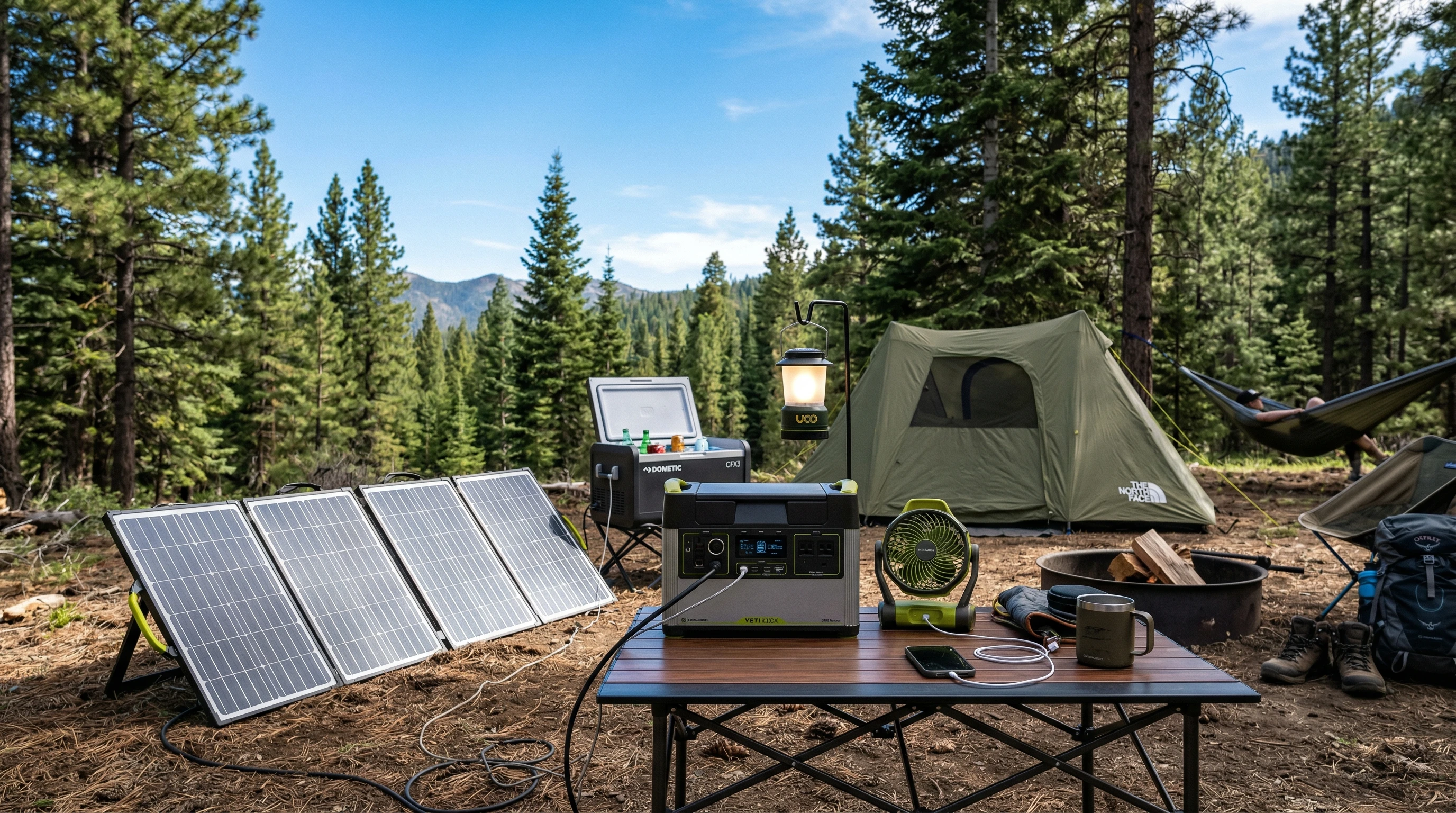
Top Quick Picks: Best Solar Generators for Camping
Shopping for a solar generator can be confusing since there’s a flood of options out there. To save you time, I’ve picked out my favorites for different needs. Here’s what I recommend for campers who want simple, reliable power without any unnecessary hassle.
- Best Overall for Camping: Jackery Explorer 1000 Pro (reliable, powerful, fast charging)
- Best Lightweight Option: EcoFlow River 2 Pro (fast recharge, easy to carry)
- Best Budget Pick: Anker 535 Portable Power Station (affordable, compact)
- Best for Long Trips: Bluetti EB70S (solid capacity, reliable output)
👉 Compare top-rated portable solar generators here
Why Solar Generators Work Well for Camping
Traditional generators use gasoline or propane and tend to be heavy and loud. With the switch to solar, I can run my cooler and charge everyone’s phones without waking up the whole campground. Solar generators don’t release fumes, so there’s no worry about breathing in exhaust while reading at night by the tent. They’re portable and almost silent, which makes it feel like I’m not disrupting the nature around me. The fact that I can recharge these generators with the sun just makes sense for an outdoor lifestyle. Plus, I never have to buy or haul fuel.
What to Look for in a Solar Generator for Camping
Picking the right model depends on your own trip needs. Understanding these key features helped me avoid buying a generator that either wasn’t strong enough or was just too much to carry. Here’s what I always check:
- Battery Capacity (Wh): The watt-hour (Wh) rating tells me how much energy I can store for the night. For quick weekend trips, 500Wh covers essentials. If I want to power a mini fridge or go off-grid longer, I aim for 700Wh or more.
- Portability and Weight: I like to keep things light so I can move my setup easily. Generators around 10-20 lbs are much easier to carry around camp compared to heavy-duty models.
- Charging Options: It’s good to have options. I make sure my solar generator lets me recharge from a solar panel, wall outlet, or car. If clouds roll in, I’ll still have backup charging covered.
- Noise Level: Quiet operation is nonnegotiable for me. Most solar generators make a faint hum at most, so there’s no shouting over the noise or missing out on nature’s sounds.
- Durability: Camping gear needs to hold up to bumps, dust, and sometimes rain. I look for models with a sturdy, rugged design that can survive being moved in and out of the car or tent.
If you’re also comparing budget options, check out my guide on the best solar generators under $1000.
Best Solar Generators for Camping: Comparison Table
| Model | Battery Capacity (Wh) | Max Output | Weight | Best For | Price Range | Rating |
|---|---|---|---|---|---|---|
| Jackery Explorer 1000 Pro | 1002 Wh | 1000W (2000W surge) | 25.4 lbs | All purpose and family trips | $$$ | 4.7/5 |
| EcoFlow River 2 Pro | 768 Wh | 800W (1600W surge) | 17.2 lbs | Weekend getaways, lightweight travel | $$ | 4.6/5 |
| Bluetti EB70S | 716 Wh | 800W (1400W surge) | 21.4 lbs | Multiday or family camping | $$ | 4.8/5 |
| Anker 535 PowerHouse | 512 Wh | 500W (750W surge) | 16.7 lbs | Budget and solo trips | $ | 4.5/5 |
| ALLPOWERS S700 | 606 Wh | 700W (1400W surge) | 11 lbs | Day trips and emergency use | $ | 4.4/5 |
Detailed Reviews: Best Solar Generators for Camping in 2026
Jackery Explorer 1000 Pro
Key Specs: 1002Wh capacity, 1000W output (2000W surge), recharges in 1.8 hours with two SolarSaga 200W panels, 3 pure sine wave AC outlets, 2 USB-C, 2 USB-A, 1 car outlet, weighs 25.4 lbs.
This model has traveled with me to both long and short camping spots, giving me enough juice to run lights, fans, and even a compact coffee maker. Jackery’s interface is easy to use, and their customer support has always been responsive the few times I’ve needed clarification.
Pros:
- Large battery for full campsites
- Very reliable charging options
- Quiet operation, even at high loads
- Fast solar charging capability
Cons:
- Slightly heavier than other models (might need a wagon for transport over distance)
- Panels sold separately
Best for: Families or groups who don’t want to worry about running out of power at night.
Not for: Someone who is counting every ounce for a backpacking trip.
Check latest price on Jackery official website.
EcoFlow River 2 Pro
Key Specs: 768Wh capacity, 800W output (1600W surge), 4 AC outlets, multiple USB-C/A ports, quick recharge (under 1 hour with AC), weight 17.2 lbs.
I took this one for a three-day fishing trip and found the rapid recharge time really helpful. I could top off the River 2 Pro at a coffee shop midtrip if the sun wasn’t out. The compact body fits in any trunk or backseat without hassle.
Pros:
- Super fast charging (AC and solar)
- Good balance of capacity and weight
- Easy-carry handle makes moving it around camp simple
Cons:
- Solar input is lower compared to higherend units
- No wireless charging top
Best for: Quick weekend escapes where speed and simplicity matter.
Not for: Off-grid trips longer than 4-5 days unless paired with high efficiency solar panels.
See EcoFlow River 2 Pro pricing and availability
Bluetti EB70S
Key Specs: 716Wh capacity, 800W output (1400W surge), 2 AC outlets, 2 DC outputs, 2 wireless charging pads, 2 USB-C, 2 USB-A, weights 21.4 lbs.
The wireless charging pads on the EB70S make it easier to keep phones charged without hunting for a cable. I ran my camping fan and portable fridge at the same time, and still had juice for lights. Build quality feels solid and the handle is comfortable for moving around camp.
Pros:
- Solid performance, reliable output for multiple devices at once
- Includes wireless charging pads
- Strong safety protections for outdoor use
Cons:
- Could be lighter for hiking longer distances
- Display is basic (shows voltage and estimate, but not detailed remaining runtime)
Best for: Extended camping trips or when running several gadgets at once.
Not for: Minimalist travelers or those hiking far from their vehicle.
View Bluetti EB70S current deals
Anker 535 Portable Power Station
Key Specs: 512Wh battery, 500W output (750W surge), 4 AC outlets, 3 USB-A, 1 USB-C, 1 car outlet, weighs 16.7 lbs.
This is my top pick for travelers on a budget or those packing light. The Anker 535 is super portable and has enough juice for phones, a laptop, and string lights for a cozy campsite. Anker’s reputation for reliable battery tech is definitely felt here.
Pros:
- Affordable price for the capacity
- Compact and easy to carry
- Decent recharge speed
Cons:
- Lower overall power limit than larger models
- Doesn’t support high wattage appliances (like a microwave or hair dryer)
Best for: Solo campers or those who just want to keep essentials running.
Not for: Running several heavy electronics.
ALLPOWERS S700
Key Specs: 606Wh capacity, 700W output (1400W surge), 2 AC outlets, 2 USB-C, 2 USB-A, 1 car outlet, weighs just 11 lbs.
I grabbed this model for a couple of spontaneous day trips and emergency backup at home. It’s very light, so I didn’t mind tossing it in the trunk at the last minute. It lacks a few highend extras but makes up for it by being genuinely portable and affordable.
Pros:
- Very lightweight and compact
- Easy for quick getaways and short outings
- Budgetfriendly
Cons:
- Not enough power for long trips or running big gadgets
- Solar charging is a bit slower compared to some larger units
Best for: Short trips, emergencies, or anyone who wants something light to carry.
Not for: Running heavier equipment or staying off-grid for days in a row.
ALLPOWERS is often overlooked, but it offers some of the best value for lightweight camping setups.
Check latest price on ALLPOWERS (US store)
Based in Europe? View the ALLPOWERS EU store here
What Devices Can a Camping Solar Generator Power?
After lots of trial and error, I’ve worked out what these units can actually handle on a real campout. Here’s what I typically run on a single charge:
- LED lanterns or string lights: 20–30 hours of light on most midrange units
- Phones and tablets: 20+ full charges
- Portable fans: 8–18 hours, depending on size
- Minicoolers/portable fridge: 10–20 hours for efficient models
- Laptop: 3–7 full charges or 12+ hours runtime
- CPAP machine: A full night’s use for most models (check the wattage of your device!)
If you want to run highdraw items like an induction cooktop or an electric heater, go for one of the bigger units and watch the power draw. I usually leave those at home and stick to gas for cooking to make the power last longer.
Tips for Using a Solar Generator at Camp
I’ve picked up a few useful strategies for making the most out of every watt. These tips help stretch your battery and make camp more comfortable:
- Panel placement matters: Face your panels directly toward the midday sun. Move them as the sun switches up, and avoid shaded spots from trees or tents.
- Charge smart: Start charging your devices in the early morning to avoid draining the generator’s battery before sunset. Run bigger loads (like coolers or fans) while the sun is shining if you can.
- Prioritize essentials: Only power up what you actually need. LEDs are way more efficient than halogen lanterns, and saving a few watts here and there means a more relaxed trip.
- Pack backup cables and adapters: I make sure to have the right charging cables for every device to avoid slow charging or wasted outlets.
- Keep your gear clean and dry: Wipe off solar panels regularly and store the generator someplace dry, especially if there’s morning dew or rain.
FAQs About Solar Generators for Camping
Can solar generators really replace gas generators for camping?
Yes, for typical camping needs. Unless you’re running high wattage appliances all at once, a solar generator is usually enough for phones, lights, fans, small fridges, and a few extra gadgets.
How long does a solar generator take to charge with solar panels?
It depends on the battery size and the panel wattage, plus the amount of sunlight. A 500Wh unit with a 100W solar panel might take about 5–7 hours in strong sunlight. Larger batteries or cloudy weather will need more time. Some models can recharge quicker by connecting multiple panels.
Can I leave my solar generator outside overnight?
I usually keep mine inside a tent or under a shelter to protect it from dew, rain, or animals. Light overnight exposure is fine, but for longer life, it’s better to keep electronics dry and clean.
Is it safe to use these in the rain?
Solar generators themselves are not rainproof, but most can handle a little moisture. The solar panels are built to handle light rain, but I store everything away if there’s heavy weather.
How do I know what size generator I need?
Add up the watt-hours for all your devices, including how long you plan to run each one. It’s better to go a little higher in capacity. That way, you’re not stressed about running out of power when you want to just relax and enjoy the trip.
Final Thoughts and Recommendations
Switching to a solar generator has changed my camping routine for the better. I don’t worry about the noise, fumes, or running out of fuel. For most campers, a model in the 500–1000Wh range covers weekend trips and more. Those planning longer, gearheavy trips should check out units with bigger batteries and faster solar input. Prices fluctuate, so it’s always smart to check current deals before buying. With the right setup, camping stays peaceful. Your gear stays powered up wherever you go.