
Some of the links on this page are affiliate links, which means I may earn a small commission if you make a purchase through them, at no extra cost to you. This helps support the site and allows me to continue creating helpful content.
Power outages, storms and grid interruptions can leave refrigerators, internet equipment, lighting and other essential devices without power. A battery-based solar generator can provide quiet backup electricity without storing fuel or producing combustion exhaust during normal operation.
The best solar generator for home backup depends on the amount of stored energy you need, the appliances you want to run, AC output and surge requirements, charging options and whether the system can expand with additional batteries.
This guide compares solar generators for different home backup needs in 2026, from compact systems for essential loads to larger expandable power stations designed for longer outages.
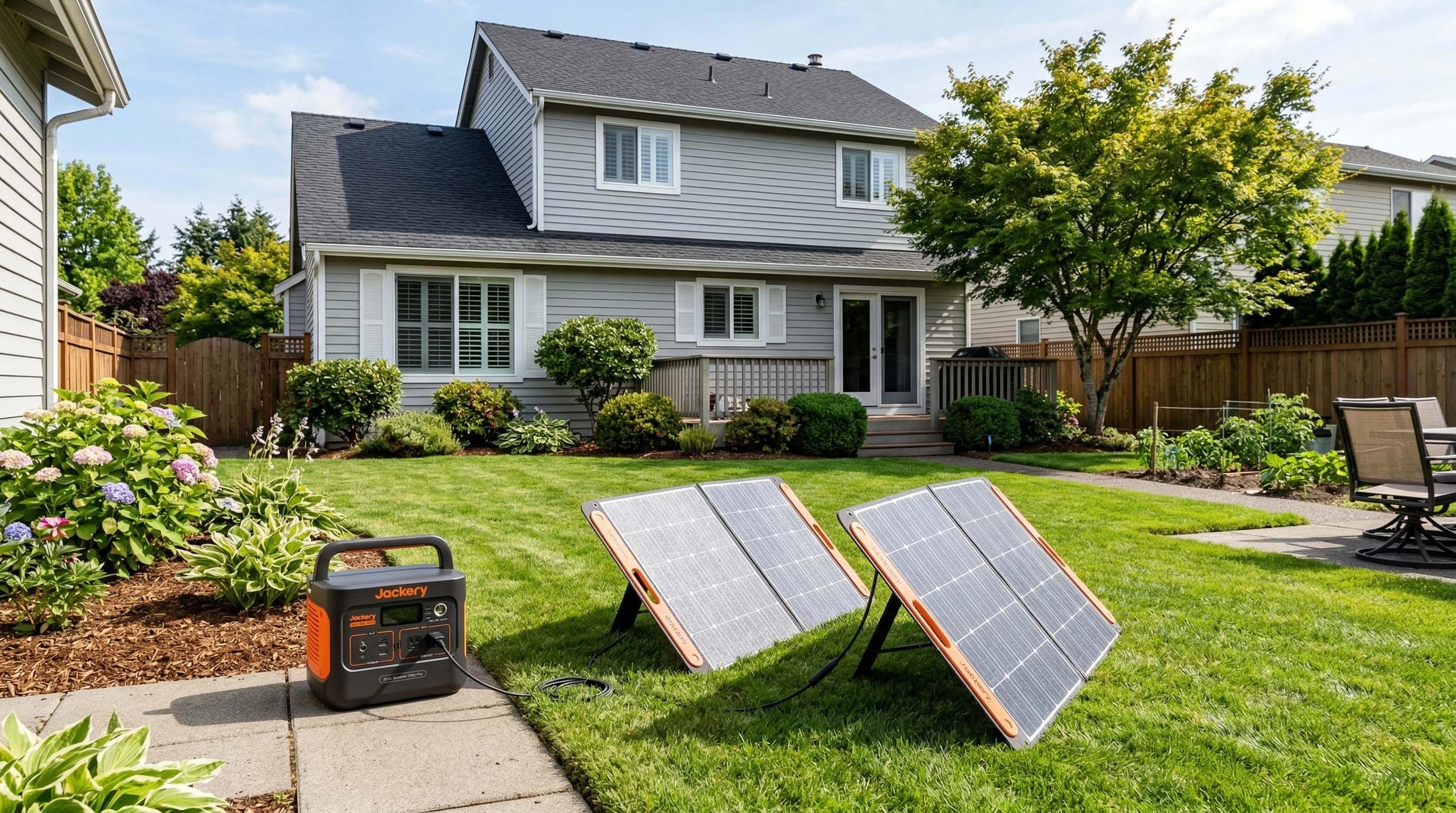
Quick Answer: Best Solar Generators for Home Backup Power
The best solar generator for home backup power depends on the amount of stored energy, AC output and expandability your household needs. The EcoFlow DELTA Pro 3 is the largest and most powerful expandable option covered here, while the BLUETTI AC200L, Jackery Explorer 2000 Plus and Anker SOLIX F2000 target mid-size portable home backup. A smaller system may be more appropriate when the goal is simply to keep selected low-power essentials running.
Before buying, compare usable battery capacity, continuous AC output, surge capability, battery chemistry, solar input, expansion options and current manufacturer compatibility.
What Is A Solar Generator For Home Backup?
A solar generator typically combines a rechargeable battery, inverter and charging system in a portable power station that can be recharged from compatible solar panels. Most systems can also recharge from an AC outlet, and some support vehicle or other charging methods.
The term “solar generator” is commonly used for these battery-based systems when paired with solar charging, although the power station itself stores electricity rather than generating it.
What makes a battery-based solar generator practical during power outages is its quiet operation, portability and lack of combustion exhaust during normal use. Unlike fuel-burning generators, portable power stations do not produce carbon monoxide while operating. They can be used indoors when operated according to the manufacturer’s instructions, kept dry and provided with adequate ventilation.
What To Look For In A Solar Generator For Home Backup
Choosing a solar generator for home backup is not simply about finding the largest battery. Several specifications determine how useful a system will be during an emergency or extended outage:
- Battery Capacity (Wh): Battery capacity indicates how much energy the unit can store. Higher capacity can support more devices or longer runtimes, although usable energy will normally be lower than the advertised capacity.
- Inverter Power (W): Continuous AC output determines how much power the unit can supply during normal operation, while surge output matters for appliances such as refrigerators that can briefly draw more power when starting.
- Expandability: Some systems support additional batteries, allowing backup capacity to grow if your needs change or you want to prepare for longer outages.
- Charging Speed: AC and solar charging rates matter during extended outages. Faster recharging can help restore battery capacity when grid power briefly returns or adequate sunlight is available.
- Ease of Use: A clear display, accessible ports, straightforward controls and useful app features can make the system easier to manage during an outage.
Quick Comparison Table: Top Solar Generators For Home Backup
| Model | Battery Capacity | AC Output | Best For |
|---|---|---|---|
| EcoFlow DELTA Pro 3 | 4,096Wh, expandable | 4,000W | Larger expandable backup |
| BLUETTI AC200L | 2,048Wh, expandable | 2,400W | Mid-size home essentials |
| Jackery Explorer 2000 Plus | 2,042.8Wh, expandable | 3,000W | High-output portable backup |
| Anker SOLIX F2000 | 2,048Wh, expandable | 2,300W | Mid-size portable backup |
The models below cover several home-backup configurations, from mid-size portable power stations to larger expandable systems. Compare current specifications, compatibility and pricing before choosing a system for your household.
Best Solar Generators For Home Backup (Top Picks)
EcoFlow DELTA Pro 3
Battery: 4,096Wh, expandable
Output: 4,000W (8,000W surge)
Solar Input: Up to 2,600W
Battery Chemistry: LFP
Weight: 51.5kg / 113.5lb
The EcoFlow DELTA Pro 3 is the largest expandable home-backup option covered in this guide. It combines a 4,096Wh LFP battery with up to 4,000W of AC output and supports additional compatible batteries when more stored energy is required.
Its two solar inputs support up to 2,600W combined under compatible conditions. At 51.5kg, however, this is a substantial system rather than a lightweight portable power station.
Pros:
- Large 4,096Wh battery capacity
- High continuous and surge output
- Expandable battery system
- High solar input capability
- LFP battery chemistry
Cons:
- Heavy
- Higher-cost system than smaller portable power stations
Best for: Larger essential backup loads and households that want an expandable battery-based backup system.
Not for: Users who primarily need a lightweight power station for a few small devices.
Check current EcoFlow DELTA Pro 3 specifications, availability and pricing
BLUETTI AC200L
Battery: 2,048Wh, expandable
Output: 2,400W AC
Surge: 7,200W
Solar Input: Up to 1,200W
Battery Chemistry: LiFePO4
Weight: 28.3kg / 62.4lb
The BLUETTI AC200L combines a 2,048Wh LiFePO4 battery with 2,400W of AC output and supports compatible expansion batteries when additional storage is required. It sits between smaller portable units and the larger expandable systems aimed at heavier backup requirements.
Solar input is rated up to 1,200W under compatible conditions, while Wi-Fi and Bluetooth app control provide another way to monitor and manage the system.
Pros:
- Expandable battery capacity
- 2,400W AC output
- Up to 1,200W solar input
- LiFePO4 battery chemistry
- Wi-Fi and Bluetooth app control
Cons:
- Expansion batteries add additional cost
- Considerably heavier than compact power stations
Best for: Mid-size home backup where multiple essential loads may need to operate during an outage.
Not for: Users whose main priority is a small, lightweight backup system.
Check current BLUETTI AC200L specifications, availability and pricing
Jackery Explorer 2000 Plus
Battery: 2,042.8Wh, expandable
Output: 3,000W AC (6,000W surge)
Battery Chemistry: LiFePO4
Weight: 61.5lb / 27.9kg
The Jackery Explorer 2000 Plus combines a roughly 2kWh LiFePO4 battery with 3,000W of AC output and an expandable battery system. This makes it suitable for users who want substantial portable backup capacity without moving to a permanently installed home battery.
Its relatively high AC output provides more flexibility for appliances with larger power requirements, although actual compatibility and runtime still depend on each appliance’s continuous load, startup requirements and total energy consumption.
Pros:
- 3,000W AC output
- Expandable battery capacity
- LiFePO4 battery chemistry
- Wheels and handle for easier movement
- App-based monitoring
Cons:
- Heavy compared with smaller portable power stations
- Expansion batteries increase the overall system cost
Best for: Expandable portable home backup with relatively high AC output.
Not for: Users who only need a lightweight system for phones, networking equipment and other small loads.
Check current Jackery Explorer 2000 Plus specifications, availability and pricing
Anker SOLIX F2000 (PowerHouse 767)
Battery: 2,048Wh, expandable to 4,096Wh
Output: 2,300W AC
Solar Input: Up to 1,000W
Battery Chemistry: LiFePO4
The Anker SOLIX F2000 is a 2,048Wh portable power station designed for larger portable loads and home backup. A compatible expansion battery can increase total stored capacity to 4,096Wh.
Its combination of battery capacity, 2,300W inverter output, wheels, app monitoring and expansion support makes it another option for households that want more capability than a compact power station without moving to a permanently installed battery system.
Pros:
- 2,048Wh battery capacity
- Expandable to 4,096Wh
- LiFePO4 battery chemistry
- Wheels for easier movement
- App monitoring
- Up to 1,000W solar input
Cons:
- Heavy compared with compact power stations
- Expansion battery adds substantial cost
Best for: Mid-size portable home backup with optional battery expansion.
Not for: Users primarily looking for a compact emergency power source.
Check current Anker SOLIX F2000 specifications, availability and pricing
How Long Can A Solar Generator Power Your Home?
olar generator runtime depends primarily on usable battery capacity and the loads connected to the system. Appliance cycling, inverter losses, battery condition and changing power demand can also affect how long the available energy lasts.
Appliance power consumption varies considerably by model, operating mode and usage pattern. For more realistic runtime planning, check the appliance label or manufacturer specifications and, where practical, measure actual energy consumption.
A simple starting point is:
Estimated Runtime (hours) = Usable Battery Energy (Wh) ÷ Average Load (W)
Actual runtime will also be affected by inverter losses, changing appliance loads, battery condition and environmental conditions.
During an outage, prioritizing essential loads and reducing unnecessary consumption can extend available battery runtime. Expansion batteries can increase stored energy, while compatible solar charging may help replenish part of the energy used. Actual solar generation depends on panel size, weather, season, shading, orientation and the power station’s supported solar input.
For a deeper breakdown, see the guide on how long a portable power station can run a refrigerator during a blackout.
Want to estimate your own outage runtime? The Home Power Outage Planner & Runtime Toolkit lets you enter your battery capacity and essential devices to estimate your energy needs for 24, 48 and 72 hours. View the Outage Planner & Runtime Toolkit.
Solar Generator vs Gas Generator For Home Backup
- Noise: Battery-based solar generators operate much more quietly than combustion generators, although cooling fans may still be audible under heavier loads.
- Maintenance: Portable power stations generally require less routine maintenance than fuel generators because there is no engine oil, fuel system or carburetor to maintain. Battery condition and storage charge should still be checked periodically.
- Safety: Battery power stations do not produce combustion exhaust or carbon monoxide during normal operation. They can be used indoors when operated according to the manufacturer’s instructions. Fuel-burning generators must be operated outdoors and positioned safely away from doors, windows and other openings.
- Convenience: Portable power stations can usually be started with a button and do not require fuel handling. Fuel generators require safe fuel storage, refueling and additional maintenance.
Fuel generators can provide sustained power as long as an appropriate fuel supply is available, while battery-based solar generators provide stored electrical energy that must eventually be recharged. Battery systems can be more convenient for selected indoor backup loads because they do not produce combustion exhaust during normal operation.
Never operate a fuel-burning generator indoors, in a garage or near doors, windows or vents because carbon monoxide can build up to dangerous levels. Follow the generator manufacturer’s placement and operating instructions.
Not Sure How Much Backup Power You Actually Need?
Before choosing a solar generator, it helps to estimate how much energy your essential devices may use during an outage.
The Ecowised Home Power Outage Planner & Runtime Toolkit includes a printable planning guide and an Excel runtime calculator to help you list your essential devices, estimate their energy needs, and compare your available battery capacity with 24, 48 and 72-hour outage scenarios.
Get the Home Power Outage Planner & Runtime Toolkit — £8.99
How To Choose The Right Solar Generator Size
Start by listing the devices you would consider essential during an outage. Check their rated wattage and estimate how long each device needs to operate.
Compare the resulting energy requirement with the power station’s usable battery capacity, then check whether its continuous AC output and surge capability can support the connected loads.
Avoid choosing a system from battery capacity alone. Two households can have very different backup requirements even when they use similar appliances.
For detailed planning, see How Much Battery Backup Do You Need for a Power Outage? or use the Home Power Outage Planner & Runtime Toolkit to calculate your own 24, 48 and 72-hour scenarios.
Tips For Power Outages With Solar Generators
- Prioritize essential loads: Decide which devices are most important for your household and allocate available battery capacity accordingly.
- Manage your loads: Avoid running unnecessary devices at the same time. Charge smaller electronics when other loads are low and prioritize appliances according to your available battery capacity.
- Reduce unnecessary consumption: Switch off or disconnect non-essential loads where appropriate and monitor remaining battery capacity throughout the outage.
- Make the most of available solar charging: Position compatible panels according to the manufacturer’s guidance and avoid unnecessary shading. Solar recharge varies considerably with panel size, weather, season, location and the power station’s maximum solar input.
- Test the setup before an outage: Check that your essential devices operate within the power station’s continuous and surge limits, and become familiar with charging and shutdown procedures before an emergency.
Related Guides
- Solar Generator Sizing Guide
- How Long Will a Solar Generator Last During a Power Outage?
- How Much Battery Backup Do You Need for a Power Outage?
- How to Calculate Power Station Runtime for Multiple Devices
- Portable Power Station vs Solar Generator
- Best Portable Power Stations for Storm Preparedness
Final Takeaway
The best solar generator for home backup power depends on the amount of energy you need to store, the output required by your essential loads and whether you want the option to expand the system later.
Larger systems such as the EcoFlow DELTA Pro 3 provide greater battery capacity and output, while the BLUETTI AC200L, Jackery Explorer 2000 Plus and Anker SOLIX F2000 offer different combinations of portability, output and expandability.
Before buying, calculate your essential energy requirements and compare them with the system’s usable battery capacity, continuous AC output, surge capability, charging options and current manufacturer specifications. Product availability and specifications can vary by region and may change over time.
Frequently Asked Questions
Can a solar generator power a whole house?
Most portable solar generators are better suited to selected essential loads than normal whole-house electricity use. Larger expandable systems can support more appliances, but whole-home backup requires careful assessment of battery capacity, continuous and surge output, electrical integration and household energy demand.
How long will a solar generator last during an outage?
Runtime depends on usable battery capacity and the average load connected to the system. Inverter losses, changing appliance loads, battery condition and available recharging can also affect runtime. Estimate your own requirements from actual appliance energy use rather than relying on a universal runtime figure.
Is a solar generator better than a gas generator?
Neither option is universally better. Battery-based solar generators provide quiet power without combustion exhaust during normal operation and can be used indoors according to manufacturer instructions. Fuel-burning generators can provide sustained power while fuel remains available but must be operated outdoors because of carbon monoxide risk.
What size solar generator do I need for home backup?
Start by identifying the devices you need during an outage and estimating their energy consumption. Then compare that requirement with the power station’s usable battery capacity, continuous AC output and surge capability. Required capacity varies considerably between households.
Can I run a refrigerator on a solar generator?
Many refrigerators can operate from a compatible solar generator, but the power station must support both the refrigerator’s normal running load and any startup surge. Battery runtime depends on the refrigerator’s actual energy consumption and the other loads connected to the system.