
Power outages are getting a lot more common where I live, and I’ve noticed more homeowners looking for quiet, safe ways to keep the lights (and life) on during blackouts. After using both gas and solar solutions through a number of storms and maintenance shutdowns, I found solar generators to be one of the easiest ways to back up essential home power without fumes or constant noise. Solar generators are clean, pretty simple to use, and I don’t need to store fuel or worry about ventilation as I do with traditional gas generators.
If you’re unsure how solar generators work in real situations, you can also check out my guide on how long a solar generator can power a house.
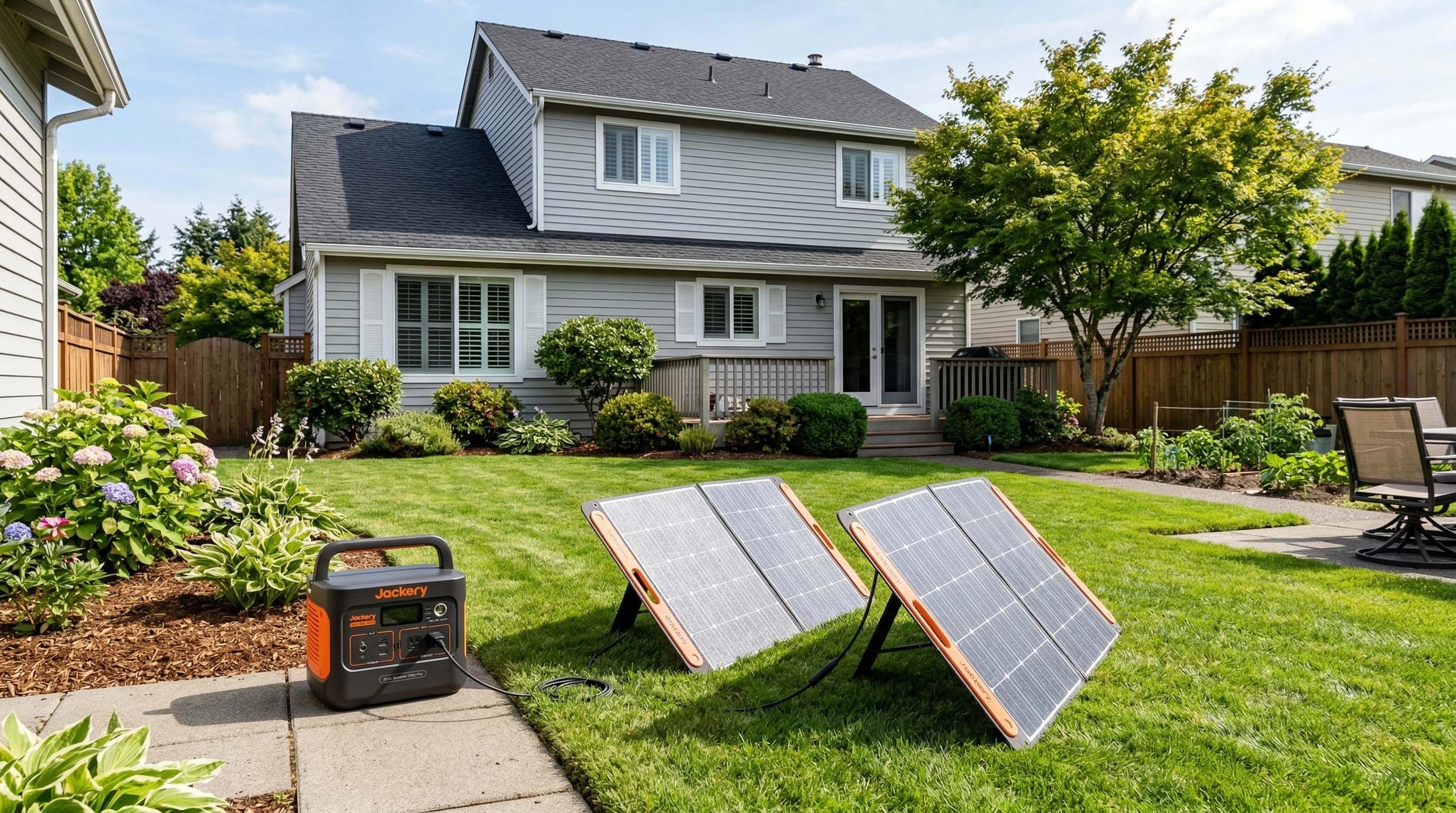
What Is A Solar Generator For Home Backup?
A solar generator is basically a bundle that brings together a large rechargeable battery (so it’s really a battery power station), a power inverter to turn that stored energy into usable household electricity (AC), and a charger that connects directly to solar panels. The solar panels use sunlight to make electricity during the day, which charges the battery. Most units also let you charge up from a wall outlet or your car, but adding solar panels is what sets these apart for offgrid backup.
What makes a solar generator for home backup really practical during power outages is its portability, quiet operation, and the fact that I can use it safely indoors without worrying about fumes or carbon monoxide. This makes them especially useful for families, apartment dwellers, and anyone who can’t or doesn’t want to install a permanent backup generator outside.
What To Look For In A Solar Generator For Home Backup
Choosing a solar generator for home backup isn’t just about picking the one with the biggest battery. I look at a few key features that really make a difference during an emergency or extended blackout:
- Battery Capacity (Wh): This tells me how much energy the generator can store. It’s measured in watt-hours (Wh). Higher numbers mean I can run more devices or keep important items powered up for longer stretches of time.
- Inverter Power (W): The inverter deals with surges when starting up big appliances like a fridge or microwave. Both peak and continuous watt ratings let me know what I can safely plug in and run.
- Expandability: Some solar generators let you add extra batteries or more solar panels. This is great if I need more power down the road or want to prep for longer outages.
- Charging Speed: During an extended outage, quick solar and AC recharging can make a big difference. Fast charging helps me bounce back whenever I get a patch of sunlight or if the grid snaps back on for a bit.
- Ease of Use: Big display screens, handy mobile app controls, and clearly marked plugs are a blessing when I’m fumbling for a flashlight in the dark.
Quick Comparison Table: Top Solar Generators For Home Backup
| Model | Battery Capacity | Output Power | Best For | Price Range | Rating |
|---|---|---|---|---|---|
| EcoFlow Delta Pro | 3,600 Wh (expandable to 25,000 Wh) | 3,600 W (7,200 W surge) | Whole-home backup, RVs | $$$ | 4.9/5 |
| Bluetti AC200MAX | 2,048 Wh (expandable to 8,192 Wh) | 2,200 W (4,800 W surge) | Medium homes, large appliances | $$ | 4.8/5 |
| Jackery Explorer 2000 Plus | 2,048 Wh (expandable to 12,000 Wh) | 3,000 W (6,000 W surge) | Home essentials, portable backup | $$–$$$ | 4.7/5 |
| Anker SOLIX F2000 | 2,048 Wh (expandable to 4,096 Wh) | 2,400 W (4,800 W surge) | Reliable mid-range backup | $$ | 4.7/5 |
| BLUETTI EB70S | 716 Wh | 800 W (1,400 W surge) | Apartments, basic backup | $ | 4.4/5 |
To make things easier, I’ve picked some of the most reliable solar generators based on real-world use, performance, and value. These are solid options whether you’re preparing for occasional outages or planning for longer emergencies.
Best Solar Generators For Home Backup (Top Picks)
EcoFlow Delta Pro
- Battery: 3,600 Wh (expandable up to 25,000 Wh with extra batteries)
- Output: 3,600 W (7,200 W surge)
- Charging: 1,800 W AC (fastest in its class), solar up to 1,600 W
- Weight: 99 lbs
The EcoFlow Delta Pro packs huge power and serious flexibility. I can run my refrigerator, lights, WiFi, medical devices, and even a window air conditioner at the same time for hours. The mobile app is user-friendly, and I like the modular battery system that lets me scale up for longer blackouts. Just keep in mind—it’s heavier than most, so having wheels and good handles is important if you need to move it around.
Pros:
- Massive capacity for major outages
- Super fast charging from wall, car, or solar
- Expandable for longterm backup
- Smart app, tons of ports (AC, USB, DC, 240V)
Cons:
- Expensive
- Heavy, so not the most portable
Best for: Larger homes, longer blackouts, important medical gear. It’s a solid pick if you’re aiming for nearwholehome backup but don’t want a permanent install.
Not for: Folks living in apartments or needing something you can carry with one hand.
If you’re looking for a reliable home backup solution, this is one of the best options to consider.
Bluetti AC200MAX
- Battery: 2,048 Wh (expandable up to 8,192 Wh with extra batteries)
- Output: 2,200 W (4,800 W surge)
- Charging: Up to 900 W solar, 500 W AC (can combine), charges in about 2 hours
- Weight: 61.9 lbs
This Bluetti gives me all the essentials and more. The touchscreen display is clear, and powering a fridge plus a few other things like TVs and lights isn’t a problem. Lithium iron phosphate batteries mean long lifespan even with daily use. And there are plenty of ways to add more batteries or panels if you want to scale up your backup.
Pros:
- Covers many AC and DC setups
- Good price for the capacity
- Expandable and not too big for most spaces
- Easy to work with menu and display
Cons:
- Solar panels sold separately
- Might be heavy for small households or folks with mobility issues
Best for: Home backup for fridges, sump pumps, or multiple devices together. College students and families I spoke with like it for both home prep and offgrid cabins.
Not for: People with hardly any storage room.
If you’re looking for a reliable home backup solution, this is one of the best options to consider.
Jackery Explorer 2000 Plus
- Battery: 2,048 Wh (expandable up to 12,000 Wh)
- Output: 3,000 W (6,000 W surge)
- Charging: 1,800 W AC input (charges in 2 hours), up to 1,200 W solar charging (fast)
- Weight: 61.5 lbs
The Jackery 2000 Plus is all about straightforward operation. I like how clear the display is, especially in a hurry. It’s strong enough to cover medium or large essentials—fridge, router, a few lights, and phone chargers. I sometimes bring this along for RV trips or set it up in the backyard when working outdoors.
Pros:
- High output for appliances and tools
- Tough, clean design
- Mobile app is intuitive
- Nice value given the power and brand
Cons:
- Expansion batteries cost extra money
- No 240V for big home HVAC systems
Best for: Homeowners after a portable but powerful backup, or anyone who wants to move their system between home and the road.
Not for: Those wanting to run all home circuits or the biggest appliances around the clock.
If you’re looking for a reliable home backup solution, this is one of the best options to consider.
Anker SOLIX F2000 (PowerHouse 767)
- Battery: 2,048 Wh (expandable up to 4,096 Wh)
- Output: 2,400 W (4,800 W surge)
- Charging: 1,000 W AC, up to 1,000 W solar (hybrid charging)
- Weight: 67.3 lbs
This Anker generator is super easy to use, and I like its rolling suitcase style—it makes moving it much simpler. The built-in app and the rugged build are reassuring. Performance is impressive, and if you pace yourself, it runs essentials for several days.
Pros:
- Flexible for various charging setups
- Solid range of available ports
- Rugged but easy to move
- Longlasting LFP batteries
Cons:
- Expansion is more limited than some rivals
- Solar panel kits can add up in price
Best for: People who want something reliable and affordable for outages or light household backup.
Not for: Running big HVAC or energy-hungry medical equipment.
If you’re looking for a reliable home backup solution, this is one of the best options to consider.
BLUETTI EB70S (Affordable, Compact Pick)
- Battery: 716 Wh
- Output: 800 W (1,400 W surge)
- Charging: 200 W AC or solar (full charge in under 5 hours)
- Weight: 21.4 lbs
The EB70S is way more affordable and a breeze to carry, which is why I suggest it for apartments or mobile needs. It handles a CPAP, WiFi, LED lights, and phone chargers for a night or more, or keeps a mini fridge cold for plenty of hours. For fullsize appliances, though, it’s not enough for an entire household.
Pros:
- Low cost and lightweight
- Small enough for underbed or closet storage
- Covers most electronics and basic medical gear
Cons:
- No expandability options
- Not built for big fridges or power tools
Best for: Apartments and people looking for something out-of-the-way and easy to move.
Not for: Anyone needing to power big appliances for long periods.
If you’re looking for a reliable home backup solution, this is one of the best options to consider.
How Long Can A Solar Generator Power Your Home?
Every solar generator’s battery size, how fast you draw power, and your household’s power use habits will affect how long you get backup. Using my 2,000 Wh setup, I can keep my fridge and WiFi running for about 24 hours, or stretch things out to several days for lights and phone charging only. Here’s a sample of typical power draws:
- Fullsize fridge: 120–150 W (cycles on and off)
- Internet router: 10–20 W
- LED lights (6 bulbs): 60 W altogether
- Phone charging: 5–10 W per device
- CPAP machine: 40 W
The best strategy is to pace your power use—run only the most important stuff, and cycle devices instead of plugging everything in at once. If you add expansion batteries to a larger generator, you could cover essential loads for days, especially if the sun peeks out and you get a daytime recharge.
I also break this down in more detail in my guide on running appliances like refrigerators during outages.
Solar Generator vs Gas Generator For Home Backup
- Noise: Solar generators are almost silent, which helps if I need to sleep or work during an outage. Gas generators range from 65 to 100 decibels, and can annoy neighbors and family members alike.
- Maintenance: With solar, I never worry about oil changes or sticky carburetors. Usually, a quick dustoff and battery check is all they need.
- Safety: Solar generators create no smoke or carbon monoxide. I’m comfortable using them in my living room. Gas ones must stay outdoors and should be checked regularly for safe operation.
- Convenience: I can start a solar generator with a single tap or button. Gas units need more effort—handling, storing, and pouring gasoline takes time and planning.
While gas generators deliver a lot more raw wattage for things like central AC or entire households, the safety and convenience of solar make them a natural pick for personal backup and everyday comfort.
How To Choose The Right Size (Small, Medium, Large Homes)
- Small homes/apartments (<1> A unit between 700 and 1,500 Wh usually covers lights, WiFi, laptop, and maybe a small fridge.
- Medium homes (1,200–2,000 sq ft): Step up to 2,000–3,600 Wh. Look for high inverter output if you want to run kitchen appliances or small heaters.
- Large homes (>2,000 sq ft): Multiple expandable units, like EcoFlow’s Delta Pro, will let you scale up and keep important appliances, freezers, and pumps running.
It helps to use a power usage monitor to spot which appliances in your home use the most juice. I listed out everything that mattered most, added up the total watts, and then double-checked generator specs before making a purchase. This way, you’ll find a backup setup that matches your household’s priorities and comfort.
Tips For Power Outages With Solar Generators
- Prioritize essentials first: Keep the fridge, internet, and a light or two powered. Save less important electronics until the outage has passed or you have surplus.
- Cycle your load: I rotate device use—for instance, charging gadgets in the morning and running the fridge in timed cycles instead of powering everything at once.
- Save battery wherever possible: Unplug things when not charging. LED bulbs, batteryoperated fans, and turning off standby electronics save a surprising amount of electricity.
- Aim the solar panels well: Take advantage of direct sunlight and tilt your panels for better results. A few solid hours in the sun can prep you for a full night’s backup.
- Test everything ahead of time: Practice with your setup before real blackouts, so nothing catches you offguard in an emergency.
Wrapping Up
Solar generators have really made my power outage routines safer and a lot less stressful. No fumes, no loud noise, and with a little practice managing energy use, I can keep my lights, fridge, and internet on for days. With unpredictable weather and grid outages on the rise, having a solar generator on standby makes a big difference for comfort and security at home. It’s the one piece of gear I recommend for anyone hoping to keep life humming through those tough moments.
Frequently Asked Questions
Can a solar generator power a whole house?
I find that most solar generators can’t handle every circuit in a big house, because of battery size and output limits. But expandable kits like EcoFlow Delta Pro, Bluetti EP500Pro, or two midrange units together will keep essentials running for a couple of days. For total household backup (HVAC, well, big heater, and all), a permanent generator or a few linked solar units with a transfer switch might be the smartest move.
How long will a solar generator last during an outage?
The answer depends on battery size and your power use. If I run a fullsize fridge (about 150 W), internet, and some lights from a 2,000 Wh generator, that gives me roughly 10 to 20 hours of backup. If I’m careful, I can stretch this to a couple of days for smaller things. Models with solar recharge can keep going as long as you can catch some daylight and keep usage smart.
Is a solar generator better than a gas generator?
For safety, convenience, and indoor use, solar generators win for most backup needs. They don’t throw out carbon monoxide, take little maintenance, and run quietly enough for sleep or indoor work. But if you need to power everything nonstop or go days without sunlight, gas generators definitely have a role for whole house power or for folks needing extra watts.
What size solar generator do I need?
Just add up the total watts of everything you absolutely need running at the same time, then figure out how many hours of backup you’d like. This gives a good watthour (Wh) target. I’d aim a bit higher, especially if you need to run a fridge, medical gear, or live somewhere remote.
Can I run a refrigerator on a solar generator?
Yes, I keep my fullsize fridge powered during outages with a 2,000 Wh solar generator. You just need to match your generator’s continuous output to your fridge’s peak startup watts (which can be two or three times higher for a moment). Most bigger solar generators can handle that startup without shutting down, just doublecheck your fridge’s needs before plugging in.