
Choosing the right solar generator for off-grid living can make the difference between reliable power and constant frustration. Not all solar generators are built for off-grid use, and picking the wrong one can leave you without enough energy when you need it most. In this guide, I’ll break down the best solar generators for off-grid living in 2026, based on real power needs, battery capacity, and long-term reliability. Whether you’re powering a cabin, van, or full off-grid setup, these are the models worth considering. If you’re serious about off-grid living, choosing the right solar generator is critical. Models like EcoFlow Delta Pro or Bluetti systems are among the most reliable options for long-term off-grid use.
What Is An Offgrid Solar Generator?
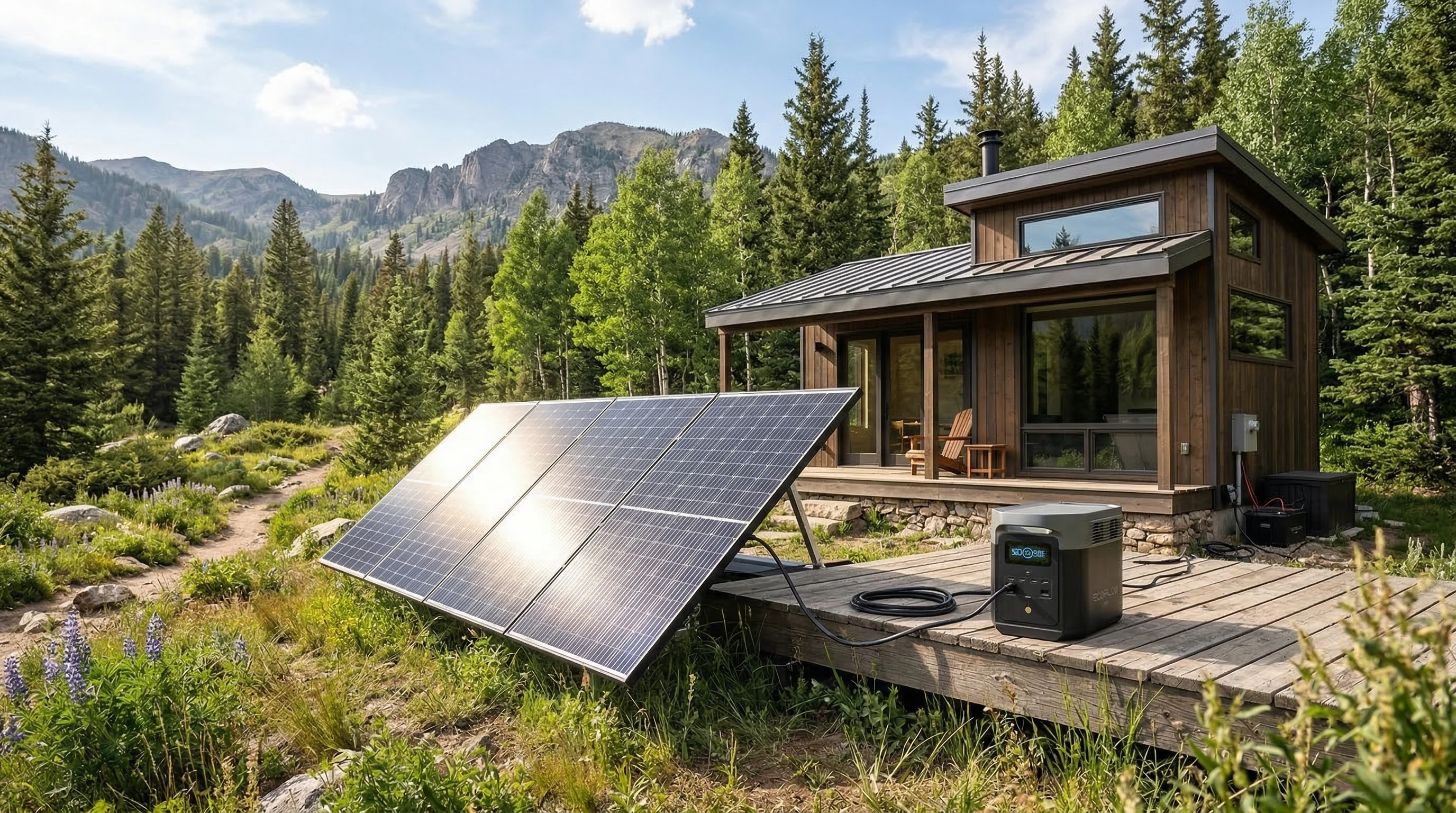
An off-grid solar generator is a complete portable power solution that lets me generate, store, and use electricity without any connection to the local power grid. At its core, a solar generator combines several components: a battery (for storing energy), a solar charge controller (for regulating input from solar panels), an inverter (to convert battery DC power into AC power for typical appliances), and input ports for connecting solar panels. The system is usually self-contained, so I can set it up almost anywhere, like a remote cabin, RV, van, yurt, or tiny house. Some solar generators have builtin solar panels, but most are designed to connect to external panels for greater flexibility and power.
When the sun hits my solar panels, they produce DC electricity. The charge controller prevents the battery from overcharging and channels the energy into it. When I plug in my appliances, the inverter converts stored DC power into the AC or DC outputs my gadgets and small appliances use. Many models offer a mix of AC wall outlets, USB ports, 12V car sockets, and sometimes highpowered 240V outputs. For off-grid living, reliability, capacity, speed of charging, and expandability are really important factors when picking a solar generator.
What To Look For In A Solar Generator For Offgrid Living
Choosing a solar generator can feel overwhelming, but breaking the decision down into a few main factors makes it much easier to find the right fit for my lifestyle and usage patterns. Here’s what I focus on:
- Battery Capacity (Wh): Battery size is measured in watthours (Wh) and determines how long I can run my devices. For off-grid living, systems with at least 1,500Wh are a starting point, but aiming for 2,000–5,000Wh or more gives me the flexibility to power essentials like fridges, lighting, and electronic devices for longer periods.
- Inverter Power (W): The inverter rating (in watts) determines the maximum wattage I can draw at any moment. Higher wattage lets me run things like power tools, microwaves, or multiple appliances at once. For most offgrid setups, a continuous output of at least 1,500–2,000W is preferable for versatility.
- Expandability: Some systems allow me to connect extra batteries or stack units to increase storage over time; this is a huge benefit if my needs grow or if I want to weather longer periods without sun.
- Solar Input (Charging Speed): Check the maximum input wattage. Fast charging from solar panels means my system will be ready sooner after cloudy weather. Some solar generators handle up to 1600W of solar input or more, which is helpful if I have space for large panels.
- Portability vs Fixed Use: I decide if I need a lightweight system I can move around, or a heavier, stationary model for a cabin or permanent spot. Portable models are great for RVs and vans, while heavier units with larger batteries suit cabins or home backups.
Choosing the right combination of battery capacity and inverter power is the most important factor when selecting a solar generator for off-grid living.
Top Picks Summary
Best Overall: EcoFlow Delta Pro
Best Budget: Bluetti AC200MAX
Best Portable: Jackery 2000 Plus
Quick Comparison Table
| Model | Capacity | Output | Best For | Price | Rating |
| EcoFlow Delta Pro | 3600Wh+ | 3600W | Full off-grid homes | $$$ | 4.8 |
| Bluetti AC200MAX | 2048Wh | 2200W | Cabins | $$ | 4.7 |
| Jackery 2000 Plus | 2048Wh | 2200W | Portable setups | $$–$$$ | 4.6 |
| Anker F2000 | 2048Wh | 2400W | General use | $$ | 4.5 |
| Goal Zero 3000X | 3032Wh | 2000W | Backup | $$$ | 4.4 |
- Best Overall: EcoFlow Delta Pro
- Best Value: Bluetti AC200MAX
- Best Portable Option: Jackery Explorer 2000 Plus
Best Solar Generators For Offgrid Living (Top Picks)
EcoFlow Delta Pro
EcoFlow Delta Pro stands out as one of the most advanced solar generators available. The base unit holds 3,600Wh of storage, and with its expandable system, I can add extra batteries; reaching over 25,000Wh if I need serious backup for long periods. Its 3,600W pure sine wave inverter means it runs highpower devices with ease. For large cabins or tiny homes with significant energy needs, this generator keeps up well.
- Key Specs: 3,600Wh battery (expandable to 25,000Wh+ with extra units), max 3,600W AC output (7,200W surge), up to 1,600W solar input, AC and 30A RV plug
- Pros: High capacity, massive inverter power, expandable, pairs with EcoFlow app for remote monitoring, dual charging
- Cons: Heavy at 99 lbs, higher upfront investment, needs compatible expansion batteries for full system
- Best For: Fulltime offgrid homes, large cabins, powerhungry appliances, or extended backup needs
- Who It’s NOT For: Those needing lightweight, compact units for frequent moving
If you want a powerful and expandable off-grid system, the EcoFlow Delta Pro is one of the best options available right now. Check latest price and availability.
Bluetti AC200MAX
Bluetti has earned a solid reputation for making powerful and modular power stations. The AC200MAX combines a 2,048Wh battery with robust 2,200W output. Expansion ports allow me to add up to two more battery modules. I can use a wide range of solar input options, and the highoutput inverter easily covers most off-grid essentials. It’s a popular choice among off-grid newcomers and seasoned cabin owners who want flexibility without jumping straight to the largest options.
- Key Specs: 2,048Wh battery (expandable), 2,200W continuous inverter, 900W max solar input, LiFePO4 cell chemistry
- Pros: Good size for daily off-grid needs, expandable, supports both AC and DC charging, lots of output ports, Bluetooth app support
- Cons: Heavier than some at 62 lbs, requires extra batteries for multiday backup, screen can be hard to read in bright sunlight
- Best For: Cabins, sheds, campers, or as a main source for smaller offgrid setups
- Who It’s NOT For: Those seeking ultraportable power, or only running very small loads
For a balanced and flexible setup, Bluetti is a great choice for most off-grid users. View current deals
Jackery Explorer 2000 Plus
Jackery has become one of the most recognizable names in portable solar. The Explorer 2000 Plus brings impressive portability and solid performance. With a 2,048Wh LiFePO4 battery pack (expandable to 12,000Wh with additional batteries), I get flexible options for run time and capacity. Its userfriendly interface and fast solar charging are helpful for off-grid living, road trips, and quick deployment in emergencies.
- Key Specs: 2,048Wh (expandable), 3,000W peak/2,200W continuous power, can accept up to 1,200W solar input, lightweight compared to similar units (61 lbs)
- Pros: Expandable, highly portable, simple controls, easy integration with Jackery solar panels
- Cons: Limited AC ports, additional batteries and panels can add cost, app use is basic
- Best For: Modular offgrid living, van lifers, portable cabin setups, quick home backup
- Who It’s NOT For: Those who need the highest power output or ultracustomizable setups
See Jackery options
Anker SOLIX F2000
Anker’s SOLIX F2000 sets itself apart with a strong balance of compact size and durable construction. With 2,048Wh capacity and 2,400W AC output, it manages essential loads like fridges, lighting, or laptops without breaking a sweat. It’s simple to use and features rapid solar charging up to 1,000W, making it practical for those looking for an easy, dependable unit for off-grid weekends or lightduty cabins.
- Key Specs: 2,048Wh LiFePO4 battery, 2,400W AC inverter, up to 1,000W solar input, under 70 lbs
- Pros: Great build quality, silent operation, userfriendly display, affordable compared to some competitors
- Cons: No app control, nonexpandable battery, fewer AC outlets than others in its class
- Best For: Medium cabin users, parttime offgrid homes, emergency backup power, camping
- Who It’s NOT For: Those needing expandable or highoutput systems for large home setups
Goal Zero Yeti 3000X
Goal Zero’s Yeti series has long been a favorite for simple, powerful solar generators. The 3000X brings together a 3,032Wh battery and a 2,000W inverter, providing enough capacity to handle large fridges, medical equipment, power tools, and entire small cabins for multiple days. The sturdy build and advanced safety mechanisms make it reliable for allweather use. Multiple charging options provide flexibility, and it’s compatible with both Goal Zero and thirdparty panels.
- Key Specs: 3,032Wh battery, 2,000W continuous inverter, up to 600W solar input, draws 69 lbs
- Pros: Robust construction, multiple output options, integrates well with other Goal Zero gear
- Cons: Slowest solar charging among these picks, pricey compared to some equally capable rivals, not as portable
- Best For: Stationary cabins, home emergency backup, those wanting a “set-and-forget” solution
Who It’s NOT For: Light packers, frequent travelers, users needing the highest solar input speed
Which Solar Generator Should You Choose?
If you want maximum power → EcoFlow Delta Pro
If you want balance → Bluetti AC200MAX
If you want portability → Jackery 2000 Plus
How Much Power Do You Need For Offgrid Living?
Before investing in a system, I always recommend estimating typical daily power usage. This lets me know if a generator’s battery and inverter setup can actually cover my needs without running out of juice. To start, I list every appliance and device I want to use; then check their wattage and estimate the hours per day I’d use each one. Multiplying wattage by hours for each device gives the daily watt-hours needed.
Here are some examples of daily device usage:
- Fridge: A typical small energyefficient fridge uses 40–60 watts per hour, averaging about 720–1,440Wh per day, depending on climate and model.
- LED Lighting: Ten 10W LED bulbs running for four hours total around 400Wh per day.
- Laptop: A laptop pulling 60W for five hours is about 300Wh/day.
- Water Pump: A small well pump or pressure booster usually needs 300–1,000W while running; usage varies depending on water needs.
- Small Appliances: Things like phone charging (10–15Wh each time), blender (300–400Wh for several minutes), and fans (50–100Wh/hour) are typically minor in daily use, but it adds up if lots of gadgets are running at the same time.
Adding up every appliance’s power needs gives me my daily energy requirement. For true off-grid living, I multiply my daily estimate by at least 2 or 3, adjusting for stormy days or unexpected usage spikes. This keeps me from running out of power after just one cloudy afternoon.
Is A Solar Generator Enough For Off-Grid Living?
For many people, a solar generator is enough for off-grid living, especially when powering essentials like a fridge, lights, and devices. However, full off-grid homes with high energy demands may require larger battery systems or hybrid setups. Not all solar generators are designed for off-grid living. Choosing the wrong one can leave you without enough power when you need it most.
How Many Solar Panels Do You Need?
Sizing my solar panel setup correctly is super important for a reliable off-grid power experience. The number of panels I need depends on my total daily watt-hour requirement, the number of peak sun hours I receive at my location, and the efficiency of my panels and system.
Here’s a simple way I figure it out:
- First, I total my daily watt-hour usage (for example, 3,000Wh per day).
- Next, I look up my local average peak sun hours per day; often 4 to 6 hours depending on the season and latitude.
- I divide my daily needs by the sun hours. In this example: 3,000Wh ÷ 5 sun hours = 600W minimum of solar panel power.
- I add a bit more to account for inefficiency and cloudy days. So, I’d go for about 700–800W of panels, minimum.
Bigger setups or those in cloudier locations may benefit from 1,200W, 1,600W, or even more solar input. Modular systems let me start with a few panels, adding more if I see my battery often running low or taking too long to recharge.
Solar Generator vs Full Solar System
Deciding between a solar generator and a full custom solar installation is a big decision. Solar generators offer plug-and-play convenience, portability, and easy setup, making them perfect for remote cabins, rentals, or people who want an allinone solution. I don’t need to worry about wiring, inverters, or complex electrical work, and I can usually set everything up by myself within minutes. I can take the whole kit with me if I move, making it a good investment for renters or travelers.
A full off-grid solar system, on the other hand, usually involves separate batteries, charge controllers, inverters, disconnects, breakers, and solar arrays permanently installed. These setups are ideal for permanent homes with high power demands or unique layout needs. They usually offer larger storage and higher efficiency but require more maintenance, permits, and knowledge. For most cabins, small homes, or vanlifers, a solar generator offers plenty of power and peace of mind with much less work.
Realistic Expectations For Off-grid Power
Solar generators have come a long way, but being realistic about what they can and can’t do is important for a smooth experience. Most midrange models won’t run heavydraw devices like electric stoves, big air conditioners, or hot water heaters for long periods. Some high capacity generators can handle brief surges, but running these appliances daily still requires a large battery and massive solar array.
I’ve found solar generators excellent for powering essentials: fridges, lights, devices, small kitchen tools, water pumps, WiFi gear, and medical equipment. For full off-grid comfort and heavy daily loads, either combining with backup generators or designing my lifestyle to minimize powerhog appliances is usually required. Planning rationed usage and monitoring consumption makes a huge difference. I check my system’s app or display regularly to see how much energy I’m producing and using, then adjust my habits accordingly during stretches of poor weather.
Tips For Off-grid Power Success
I’ve gathered a few key tips to help make off-grid living with a solar generator easier and frustration free:
- Choose a solar generator with more capacity than my “bare minimum” calculation for more freedom and less risk of running out of power.
- Always match or exceed the generator’s maximum solar input rating to keep recharge times reasonable.
- Combine solar charging with grid or generator charging during stretches of bad weather or peak use.
- Use energy efficient appliances, especially fridges, lights, and pumps, to reduce the total daily energy drain.
- Get in the habit of checking energy usage with smartphone apps or system displays. This helps spot unusual loads or vampire drain.
- Keep panels clean and aim them at the sun’s strongest angle for better performance, especially if dust or snow is common.
- Invest in high quality extension cables so I can put my panels in the sunniest spot even if my generator is inside or shaded.
- Consider backup options like a small propane dual fuel generator for emergencies, but use them sparingly to keep things green and quiet.
Wrapping Up
Choosing a solar generator for off-grid living in 2026 has never been easier, or more powerful. Today’s models offer bigger batteries, faster charging, easier expandability, and smarter controls than ever before. I focus on the balance between battery size, inverter strength, solar input, portability, and expandability when picking the right unit. Careful planning helps me match my energy needs with the systems above, whether for a parttime cabin or a fulltime off-grid home. By staying realistic about capabilities and building efficient habits, I enjoy hasslefree energy independence wherever my adventure takes me. If you’re planning a reliable off-grid setup, investing in a high-capacity solar generator is one of the smartest decisions you can make for long-term energy independence.
Frequently Asked Questions
Can I run my entire house on a solar generator?
Fulltime, fullhouse use depends on the size of both the generator and my house. Most portable models handle fridges, lights, and essentials, but running highpowered items like central AC or electric ovens needs very large systems or a full permanent solar setup.
How long do solar generators last?
Modern solar generators using LiFePO4 battery tech often last for thousands of charge cycles. That translates to 5–10 years of daily use with some care and keeping the batteries from deep discharges all the time.
Can I use any solar panel with my generator?
Most leading brands let me connect thirdparty panels, but voltage and connector compatibility matter. Always check the generator’s specs before plugging in nonbranded panels.
Will a solar generator work during winter?
Solar generators work yearround, but the amount of sunlight drops in the winter. I adjust usage downward or bump up my solar panel array in winter months for consistent performance.
Are solar generators safe for sensitive electronics?
Most highquality generators use pure sine wave inverters, which are safe for sensitive devices like laptops, CPAP machines, and televisions. It’s always smart to doublecheck for pure sine wave output when picking a unit for sensitive loads.
What size solar generator is best for off-grid living?
For most off-grid setups, a solar generator with at least 2000Wh capacity and a 2000W inverter is recommended. Larger systems are better for extended use or multiple appliances.