
Some of the links on this page are affiliate links, which means I may earn a small commission if you make a purchase through them, at no extra cost to you. This helps support the site and allows me to continue creating helpful content.
RV living offers an eye-catching way to roam and see more of the world at your own rhythm. Throughout my travels, one thing stands out: planning for power comes first, whether I’m staying at a busy campground or finding peace off the grid. I’ve run all kinds of power setups—from old-school gas generators to plug-in hookups—but none offer the hassle-free use and flexibility of solar generators. Solar power stations are quiet, compact, and simple to move around or set up for your next adventure. In this article, I’ll share my favorite models, what features are crucial for RVers, and my best tips from years on the road, both full-time and on long hauls. If you’re looking for the best solar generators for RV living, especially for full-time or off-grid setups, choosing the right capacity and power output is crucial.
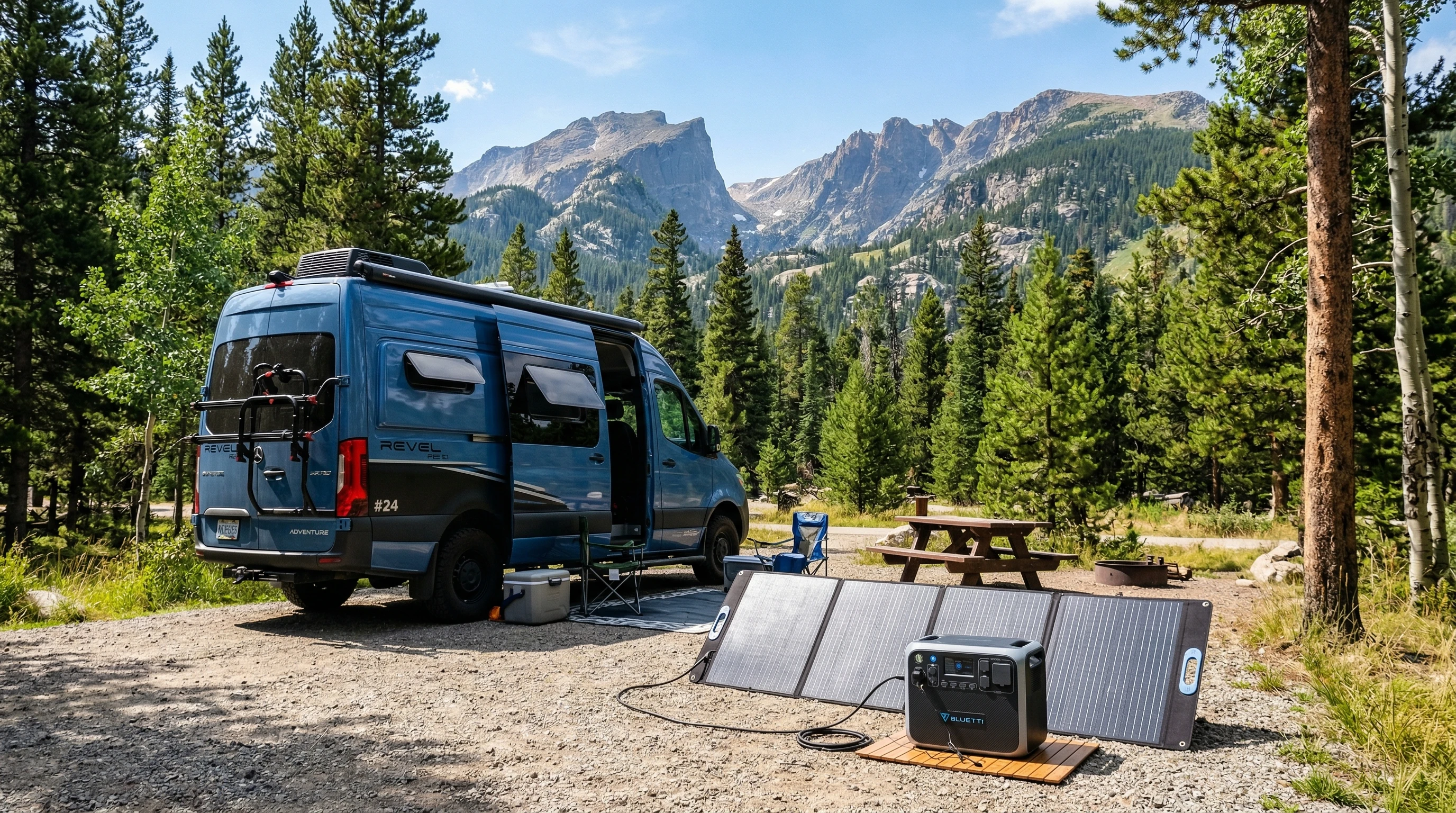
Quick Picks: Best Solar Generators for RV Living
- Best Overall for RV Living: EcoFlow Delta Pro
- Best Expandable System: Bluetti AC200MAX
- Best Midrange Option: Jackery Explorer 2000 Plus
- Best Budget RV Option: ALLPOWERS S1500
- Best Portable Option: EcoFlow Delta 2
Check latest prices:
• EcoFlow Delta Pro
• Bluetti AC200MAX
• Jackery 2000 Plus
• ALLPOWERS S1500
Why Solar Generators Work So Well for RVs
- No fuel needed, so you don’t have to store gas or mess with spills
- Runs quietly, even at night. That’s great for campgrounds and restful sleep
- Recharges from solar panels, your vehicle’s DC port, or shore power
- Easy to carry and move around your RV or campsite on the fly
I really appreciate my solar generator most during summer campouts—no more all-night generator noise or burning through fuel just for a fan. Instead, my solar setup gives me steady power for lights, electronics, and essentials, with no complaints from fellow campers nearby.
What to Look For When Choosing a Solar Generator for RVs
Not every portable solar power station is ready for the demands of RV travel—especially if you roll with a partner or the whole family. Here are the most important features I always check before choosing:
- Battery Capacity (Wh): For long trips or boondocking, capacity matters most. Under 1000Wh can drain fast. I always look for at least 1500Wh when running a fridge, microwave, or multiple gadgets.
- Output Power (W): Some appliances (like a coffee maker) need lots of watts. Make sure the power station can handle both ongoing and surge power needs for your RV.
- Expandability: Some generators support extra battery packs, which is perfect for longer adventures or ramping up your power later on.
- Charging Speed: Fast charging (AC or solar) is lifesaving on cloudy days or quick camp moves. Faster charging equals better flexibility and less downtime.
- Port Variety: Look for AC, USB-A/USB-C, DC auto sockets, and a 30A RV plug if possible. The more output options, the more uses you’ll get out of your generator.
Check these boxes, and you’ll have a smoother adventure, no matter where your RV takes you.
Comparison Table: Best Solar Generators for RV Use (2026 Edition)
| Model | Capacity (Wh) | Output (W) | Best For | Price | My Rating |
|---|---|---|---|---|---|
| EcoFlow Delta Pro | 3600 (expandable) | 3600 (7200 surge) | Full-timers & off-grid | Check Price | 9.5/10 |
| Bluetti AC200MAX | 2048 (expandable) | 2200 (4800 surge) | Expandable setups | Check Price | 9/10 |
| Jackery Explorer 2000 Plus | 2042 (expandable) | 2200 (4400 surge) | Easy use/midrange | Check Price | 8.7/10 |
| ALLPOWERS S1500 | 1092 | 1500 (3000 surge) | Budget-conscious | Check Price | 8/10 |
| EcoFlow Delta 2 | 1024 | 1800 (2700 surge) | Short trips/portability | Check Price | 8.5/10 |
In-Depth Reviews: Top Solar Generator Choices
EcoFlow Delta Pro
The EcoFlow Delta Pro is my go-to for serious off-grid power. With 3600Wh of basic capacity (expandable with add-on batteries), it tackles fridges, microwaves, and lights while also meeting short bursts for AC. Recharging is fast via AC, solar, or even an EV charging station. Its wheels and handle mean no strain lugging it around, and the smartphone app lets me keep tabs without stepping outside the RV. The Delta Pro is my first choice for full-time RVers who want maximum flexibility and long-term use.
Check latest price on Ecoflow.com
Bluetti AC200MAX
The Bluetti AC200MAX stands out for mixing in some variety with extra battery options. The base 2048Wh lets you add battery packs for big power boosts, perfect for weeklong boondocking where running out isn’t an option. The AC200MAX also features multiple output ports to run everything from fans to small microwaves at once. It recharges quickly with solar panels, which makes cloudy days less stressful. I use this for summer desert camping and appreciate its reliability and flexibility when off the grid.
Check latest price on Bluetti.com
Jackery Explorer 2000 Plus
If you want a solid, straightforward system, Jackery’s 2000 Plus is an excellent fit. All the controls are userfriendly, setup is straightforward, and I like the clean readout for battery and charge status. Its midrange size is ideal for two people or solo RVers who want decent backup for all their gadgets and appliances. The Jackery’s customer support team is also reliable, which matters when you’re hundreds of miles from a store.
Check latest price on Jackery.com
ALLPOWERS S1500
For quick getaways or anyone on a stricter budget, the ALLPOWERS S1500 gets the job done. Its 1092Wh offers solid capacity for lights and a small fridge or microwave. It’s lightweight, easy to carry, and packs up small for those tight RV storage spaces. I’ve brought this on weekend adventures when keeping essentials running is more important than powering every last device in the RV. Budget-conscious? This is a solid contender.
Check latest price on Allpowers.com
EcoFlow Delta 2
This lightweight generator is perfect for travelers packing light or heading out for a few nights. The Delta 2’s 1024Wh can run electronics, lights, a fan, and keep your phone and tablets charged. Since it charges rapidly from either solar or AC (under two hours if plugged in), it’s great for itineraries that involve hopping from site to site. Its compact design makes carrying and stashing easy, making it a favorite for weekenders or solo trips.
Check latest price on Ecoflow.com
If you’re looking for more affordable options, check out my guide on solar generators under $1000.
What Can You Power in an RV with a Solar Generator?
RVs are mini-homes on wheels, so it matters what real appliances your solar generator will support. Here’s a snapshot of what typical mid-to-large units can keep running long-term:
- RV fridge: 60–150W (can run for days with large enough battery)
- LED lights: 10–50W each
- Laptop: 50–100W
- Fan or roof vent: 30–70W
- Coffee maker: 600–1000W (short, morning bursts)
- TV or router: 50–100W
With a big solar generator like the EcoFlow Delta Pro, I keep my energy-efficient fridge, lights, laptop, and coffee maker running for up to three days between solar charges. Positioning the solar panels for max sunlight keeps the battery topped up most days, making true off-grid living possible.
If you’re looking for more affordable options, check out my guide on solar generators.
How Long Will the Power Last?
Your solar power’s runtime hinges on three details:
- The battery’s watt-hour rating
- How much power your devices use (in watts)
- How much sunlight recharges your battery each day
As a simple example, if you have a 2000Wh battery and consistently draw 200 watts, divide to see you get around 10 hours before recharge (2000Wh / 200W = 10 hours). More sunlight, more runtime—sometimes days of off-grid living if you watch your usage. My weeklong stays in the desert often run on 2200Wh with careful management and a decent-sized solar array.
Tips for Maximizing Solar Power in Your RV
- Park where the sun shines brightest for the best solar charging
- Use LED lights and energy-saving appliances to stretch power further
- Plug in and charge devices during the day, taking advantage of active solar panels
- Monitor your battery often so you’re never left in the dark, literally
- Move and angle solar panels to grab the most direct sun—small adjustments can crank up your daily power intake
Paying attention to these details lets you enjoy reliable power wherever you roll.
If you’re serious about RV living or off-grid travel, investing in a reliable solar generator is one of the smartest upgrades you can make.
Check the latest prices and availability here:
• EcoFlow Delta Pro (Best for full-time RV living)
• Bluetti AC200MAX (Best expandable system)
• ALLPOWERS S1500 (Best budget option)
Solar vs Gas Generators for RV Power
I’ve lived with both options. Here’s a breakdown:
| Solar Generator | Gas Generator | |
|---|---|---|
| Noise | Quiet | Loud, can disturb neighbors |
| Fuel | No refueling or fumes | Needs gas, produces exhaust |
| Maintenance | Minimal | Requires regular tune-ups |
| Portability | Lightweight, easy to move | Usually bulkier and heavier |
| Power Output | Great for essentials and small appliances | Best for very heavy loads or big RV ACs |
If you want calm mornings and easy power, solar comes out on top. For bigger air conditioners or running lots of high-watt devices non-stop, some folks still rely on gas, but these cases are more rare in my experience. For most RVers, solar covers about 95% of daily needs.
Questions RV Folks Ask About Solar Generators
Can a solar generator run an RV air conditioner?
The average solar generator is good for a short AC run but won’t cool your RV all day, unless you go big on your battery bank and opt for a super-efficient air conditioner. If you only need AC for a few hours, it works. Otherwise, look for larger setups or manage your expectations.
How much solar power do I need for full-time RV living?
For the basics (fridge, lights, electronics), plan on 2000–3000Wh of usable battery and a solid solar array. If you run high-watt gadgets or travel with more people, you’ll want to step up your capacity accordingly.
Can I charge my generator while driving?
Yes! Nearly all modern solar generators offer DC charging from your car’s auto port. I always top off my battery during travel days—handy for staying powered up once camped.
Is solar enough for full-time RV life?
With a properly sized generator and efficient gear, absolutely. I’ve gone entire seasons using just solar, careful about weather and power management. It’s freeing to travel without always chasing a plug or fuel station.
Ready for Quiet, Flexible Power in Your RV?
Switching to a solar generator changed my travel planning and turned off-grid camping into a simple, enjoyable experience. Whether you’re testing out long weekends or gearing up for months on the road, picking the right solar power setup keeps you powered and comfortable, no matter where your home on wheels parks.
Check out deals from US retailers, or, in the EU, look for trusted shops stocking these brands. With a top-notch solar generator on board, your next road adventure can go further and feel more like home—all with the power you need, wherever you park.