
Figuring out how many solar panels you need for your house is one of the most common and practical questions I get as a homeowner. Plenty of folks consider going solar for the savings, sustainability, and even energy independence, but knowing what’s involved on a technical level isn’t always easy. I’ll walk you through the factors that matter most, so you can estimate your needs with confidence for 2026 and beyond. The average home typically needs 15–25 solar panels to cover most of its electricity use. The exact number depends on your yearly energy consumption, the wattage of the panels, and how much sunlight your location receives.
Average Electricity Use In A Typical Home
Understanding your electricity use is the first step in sizing a solar system. Most American homes use somewhere between 10,000 and 12,000 kilowatt-hours (kWh) of electricity per year. For a monthly bill, this usually breaks down to about 830 to 1,000 kWh each month. Your usage might be higher or lower depending on your location, family size, and how many electrical devices you rely on every day.
For example, if you live in a small apartment and use natural gas for heating, your needs may be much lower than a family in a larger home with electric heating and cooling. I always recommend looking back at your electric bills over the past year for a true average. This makes your solar panel calculation much more accurate. Remember, you can always ask your utility provider for annual summaries for even better information.
Also, consider seasonal spikes in usage. Many people see their electricity use go up during hot summers or colder winters when air conditioning or heating is running often. Factor these fluctuations into your calculations so your solar setup isn’t underpowered during peak months. If you have future plans for an electric vehicle or new appliances, try to estimate how that will impact your energy needs as well.that will impact your energy needs as well.
How Much Power Does One Solar Panel Produce?
The electricity a single panel generates depends on the wattage rating of the panel and how much sunshine it receives. Most solar panels installed on homes in 2026 are rated between 400 and 450 watts. Under ideal conditions with plenty of direct sunlight, a 400-watt solar panel can generate about 1.6 to 2.0 kWh per day.
Actual output can vary with cloud cover, your roof angle, and what direction your panels face. Southfacing is best in the U.S. When I check my own panels, I often see production dips on rainy or heavily overcast days, then spikes when the sky is clear. Your yearly solar panel production is measured in kilowatt-hours per panel, not just raw wattage.
Some modern panels are now being built with higher wattage and improved cell technology, which lets you get more power in less space. These can be especially helpful if your roof isn’t very large or if you want to leave room for additions later. Check with panel manufacturers for up-to-date ratings before making a decision.
How Many Solar Panels Are Needed For A House?
The total number of panels needed ties directly to how much electricity you want your solar system to offset. Since most homes use between 10,000 and 12,000 kWh per year, a quick estimate is possible.
- Small home (800–1200 sq ft): Typically uses 5,000–7,000 kWh per year. For this size, I usually find that 10–16 panels (400-watt panels) are enough for most needs.
- Medium home (1500–2000 sq ft): Averages 8,000–12,000 kWh per year. I recommend 16–24 panels, assuming you want to cover nearly all your electricity use.
- Large home (2500+ sq ft): These homes can easily use 14,000–20,000 kWh per year. You’d likely need 24–40 panels, depending on how much of your home you want to run on solar.
These ranges account for the typical sunny weather in much of the U.S. If you live somewhere with many cloudy days, you may need more panels, or you may only cover a portion of your use with solar. Talking to a local solar installer can point you to the right number for your actual roof and needs.
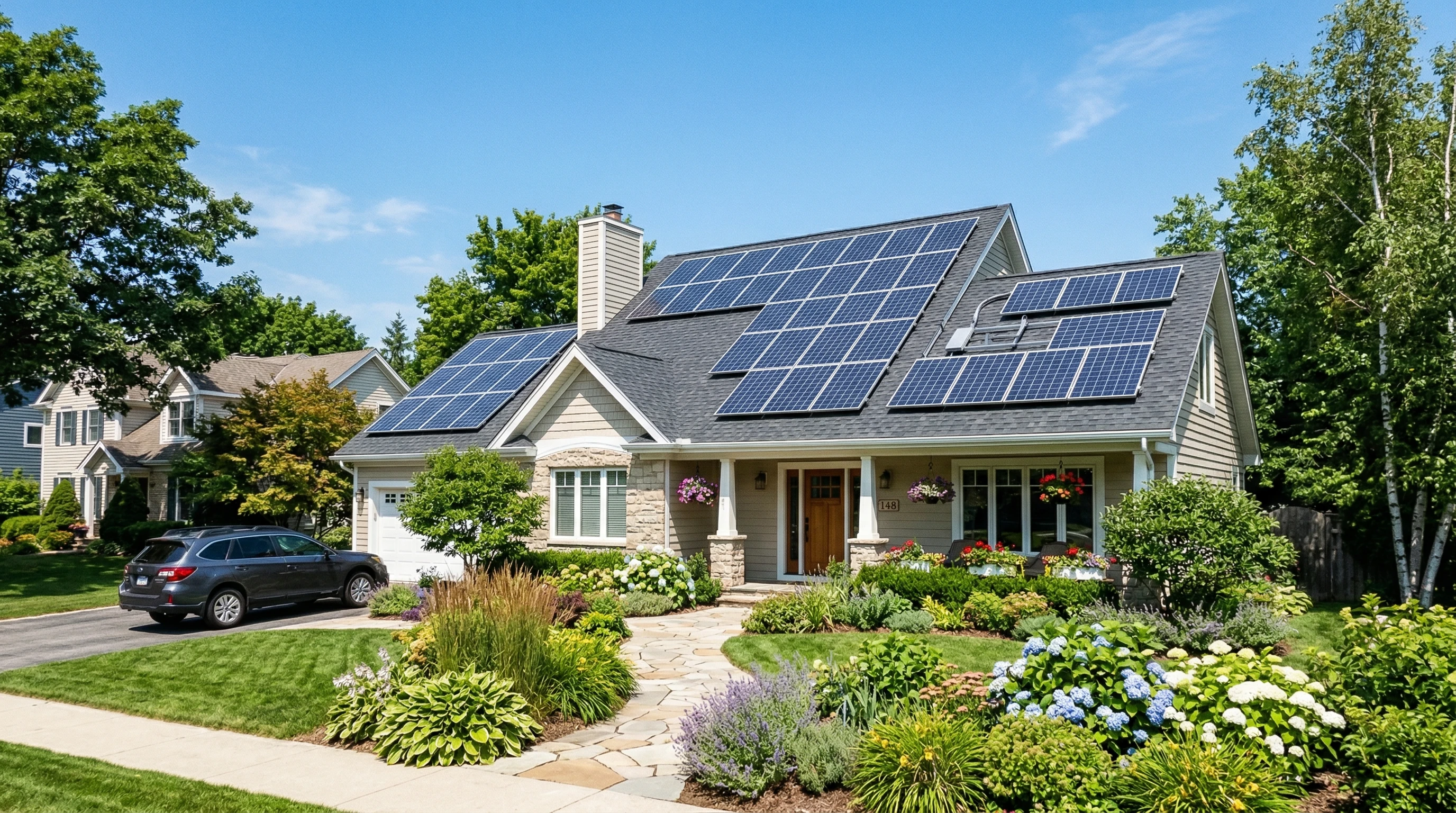
Another consideration is your roof design. Not all roofs are shaped the same, and obstacles like chimneys or skylights may limit your usable space. Roof material and angle also play a role. For example, tile roofs often need special mounting equipment to secure the panels.
Solar System Size Examples
If you want a more focused breakdown, looking at solar system sizes can be really helpful. Here’s what you can expect from some of the most common total system sizes for homeowners:
- 3 kW system: Will include about 7–8 panels (400-450 watt panels). This is the right size for a small home or if you just want to offset part of your use, maybe for efficient households or apartments.
- 5 kW system: Will use about 12–13 panels. I see this setup a lot in older or energized midsize homes, where space or usage isn’t extremely high.
- 8 kW system: About 18–20 panels. A popular choice for averagesized homes with normal electric appliances and perhaps one electric vehicle.
- 10 kW system: Up to 24–26 panels. Many large homes or houses with pool pumps, hot tubs, or multiple EVs go for this setup to cover high power needs.
Your needs may sit between these sizes, but these examples give a great starting point. Solar providers can customize system sizes—for example, a 6.5 kW or 7.2 kW system—to match your use exactly. If you anticipate adding more electric loads in your home later, like switching from gas to electric heat or adding an EV charger, you can futureproof your setup by sizing up now.
How Much Roof Space Do Solar Panels Need?
Solar panels usually require about 17–20 square feet per panel depending on the model.
For example:
- • 10 panels → about 170–200 sq ft
- • 20 panels → about 340–400 sq ft
- • 30 panels → about 500–600 sq ft
Most average homes have enough roof space for a typical solar installation, but roof shape, chimneys, and skylights can reduce usable space.
Factors That Affect How Many Panels You Need
The number of solar panels needed is shaped by more than just your electricity use. Several other things play an important role, and I always keep these in mind during my own calculations:
- Sunlight hours: The more sunshine your location gets, the more power each panel generates. Arizona gets more solar power per panel than Seattle.
- Roof direction: Panels facing true south in the Northern Hemisphere get the most sun throughout the year. Roofs facing east or west get a bit less, and northfacing roofs often aren’t recommended for solar in the U.S.
- Panel efficiency: Higherefficiency solar panels make more electricity in less space. If your roof is small, you might need to pick higherrated panels to make the most of it.
- Energy consumption: Individual usage patterns matter a lot. Homes with electric heat, air conditioning, or EV charging can need double or triple the solar of homes without these features.
Shade from trees, chimneys, or other buildings can also impact the number of panels you need, since shaded panels create less power. If you see shade on your roof through most of the day, you may need more panels to reach your power goal. Modern solar systems sometimes employ microinverters or power optimizers to help with partial shading, which can help keep your system efficient even if some panels receive shade at certain times.
Don’t forget local climate. Regions with snowy winters need panels to have the right tilt so that snow slides off and doesn’t block sunlight. Also, heavy storms or dust in some areas can reduce solar gains unless panels are cleaned now and then.
How To Calculate Solar Panels For Your Home
You can estimate the number of panels needed by dividing your yearly electricity use by the expected output of one solar panel at your location. I like using this simple formula:
Number of panels needed = Annual electricity use (kWh) ÷ (Panel wattage × Average sunlight hours per day × 365 ÷ 1000)
For a quick example, say you use 10,000 kWh per year, have 400-watt panels, and get 5 hours of direct sun a day (the U.S. average for solar). Each panel generates about 730 kWh a year (400 × 5 × 365 ÷ 1000 = 730). So, 10,000 ÷ 730 = roughly 14 panels. Having your electric bills handy and checking average sunlight hours in your area will make this estimate even more accurate.
Online solar calculators are widely available and most are free to use. You enter your location, average bill, and roof direction, and the calculator will estimate the system size and cost. Still, it’s always a good idea to have a professional check your roof and provide a site visit for a tailored assessment, especially for complicated installations or challenging roofs.
Once you’ve figured out your system size, you can also estimate your savings over the years by calculating how much electricity you will generate versus what you would otherwise pay for from the electric company. Most homeowners see a payback period of 6 to 10 years, but this changes depending on rates, incentives, and system costs in your area.
How Batteries Change Solar System Size
Adding solar batteries to your system gives your independence and flexibility a real boost.Adding solar batteries to your system gives your independence and flexibility a real boost. With batteries, you can store extra solar power during the day and use it at night or during blackouts. This is especially attractive to me during storm season, since grid outages can last several hours or more.
Batteries don’t usually reduce the number of solar panels you need; instead, they change when and how you use the energy. If you want to seriously increase your house’s resilience or live offgrid, you may need to upsize your array or add extra panels to keep your batteries charged up. Sizing for batteries is a bit more technical, as you’ll need to estimate your overnight or backup loads, but most solar designers can walk you through this.
I recommend checking out my indepth guide to solar batteries for a full look at how storage options can work for your setup. Keep in mind, too, that battery costs have been coming down, and there are incentives in some states that help with expenses. Having a battery means you can use more of your selfgenerated power and rely less on the utility—perfect for those interested in backup power or full energy independence.
Solar Panels vs Energy Efficiency First
Before investing in a huge solar array, I always look at energy efficiency upgrades. Upgrading insulation, switching to LED lighting, or replacing older appliances with energyefficient ones can cut yearly usage by a surprising amount. Reducing your consumption means fewer panels needed, plus a smaller, less costly solar system.
Smart thermostats, weatherstripping, energy smart windows, and even solar water heating can all help lower electricity use before you add solar panels. Taking these steps makes your home more comfortable and can save you thousands over the years. Some local utilities also offer rebates or energy audits to help you get started. For practical tips on how to cut down on energy use before sizing your solar panels, see my detailed article on reducing home energy consumption.
Quick Summary: How Many Solar Panels Does A House Need?
|
Home size |
Panels needed |
|
Small home |
10-16 |
|
Average home |
16-24 |
|
Large home |
24-40 |
Frequently Asked Questions
Here are some of the questions I get most often about sizing a home solar system:
Question: Can I run my whole house off solar panels?
Answer: Yes, many people power their entire home with solar, as long as there are enough panels to match your yearly use and you have battery storage (or stay connected to the electric grid for nights and cloudy days).
Question: Do solar panels work on cloudy days?
Answer: Solar panels do produce electricity in cloudy weather, but at a lower output. You might see 10–25% of your regular production when skies are gray. Having slightly more panels or a gridtied system can help smooth out the difference.
Question: What if I use more electricity than I planned?
Answer: Many systems are designed so you can add more panels later. I recommend planning for any future big appliances or EV purchases, but you can often expand your solar setup if needed.
Question: Should I get the highestefficiency panels available?
Answer: Highefficiency panels are helpful if you have limited roof space. If you have plenty of roof area, sticking to midrange panels can lower your overall system cost without sacrificing much in yearly output.
Question: How long do solar panels last?
Answer: Most solar panels are warrantied for 25 years or more, and many keep working at around 80–90% of their original output for 30 years. Keeping them clean and free of shade helps increase their lifespan and reliability. Regular inspections and occasional cleaning make sure your system stays productive for decades.
Wrapping up, sizing your home solar system doesn’t have to be overwhelming. Start by tracking your electricity use, consider your location and roof space, then factor in efficiency upgrades and storage if desired. With good planning, you can build a solar setup that meets your goals for savings, sustainability, and energy security.