
Some of the links on this page are affiliate links, which means I may earn a small commission if you make a purchase through them, at no extra cost to you. This helps support the site and allows me to continue creating helpful content.
If you’re planning RV living or going off grid, one of the first big questions you’ll face is how many solar panels for RV you actually need. It’s easy to underestimate this and end up running out of power when you need it most. On the flip side, nobody wants to spend extra money or cover the entire roof in panels they might not use. I’ve put together this simple setup guide to help you quickly figure out how many solar panels are right for your RV adventures.
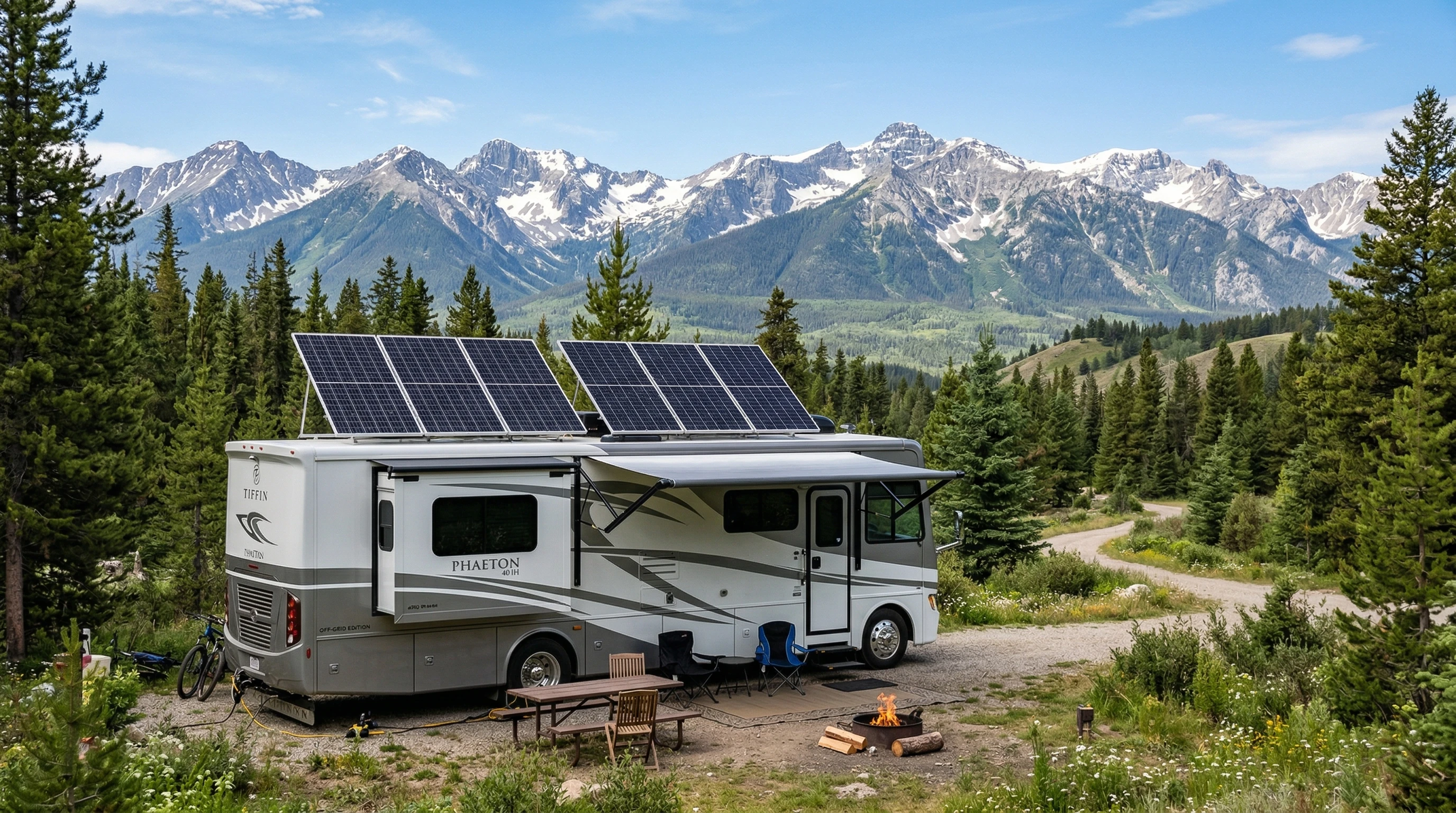
Why Solar Panels Matter for RV Living
Solar panels play a key role in keeping your RV’s power system topped off. While the generator or batteries let you use appliances on cloudy days or at night, solar is the main way I keep my system charged up for daily living. Without enough solar input, I end up relying more on hookups or running a generator, which kind of defeats the whole point of off grid freedom.
- Stay in the wild (boondocking) longer
- Skip hunting for hookups at crowded campgrounds
- Keep essential gear going every day, like the fridge, lights, fans, and laptops
- Reduce or even cut out the need for gas generators
A solar setup sized to your lifestyle means you can relax and focus on the adventure, not your battery meter.
Step 1: Estimate Your Daily Power Usage
Every RV setup is a bit different, so the best place to start is by figuring out your actual power needs. I always do this first because guessing usually leaves you short. Here are some typical daily power requirements for common RV appliances and electronics. These numbers are averages, so check your devices for more specific ratings where you can.
- RV refrigerator: 60–150W (usage adds up if running 24/7)
- LED interior lights: 10–50W (depends on how many and how long each is used)
- Laptop: 50–100W (charging every day or for a couple of long work sessions)
- Roof or portable fan: 30–70W
- TV: 40–120W (if you watch daily)
- Water pump: 60–90W (short bursts)
- Coffee maker, electric kettle, or small microwave: 600–1200W (short use)
Take note of what you’ll realistically run each day. I like to make a quick table or even just jot things down with how many hours each appliance is used. Multiply the watts by number of hours used to get watt hours (Wh), then add them all up for your daily total.
For example: If you use around 1000Wh per day (lights for 4 hours, fridge all day, laptop 3 hours), that’s your energy budget for sizing up the panels.
If you’re not sure what kind of power station fits your setup, check my guide on the best solar generators for camping.
Step 2: Understand Solar Panel Output
Solar panels are sold by the watt, but real world performance depends on how much sun you get where you’re parked, time of year, and how you mount the panels. Most of the time, I find the “watts” printed on the panel is a best case number and real output is lower, especially in cloudy areas or if your panels aren’t always pointed directly at the sun.
As a rule of thumb for RV setups in the US or Canada, I expect this per panel in good sunlight:
- 100W solar panel: about 300–500Wh per day
- 200W solar panel: about 600–1000Wh per day
If you travel a lot in the Pacific Northwest, Northern Europe, or during winter, you’ll want to bump your numbers up by 20–30% for cloudy or low sunlight conditions. Real output can drop a lot in shade or during short winter days. It’s smart to keep a margin.
Step 3: How Many Panels Do You Need? (The Simple Formula)
Once I’ve worked out daily energy use and the output per panel, I divide my usage by the production estimate. Here’s the easy formula:
Daily usage (Wh) ÷ daily solar production (Wh per panel) = number of panels you need
Example 1: Light Daytime Use
- Usage: 800Wh per day
- 100W panel = 400Wh/day
800Wh ÷ 400Wh = 2 panels needed
Example 2: Moderate, All Season RV Living
- Usage: 1500Wh per day (many folks fall here; fridge, lights, occasional TV, and charging devices)
- 200W panel = about 800Wh/day
1500Wh ÷ 800Wh ≈ 2 (round up for clouds or shade. 3 panels is safer)
Example 3: Full Time Off Grid Power User
- Usage: 2500–3000Wh per day (includes working from the road, more cooking, extra gadgets)
- 200W panels = about 800Wh/day each
3000Wh ÷ 800Wh = 3.75, so you need 4 panels (possibly 5 in less sunny regions or if you want more backup on cloudy days)
Step 4: Match Battery Size to Solar Panel Capacity
Solar panels only charge your batteries; they can’t store power themselves. If you have a huge battery bank but only a couple of panels, your batteries won’t recharge quickly. On the other hand, if your battery is small and your solar is large, you’ll waste sunlight once they’re full. Getting the balance right is what keeps your system working smoothly.
- Smaller battery + lots of panels means wasted sunshine once the battery tops off
- Big battery + few panels means batteries take forever to charge
Here’s what’s worked for me and other RVers I’ve camped with:
- If you have a 2000Wh battery bank (roughly equivalent to two 100Ah 12V lithium batteries), a 400–600W solar array usually makes sense.
- If your battery bank is closer to 3000Wh or more, plan on 600–1000W solar, especially if you use more devices or camp in shady spots.
For a deeper breakdown of battery systems and setups, see my full RV solar generator guide.
Try to have enough battery to cover a day or two of regular use and enough panels to recharge that in short winter daylight if needed.
If you’re planning a full RV solar setup and want a reliable all-in-one solution, ALLPOWERS offers solar generators, battery systems, and solar panel kits designed for off-grid living.
Check Allpowers solar solutions here. ( US store)
Based in Europe? View the ALLPOWERS EU store here.
Roof Mounted vs Portable Solar Panels
Fixed (Roof Mounted) Panels
- Panels always charging whenever there is daylight
- Great for people on the road full time who want to set it and forget it
- Panels are permanently installed, so you don’t need to mess with moving them
- Panels get less airflow (can get hot and less efficient) and can’t always be aimed perfectly at the sun
Portable Panels
- Can be moved to catch the sun even if your RV is in the shade
- Usually more efficient per watt since you can tilt and aim them
- Need to set up and pack up every time you move
- Easy to add extra capacity for short trips or guests
A lot of RVers, myself included, find that having a basic set of roof panels for daily charging, plus a good portable panel for adding juice on cloudy days or when parked in the shade, is a super practical setup.
How Local Weather and Location Change Your Needs
Solar efficiency comes down to how much sunlight your panels get each day. If you spend a lot of time in sunny places like the Southwest or Australia, you’ll get much more output per panel. In the Pacific Northwest, Maine, or areas with regular clouds, you’ll want to buy a larger or more flexible system.
- Sunny regions: fewer panels needed for the same power
- Shady, forested, or cloudy regions: plan for extra capacity; usually 20–30% more is enough to bridge the gap
Keep in mind the angle and direction of your panels, too. Adjustable mounts or portable panels can make a big difference in shoulder seasons or lower sunlight months.
Common Solar Mistakes to Avoid
- Guessing instead of measuring your real power use
- Underestimating how many panels you’ll need, especially in winter
- Getting a huge battery bank with not enough solar panels to recharge it
- Skipping adjustable mounts or portable panels. Panels pointed directly at the sun give better results
- Believing solar will run air conditioning all day (it won’t, unless you have a massive system; run the A/C at campgrounds or use fans off grid)
I learned quickly that keeping a small backup generator or having extra battery capacity takes away a lot of stress during periods of bad weather or heavier power use. It’s always nice knowing I have a plan if the sun doesn’t show up. Starting with the right solar setup saves you money, frustration, and upgrades later on.
How This Connects to Your Solar Generator
Your solar panels are there to charge your RV’s battery bank or a portable solar generator (also called a solar power station). The panels feed energy to your batteries, which then power everything inside your rig.
If you haven’t picked a generator yet, or you’re thinking about upgrading to something more reliable for boondocking, I’ve reviewed several in detail.
Check my full guide on the best solar generators for RV living.
Sample Solar Kit Recommendations for RV Living
Beginner Setup (Weekend or Light Use)
- Battery capacity: 1000–1500Wh
- Solar panel array: 200–400W (two 100W panels or one 200W panel plus portable panel)
Intermediate Setup (Seasonal or Extended Off Grid)
- Battery capacity: 2000–3000Wh
- Solar panel array: 400–800W (add 2–4 panels, mix roof and deployable)
Full Time RV Living (Family, Digital Nomad, or Year Round Travel)
- Battery capacity: 3000Wh or more
- Solar panel array: 600–1000W (4–6 roof panels, plus a suitcase or portable for tough weather)
Mixing and matching your system is common. Many RVers I talk to end up starting small, then adding portable panels or swapping out batteries as their needs change. That way, you aren’t locked into a setup that can’t keep up.
If you’re building a full RV solar setup, you’ll also need a reliable power station.
If you want a simple way to get started without building everything from scratch, complete solar kits and power stations can save a lot of time and effort.
Explore complete RV solar setups here.
Frequently Asked Questions
Here are some common questions I get from RVers who are considering, upgrading, or troubleshooting their solar setup:
Q: Can I run my RV’s air conditioner with solar power?
A: Running an entire air conditioner off solar is rarely practical for RVs, unless you have a huge (and expensive) solar and battery setup. Most rigs use fans, shade, and ventilation to stay cool off grid, and save running the A/C for times you’re plugged into shore power.
Q: What’s better, fixed roof panels or portable panels?
A: Both have their place. Fixed panels provide continuous charging, while portable panels can be aimed directly at the sun and moved out of the shade. I like using both for flexibility.
Q: How important is it to oversize my solar setup?
A: Planning a little extra capacity is really important, especially if you travel in less sunny states, have days of clouds, or want to cover unexpected power use. I always add 20–30% to my calculated needs if my RV is loaded with gear or if I’m traveling all year.
Q: Are lithium batteries worth the higher price compared to lead acid?
A: For RVers who boondock often or want lighter weight and more charge cycles, lithium is usually worth it in the long run. Lead acid can be cheaper upfront but weighs more and needs more space and maintenance.
Q: What’s the best way to clean and care for RV solar panels?
A: Occasionally wipe panels with a damp, soft cloth and remove dust or debris for best performance. I check my panels every couple of weeks and after a storm or when parked under trees.
Key Takeaways for Sizing Solar for Your RV
How many solar panels you need for RV living depends mostly on your power usage and your travel or camping style. For most RVers, starting with 2–4 panels is the safest move, and you can expand as you go. Having a bit more solar than you think you’ll need is a great way to avoid getting stranded without power somewhere far from hookups.
With a good balance of panel wattage and battery capacity, solar offers real freedom on the road. Whether you’re off-grid for a weekend or calling your RV home full time, you’ll enjoy the benefits of a reliable, clean power source that keeps your adventures rolling. Not only does it cut down on noise and fuel costs, but it also lets you camp in beautiful, remote spots for much longer. Add in the flexibility of portable panels and steadily expand your setup to match your lifestyle—simple upgrades can make a huge difference as your needs grow. So think carefully about your daily routines and power usage, build in a margin for those cloudy spells, and hit the road with confidence, knowing your solar rig is prepared for the adventure ahead.