
Some of the links on this page are affiliate links, which means I may earn a small commission if you make a purchase through them, at no extra cost to you. This helps support the site and allows me to continue creating helpful content.
Power outages can be stressful, especially when you’re worried about losing everything in your freezer. So how long will a freezer stay cold without power? The good news is that most freezers can keep food frozen longer than you might expect—if you manage them correctly. In this guide, I’ll break down real timelines, what affects freezer temperature, and simple strategies to keep your food safe for as long as possible.
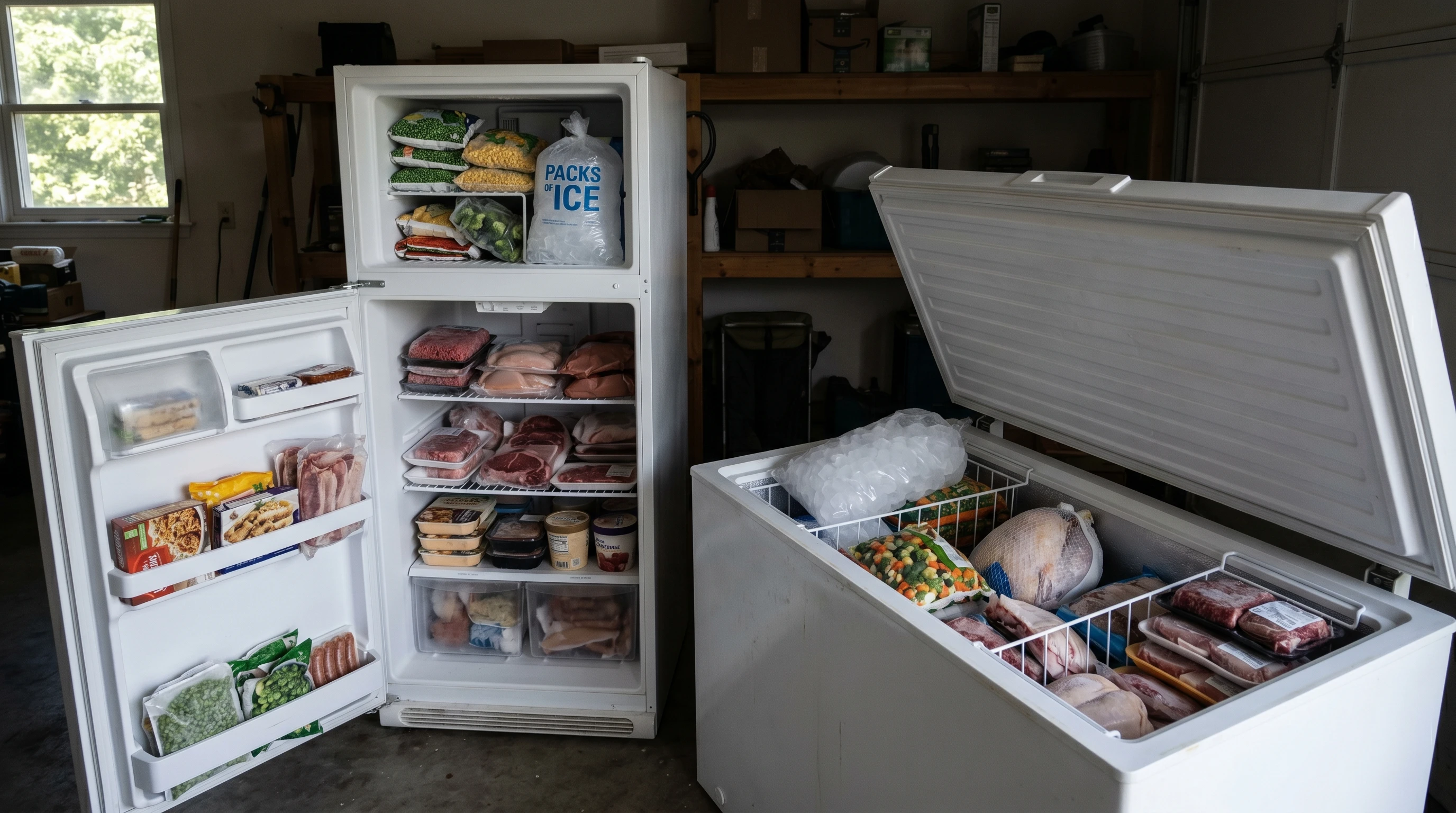
How Long Will a Freezer Stay Cold Without Power?
Quick answer:
A full freezer stays cold for about 24 to 48 hours without power, while a half-full freezer typically lasts 12 to 24 hours. Keeping the door closed is the most important factor.
What Affects How Long a Freezer Stays Cold?
Several things determine how long your freezer will actually stay cold during an outage. Through the years, I’ve learned which factors really matter:
- Freezer Type (Chest vs Upright): Chest freezers capture cold air better since the lid opens from the top and cold air sinks, making it harder for the cold to escape. Upright freezers lose more cold each time you open the door.
- How Full Is It: The fuller the freezer, the more the frozen food acts like a single ice block, keeping things cold longer. Large empty spots warm up much faster.
- Room Temperature: If your freezer is in a hot room, it’ll get warm faster than if it’s in a cool basement or garage. Even a few degrees difference in the room’s temperature can affect how long your food stays frozen.
- Door Openings: Every time you open the freezer, you let out precious cold air and let in warmer room air. Leaving it closed is the number one trick for holding onto the cold.
- Food Insulation: Bunching frozen items close together helps them keep each other cool. Big cuts of meat or blocks of food act as insulation for the smaller things around them.
In my own tests, I’ve found people with nearly empty freezers lose food much faster—even if they have a modern, energyfriendly model. So, it’s not just about having the newest gear; how you manage your freezer on a daily basis really makes a difference.
Chest Freezers vs Upright Freezers: What You Need to Know
If you want the best long-term storage, chest freezers are the winners. I’ve compared both in real blackout situations and consistently found that chest freezers hold the cold 8 to 12 hours longer than similar upright models. That’s partly because they open from the top, but also because most have thicker insulation and a tighter seal on all sides.
Upright freezers, though, are much easier for daily organization. They give you quick access and better sorting, but if you’re worried about frequent or long outages, choose a chest freezer for peace of mind. In my most recent big outage, after 16 hours, my upright freezer’s food was thawing, but the chest freezer kept everything rock solid after 24 hours.
How Long Freezers Actually Stay Cold (Real Timelines)
With modern freezers built after 2022, the cold-holding times hold up well. Most chest freezers with thick insulation and snug gaskets can stretch to 48 hours. Upright units with strong door seals can reach 24-30 hours if you avoid opening the door.
Hotter climates present bigger challenges. In a summer heatwave, I’ve seen the cold start to slip away after only 18-20 hours. Cool basements or shaded garages add several hours to your safety buffer, so always consider location.
Check your model’s manual for specifics, especially with new smart features—some freezers now have battery-powered alarms worth setting up before you need them.
Strategies to Make Your Freezer Stay Cold Longer
Extending your freezer’s chill time is all about practical habits. These strategies make a difference every outage:
- Keep the Door Closed: Only open your freezer if absolutely necessary, and plan exactly what you need before opening.
- Pre-Freeze Water Bottles: Use frozen water bottles or ice packs to fill empty spaces. I keep several two-liter bottles frozen at all times—they’re perfect for coolers, too.
- Group Items: Stack similar foods together. They’re more effective at keeping each other cold than when scattered around.
- Cover with Blankets: Lay thick blankets on top of the freezer, leaving small gaps for airflow. This boosts insulation and can provide another 2 to 4 extra hours of safe cold in my experience.
- Use a Thermometer: Put a fridge/freezer thermometer inside—digital types with a memory feature let you double-check if temperatures ever get too high during an outage.
If you have warning before a blackout, relocate your freezer to the coolest spot available. Basements, shaded corners, and even insulating under the freezer can help block heat from the floor.
When Is Freezer Food Unsafe to Eat?
Food is safe while it’s below 4°C (40°F). If items are softening but still have ice crystals, they’re generally fine to cook or refreeze. If anything is fully thawed and above refrigerator temperature for more than two hours, don’t risk it—toss it out. I always give packages a once-over for odd smells, color changes, or swelling before keeping them. To stay ahead, label and rotate freezer items often, so you know what’s oldest and most at risk if an outage comes.
Is a Solar Generator Worth It for Freezers in 2026?
If you want certainty—especially in places with many outages—a solar generator can be a smart investment to prevent wasted food. Even moderately powered solar units can run a chest freezer through part of the day or help cycle it on and off to keep food frozen longer.
If you’re not sure what size you need, check my full solar generator sizing guide here.
I recommend checking your freezer’s wattage and looking for a solar generator that offers enough stored energy for at least 6-8 hours of running time. Always match up your battery’s watt-hours with your freezers needs; you can use an energy meter for accuracy. Many companies now have online tools, but even just running an energy meter for a couple days will give you the real numbers.
👉 Want to keep your freezer running instead of just hoping it stays cold?
Check which solar generators can actually power a freezer during outages here.
Real-World Example: My Freezer During a Blackout
Last summer, we lost power for 22 hours. My full chest freezer stayed closed the whole time, packed with water bottles. By the time the power came back, everything but a couple items on the very top was still solid. My upright freezer, which was only half full, started thawing after about 15 hours—some veggies on the door shelf had turned mushy. That experience drove home just how much longer a packed chest freezer keeps things safe. The thermometer I use let me see the peak temperature during the outage, so I didn’t have to second-guess myself.
Mistakes That Lead to Freezer Food Spoiling
Here are common mistakes I’ve seen, and learned to avoid:
- Opening the door “just to check” if food is cold
- Leaving lots of empty space inside
- Not having ice packs or water bottles frozen and ready
- Ignoring freezer temperatures, or not even having a thermometer
- Trying to refreeze items that are already thawed above 4°C (40°F)
Steering clear of these issues can mean the difference between saving your food or losing it all—and your hard-earned grocery budget.
Extra Freezer Backup Solutions for 2026
Besides solar generators, a few more next-level cold-storage methods are worth a look:
- Battery Backup Hubs: Lots of home battery systems originally designed for solar now work directly with freezers. Even a compact wall battery can handle a freezer for several hours.
- Inverter Generators: These models run quietly and use less fuel, perfect for short freezer runs to keep your food cold without running the generator non-stop.
- Two-Freezer Rotation: Using one freezer for deep storage (don’t open during outages) and another for daily use can protect your bulk supplies when a long outage hits.
- Smart Freezer Monitors: If you have a modern freezer, check out WiFi-connected temperature alarms. They can send phone alerts if things warm up too much—even when you’re not at home.
Mixing these approaches can boost your overall cold time, help you save more food, and build real resilience as unpredictable power becomes more common.
You can also see real models in my guide to the best solar generators for freezers.
Frequently Asked Questions
How can I tell if freezer food is still safe?
Check for ice crystals in the center of each item and use a thermometer—below 4°C (40°F) is safest. If in doubt, especially with meat or seafood, don’t chance it.
Can I refreeze food that has partially thawed?
If it’s below 4°C (40°F) and still contains ice, yes. The texture might change, but food safety remains. Discard fully thawed items above that temperature.
Will adding ice or snow help during an outage?
Absolutely—packing frozen space with ice, snow, or even frozen bottles slows warming and adds valuable hours.
Is it worth buying a backup generator for my freezer?
If you often face outages or store a lot of food, backup power is great peace of mind. Solar or battery-based units are quieter and less hassle than gas, and they’re easy to set up if fuel is scarce.
Final Thoughts
Freezers are an overlooked lifeline when the power’s out. With a little forethought—like keeping it full, shut, monitored, and having a backup—you can keep your food safe for up to 48 hours. Modern solar generators and battery backups are well worth comparing if outages are becoming more frequent in your area. Your food supply is worth protecting, and a few simple habits truly make all the difference.
Impact-Site-Verification: ae9c956c-5e9f-4d7b-9631-c78a937dc0b0
👉 Want full peace of mind during outages?