
Some of the links on this page are affiliate links, which means I may earn a small commission if you make a purchase through them, at no extra cost to you. This helps support the site and allows me to continue creating helpful content.
Keeping my refrigerator running during a power outage is always high on my priority list. Without backup, food can spoil surprisingly quickly, and nobody wants to deal with the cost or hassle of throwing away groceries after even a short blackout. This is where a good solar generator becomes really important. With the right size and features, I can keep my fridge powered up easily and avoid the stress of spoiled food.
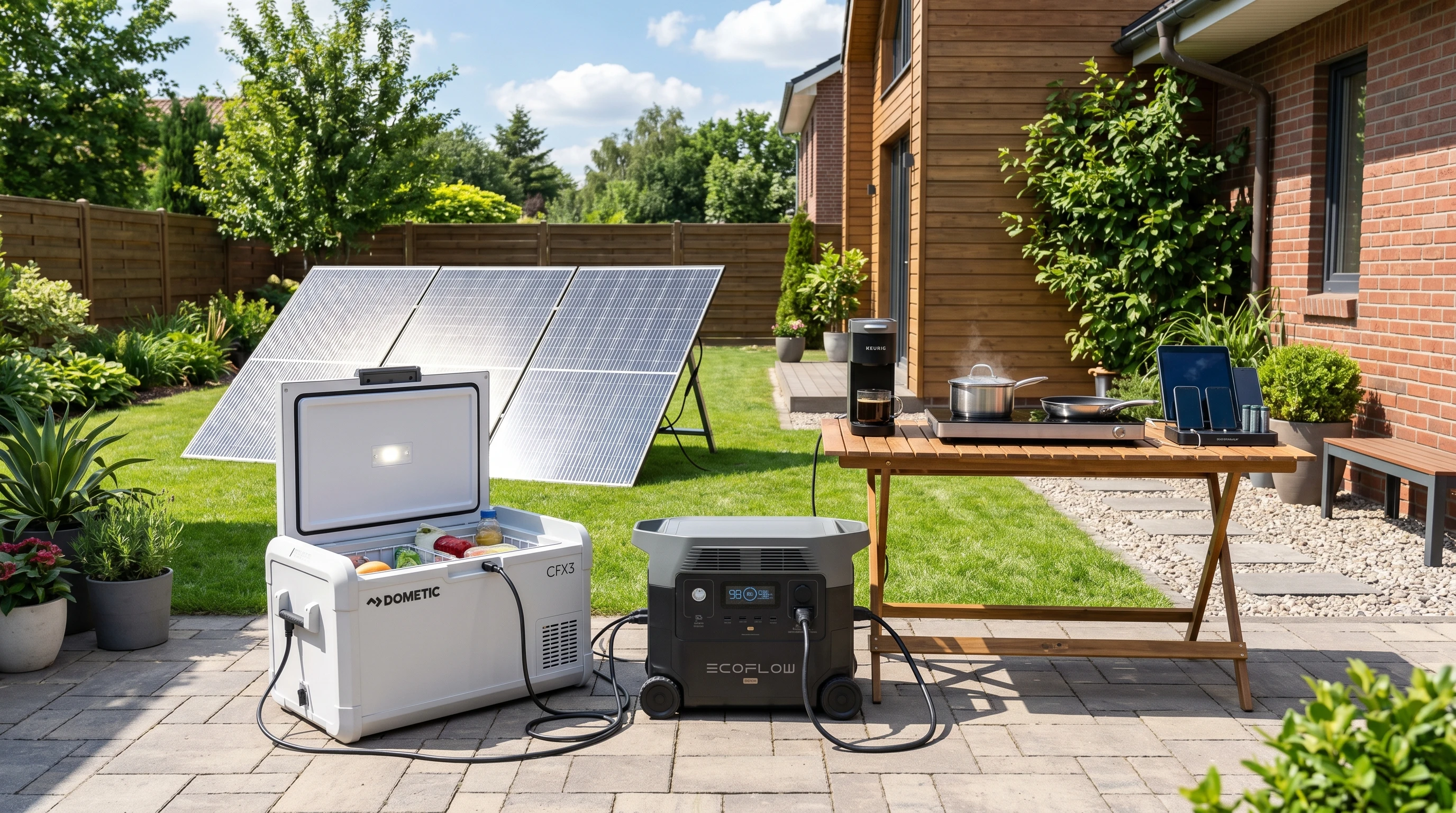
Can a Solar Generator Really Run a Refrigerator?
Yes, a solar generator can handle a refrigerator, but only if it has enough battery capacity and the right output. I’ve learned from personal experience that this is a spot where it’s easy to make mistakes. Most household refrigerators use between 80 and 150 watts to run, but they need a much higher wattage for short bursts when the compressor kicks on. This surge power requirement, which often reaches 800 to 1200 watts, is what trips up a lot of buyers.
Some mini fridges or energy-efficient models use less power, but typical top freezer or side-by-side fridges still fall into the range above. If the solar generator can’t handle that initial surge, the fridge just won’t start. So, having the right output rating really matters.
How to Choose the Right Solar Generator for a Fridge
Choosing a solar generator for my refrigerator means paying close attention to a few key features. Here are the main specs I always check before deciding:
- Battery Capacity (Wh): For occasional or short outages, a 1000–1500 Wh model can work for around half a day depending on the fridge. For more peace of mind during longer outages or if I want to run other appliances, 2000 Wh or higher makes more sense.
- Output Power (W): The continuous output should be at least 1000W, but ideally 1500W or more. That leaves extra room for additional devices or a heavy startup load.
- Surge Power: The inverter inside the generator must handle the startup surge, ideally 2000W or higher for a regular household fridge.
- Recharging Options: Wall, solar panel, and even car charging all matter for convenience. I prefer models that can recharge quickly from solar panels during daylight and also have a way to top up overnight if there’s access to power.
If you’re unsure about sizing, check my full Solar Generator Sizing Guide here.
Quick Checklist: Solar Generator Features for Refrigerators
- Capacity: 1000–1500Wh for basic or shortterm use, 2000Wh+ for multiday outages or larger fridges.
- Continuous Output: Aim for 1500W or more.
- Surge/Peak Output: 2000W or more is a safe target.
- Fast Charging: Dual input (AC and solar) keeps things topped up easily.
👉 Want to skip the guesswork?
Here are the best solar generators that can reliably run a refrigerator in 2026:
→EcoFlow Delta 2 – Premium off-grid solution
Top Solar Generators for Refrigerators (2026 List)
I’ve tested, researched, and helped others choose the right setup for real-world outages. Here are my top picks that I think will work best for most people trying to keep their refrigerators powered in 2026:
EcoFlow Delta 2
This is my top choice for most households. The EcoFlow Delta 2 balances price, portability, and performance. I like how it offers fast AC and solar recharge, a strong continuous output, and a peak enough to handle any fridge startup surge. EcoFlow’s app is easy to use, and I can monitor and control the unit remotely from any phone.
Highlights:
- 1024Wh base battery (expandable)
- 1800W continuous / 2700W surge output
- Charges up to 80% in about an hour via wall outlet
- Solar input up to 500W
👉 Check latest price on EcoFlow Delta 2
Bluetti AC200MAX
The Bluetti AC200MAX is what I’d pick for longer blackouts. It has a big built-in battery, is expandable with extra battery units, and the solar input is really high, making it perfect if I’m planning to go off-grid for days or want lots of backup.
Highlights:
- 2048Wh base battery (expandable up to 8192Wh)
- 2200W continuous / 4800W surge output
- Solar input up to 900W
- Multiple AC and DC outputs
👉 See Bluetti AC200MAX current deals
ALLPOWERS S1500
If cost is on your mind, the ALLPOWERS S1500 offers a solid feature set at a friendlier price. It has enough juice to get through smaller outages and can run most standard refrigerators for the day or overnight if I’m careful with loads.
Highlights:
- 1092Wh capacity
- 1500W continuous / 3000W surge output
- Solar input up to 500W
👉 View ALLPOWERS S1500 pricing here (US store)
Jackery Explorer 1000 Plus
The Jackery Explorer 1000 Plus keeps things simple. It’s light, reliable, and easy to carry, which is great for anyone who just wants a backup for short emergencies or camping. While not as powerful as some higher-end models, it can easily run an energy-efficient fridge and a few small items.
Highlights:
- 1264Wh (expandable with up to 3 extra battery packs)
- 2000W continuous / 4000W surge output (with expansion battery)
- Solar input up to 800W
👉 Check Jackery Explorer 1000 Plus here
How Long Will a Solar Generator Run a Refrigerator? (Real Examples)
The real-world answer depends on the fridge, its age, my climate, and how much the door is opened. But after running different fridge setups, here’s what I’ve found as a rough guideline:
- 1000Wh generator: Runs a typical fridge for about 6–10 hours.
- 2000Wh generator: 12–24 hours, sometimes more with careful use.
- Solar panels added: If there’s sunlight and enough solar wattage (400W or higher), these timeframes extend indefinitely, as long as night usage doesn’t drain the battery faster than daytime recharging can replace it.
Factors that impact runtime:
- Energy efficiency of the fridge
- Room temperature (hotter means more frequent compressor use)
- How often the door is opened and closed
- How many other devices are plugged in
Common Pitfalls to Watch Out For
Buying a solar generator for a refrigerator is not as easy as picking the highest capacity or cheapest model. Based on my own mistakes and what I’ve seen with friends and customers, here are a few things to avoid:
- Getting a system too small (battery or output) for the job
- Ignoring the surge power rating, which stops the fridge from even starting
- Underestimating how long outages might last
- Not including solar panels for multiday usage
- Putting heavy loads on a single unit; try to limit what else is powered during a blackout
Careful research helps buyers make informed decisions and leads to a much better experience when the lights go out.
👉 Avoid these mistakes: 7 Common Solar Generator Mistakes
How I Used a Solar Generator to Keep My Fridge Powered
During a weeklong July blackout, I managed to keep my French door fridge, my Wi-Fi router, and a laptop running using a 1500Wh generator. I paid special attention to keeping the fridge closed as much as possible and only ran it for a few hours at a time overnight to balance the battery use. During daylight, I connected my solar panel array (400W), which recharged the generator enough to keep everything running for up to three days. When the power came back, nothing spoiled. Having solar input really made the difference for longer-term use and took away the worry of draining the battery entirely.
Who Needs a Solar Generator Setup for a Fridge?
- Homes where food security during outages is really important
- Renters who want mobile and nonpermanent backup solutions
- Cabins, RVs, or off-grid locations where regular outages are expected
- Anyone looking for a plug and play, quiet, and fumefree backup option versus gas generators
If your area experiences frequent storms, winter outages, or you just want peace of mind, a good solar generator makes a lot of sense.
Frequently Asked Questions About Solar Generators for Refrigerators
What size solar generator should I get for my refrigerator?
For basic backup, I find 1000–1500Wh keeps things running for half a day or so. For multiday security or to power more than just the fridge, 2000Wh or higher is the safer bet. Checking your fridge’s label for wattage is the best way to make a choice.
Can I run my fridge around the clock on solar power?
I can, but only with enough battery reserve and enough solar to keep things charged during the day. High-efficiency fridges and big solar input really help for 24/7 use.
Will a small solar generator handle my fridge?
Not always. Some mini or compact fridges can run on small units, but most standard home refrigerators need the large surge power and higher battery capacity.
Is upgrading to a bigger solar generator worth the investment?
For longer or frequent outages, spending extra on a bigger system adds a lot of peace of mind. I prefer going bigger, especially if I want to add freezers, lights, or other appliances later.
Advanced Advice for Solar Fridge Setups
After setting up several generators for friends and family, and dealing with multi day back-to-back blackouts, I’ve picked up a few tricks to make these systems work even better:
- Monitor battery use using the app or onboard screen to avoid draining below 20% (this helps cell health).
- Only run the fridge when necessary. During a short outage, batching usage to nighttime can stretch battery life.
- Pair high-efficiency fridges with solar generators, since the less they draw, the longer things last.
- Add extra batteries to systems like Bluetti or Jackery if the base unit feels too limiting.
- Make sure your solar panel setup gets real direct sun for maximum recharge each day.
These tips save battery and keep food safe even during long emergencies.
The Basics: What a Good Solar Generator Setup Should Include
A reliable solar generator bundle for running a fridge should have three parts: the generator power station, a matching set of solar panels, and good extension cables for flexible panel placement. Battery size and recharge speed mean nothing if a setup can’t recharge by the time the battery drains.
Real-life example: My neighbor uses a 2000Wh generator paired with 600W solar panels, and he never worries about food spoilage during Pacific Northwest storms. He’s powered his fridge, modem, and a few lights for almost a week straight.
- Kitchen Safety: Keeping the fridge on makes sure perishable food and medicine are secure.
- Remote Properties: Vacation homes offgrid often rely on solar generators as their only backup.
- Emergency Prep: A good battery backup is a simple, clean, and quiet prep strategy for emergency kits.
Key Takeaway
Making sure I have the right size generator, plenty of battery reserve, and a practical plan for solar recharging lets me keep my fridge running safely through any blackout. Thoughtful research and matching the generator size to my real needs are both super important for reliable results.