
Some of the links on this page are affiliate links, which means I may earn a small commission if you make a purchase through them, at no extra cost to you. This helps support the site and allows me to continue creating helpful content.
If you use a CPAP machine at night, you already know how stressful a power outage can feel. I started researching portable power stations a few years ago, after waking up during a storm and realizing how much I rely on my CPAP to sleep well and stay healthy. Portable power stations quickly became my go-to for backup power, not just because they’re easy to use, but because they work safely indoors and don’t create noise or fumes. This guide covers what matters most when picking the best portable power stations for CPAP machines, whether you’re at home, camping, or preparing for emergencies in 2026. If you’ve ever wondered how to pick the right backup system for your CPAP and what features to care about, keep reading for all the essential tips based from real-world experience use and research.
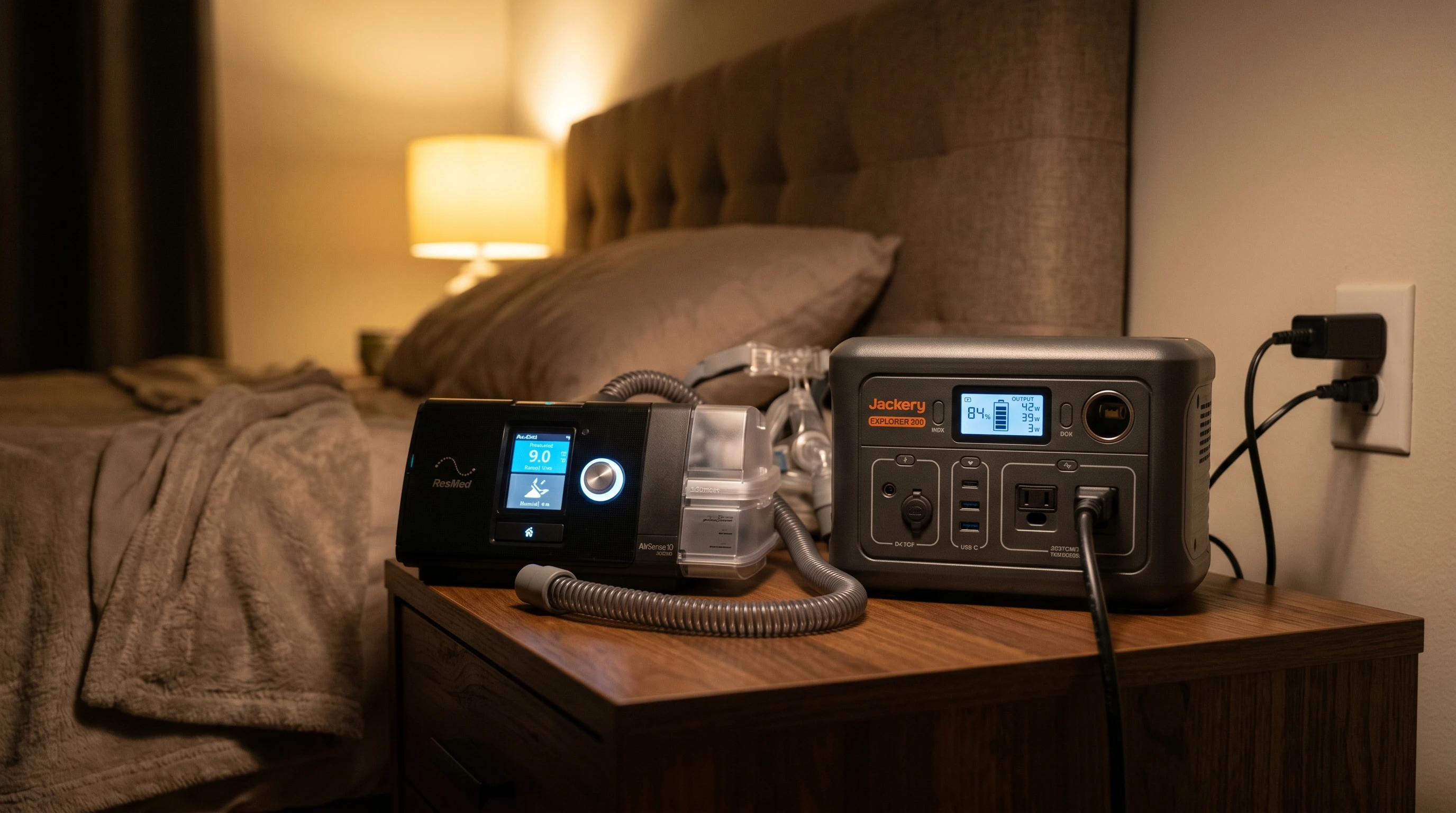
Why Portable Power Stations Are Practical For CPAP Use
CPAP machines provide real health benefits, but they rely fully on uninterrupted electricity. Many people look at gas generators for emergency power but quickly realize they’re noisy, require ventilation, and aren’t safe or practical to use inside your bedroom or apartment. Portable power stations, sometimes called solar generators, run quietly and safely wherever you need them. Here’s why I find them helpful for CPAP backup power:
- Safe for use indoors, with no fumes or risk of carbon monoxide
- Quiet enough for a bedroom; you can actually sleep
- No gasoline storage or handling required
- Simple plug-and-play setup; just plug your CPAP right into the AC outlet
- Useful during storm outages, travel, camping, or RV trips
- Easy to store in a closet or under a bed
Portable power stations are also useful for camping, RV trips, and travel. They let you run your CPAP safely without having to worry about outdoor setup or creating noise that could wake others up.
Best Portable Power Stations For Apartment Emergencies
How Much Power Does A CPAP Machine Use?
Understanding how much electricity your CPAP machine uses is a big first step. Power draw can vary a lot depending on the exact make and model, and especially if you use the humidifier or heated tubing features. Running the humidifier or heated tube will use more power and shorten battery runtime.
| CPAP Setup | Approximate Power Use |
|---|---|
| CPAP only, no humidifier | 30–60W |
| CPAP with humidifier | 60–100W+ |
| CPAP with heated tubing | Higher battery drain |
I usually recommend running your CPAP without the humidifier during power outages if you want the longest runtime from a portable power station. Some people need the humidifier for comfort, but turning it off can double (or more) your backup time. If you find yourself congested, you might need to alternate or briefly use the humidifier—just know it will affect total runtime.
What Battery Capacity Do You Really Need?
Choosing the right power station means matching your backup needs to battery capacity, measured in watt-hours (Wh). Here’s a quick guide to what I suggest for different situations:
| Usage Type | Recommended Capacity |
|---|---|
| One night backup (CPAP only, no humidifier) | 300–500Wh |
| 1–2 nights backup (may include low humidifier use) | 500–1000Wh |
| Long power outages or continuous use | 1000Wh or more |
| Camping or RV use, need solar recharging | Solar compatible model |
I find a 500–1000Wh range works best for most people, as it covers more than one night and lets you power extra devices like phones, tablets, or a lamp.
Key Factors To Check Before Choosing a Power Station For CPAP
A portable power station needs to do more than just provide enough watts. These are the features I always look for when I’m shopping for CPAP backup power:
- Battery Chemistry: LiFePO4 (lithium iron phosphate) batteries tend to last much longer than older lithiumion types. They’re safer for long-term use and tolerate more charge cycles. I always put LiFePO4 at the top of my list, even if it costs a bit more upfront.
- Quiet Cooling Fans: Some portable power stations use fans for cooling, but not all fans are created equal. I check product reviews to make sure fan noise won’t interrupt my sleep.
- Pure Sine Wave Output: Almost every CPAP machine calls for “pure sine wave” AC power input. This ensures you don’t risk damage or strange operation. I double check this spec before plugging in any medical device.
- Recharge Speed: Fast recharging can be really important during storms or frequent outages. Some modern models recharge in a few hours, while older ones take overnight. For peace of mind, a faster charge is worth it if you can find one in your price range.
- Easy CPAP Compatibility: Most CPAPs use a standard AC plug, but a few use DC input cables. I always check for the right outlet (AC or DC), and some brands even sell CPAP specific DC cables for even better efficiency.
- Display & Battery Percentage: A clear, accurate display helps me estimate how much time is left overnight. Guessing is never fun when I’m trying to sleep.
Double check these key features on the spec sheet and see if you can spot real feedback from other CPAP users. Real-world experience always helps highlight the most reliable options.
Portable Power Station vs Gasoline Generator for CPAP
I get a lot of questions about whether to buy a portable power station or a small gas generator. Here’s a side by side comparison that sums up my thoughts:
| Feature | Portable Power Station | Gas Generator |
|---|---|---|
| Indoor safe | Yes | No |
| Noise level | Quiet, usually under 50dB | Loud, 65dB and up |
| Fumes | None | Carbon monoxide risk, needs outdoor use only |
| Maintenance | Minimal (charge and store) | Regular (oil changes, gas stabilizer) |
| Setup | Plug and play indoors | Requires outdoor setup, cords into house |
For CPAP users especially, the quiet indoor safety of a portable power station just makes daily living a lot simpler. Gas generators can work for whole-house needs, but using them for CPAP overnight isn’t practical—especially if you live in an apartment or need to sleep through a storm.
Common Mistakes When Buying a Power Station For CPAP Use
- Choosing a battery that’s too small; always estimate your power needs with some margin
- Forgetting how much extra power the humidifier or heated tube uses
- Not checking recharge speed; slow models can leave you unprepared between outages
- Picking unknown or ultra budget brands; reliable customer support really matters with medical needs
- Letting the battery stay fully drained during storage—this can shorten the battery’s life. I always recharge after each use, even if there wasn’t a full drain
- Ignoring warranty and return policies; some cheaper models have little or no warranty coverage
Avoid these mistakes by measuring your CPAP’s actual power needs, checking specs before purchase, and reading real user reviews. Medical device backups are too important to risk on the unknown.
Best Features For A Balanced Portable CPAP Power Station
For almost everyone relying on a CPAP, I recommend focusing on these features for your first setup:
- Battery size between 500 and 1000Wh
- LiFePO4 (lithium iron phosphate) battery for longest usable life
- Quiet fan system rated below 50 decibels
- Pure sine wave AC output
- Fast charging capability (ideally under 3–4 hours via wall charger)
- Easy to read display for battery percentage or remaining time
- Optional: USBC ports for charging phones at the same time, solar input for outdoor or extended use, integrated flashlight or lamp
I also keep a short list of recommended power stations from big brand names, such as EcoFlow, Jackery, and Bluetti. These have earned a reputation over the last few years for reliability and user-friendly displays. Many now offer LiFePO4 batteries and support for solar recharging. You can check out the latest tech and real-world reviews directly from their websites or trusted retail partners like EcoFlow or Jackery.
Related Resources
- Battery Storage for Emergency Power (U.S. Department of Energy)
- How to Use a Battery Backup for Your CPAP (Sleep Foundation)
- Portable Power Station vs Solar Generator
- How Long Portable Power Stations Hold Charge
- Best solar generators for home backup
Tips For Getting The Most Out Of Your Power Station During Outages
After using different power stations for my own CPAP, I’ve picked up a few practical tips to stretch their runtime and reliability:
- Turn off the CPAP humidifier and heated tube feature during outages for much longer runtime
- Precharge your station fully before storms or predicted outages
- Recharge your power station after every use, even if only partial
- Avoid running extra devices unless really needed; phones and tablets use little, but bigger appliances can drain the station quickly
- Test your CPAP and station setup once you first get it. Run a trial overnight to see how much battery you use with your real settings
- Keep the station off cold floors or damp areas. Store safely in a dry area nearby for quick access
How To Calculate Runtime For Your CPAP Machine
Every CPAP and power station will have slightly different performance, but you can estimate runtime with a little math. Here’s a quick way I calculate expected runtime for my own peace of mind:
- Look up your CPAP’s average watt use. For most, it’s about 40W without humidifier, 80W with.
- Check the usable capacity of your power station in Wh (watt-hours). Not all battery capacity is usable; some stations keep a small reserve.
- Divide the battery’s watt-hour capacity by the average watt use. For example, a 500Wh station running a 40W CPAP: 500 / 40 = 12.5 hours.
- Subtract a little (usually 10–15%) for inverter loss or running other devices.
- If you want insurance on a long night or use your humidifier, move up to a higher capacity.
Actual life may vary, so I always test my setup before relying on it for an emergency. This small test will help you get a feel for what to expect.
Frequently Asked Questions
Can a portable power station run a CPAP machine all night?
Yes, many high-quality portable power stations can run a CPAP machine overnight or longer. The actual runtime depends on your machine’s power draw and whether you use a humidifier. Turning off the humidifier can double or triple the time you get from a single charge.
What size power station is best for backing up a CPAP?
Most users should target a 500Wh or larger capacity for reliable overnight backup, especially if you want to include the humidifier at lower settings. If you need backup for several nights without recharging, pick 1000Wh or more.
Are portable power stations safe to use indoors and in bedrooms?
Yes, they are designed to be operated indoors and make no fumes. Always check your power station’s manual for specific safety tips, but these units are much safer than gas generators for indoor, overnight use.
Is a LiFePO4 battery better for my CPAP backup needs?
LiFePO4 batteries usually last much longer than older lithiumion types. They handle more recharge cycles, store better through hot and cold temperatures, and pose less risk of overheating. If affordable, I recommend picking a LiFePO4 model for most CPAP users.
Can I charge my power station with solar panels?
Yes, many modern stations include solar input ports and work with compatible portable solar panels. This is a great option for camping or if you want backup electricity during longer outages. Always check the wattage and connector compatibility between the panels and your station.
Real-World Example: My Setup For Storm Season
During storm season, I rely on a 768Wh LiFePO4 power station. I charge it fully at the start of every weather watch. If we lose power, I run my CPAP without the humidifier and shut off all unnecessary lights or chargers. That setup gets me about two nights of sleep per charge, and I’m still able to use my phone and a small lamp overnight. If the outage lasts longer, I have a small 100W solar panel ready to top off the battery during the day. This kind of routine makes me feel a lot more secure, especially during longer storm outages when grid restoration isn’t guaranteed. I also keep a written note on how to set up my power station in the dark, just in case I’m groggy or hurried late at night.
Key Takeaways
- Portable power stations are safe, quiet, and super practical for CPAP backup power during outages
- Battery capacity matters most; expect to use at least 500Wh for reliable overnight backup
- Always check for pure sine wave output, quiet operation, and fast recharge features
- LiFePO4 batteries are worth the investment for longevity and safety
- Testing your setup in advance helps you prepare for any scenario
I hope this guide helps you sleep better knowing you have a safe solution for keeping your CPAP running through storms and outages. Portable power stations have made my nights less stressful, and they’ve made storm outages much easier to handle.