
Some of the links on this page are affiliate links, which means I may earn a small commission if you make a purchase through them, at no extra cost to you. This helps support the site and allows me to continue creating helpful content.
Storm-related power outages can interrupt lighting, communication, refrigeration and other essential household needs with little warning. A portable power station can provide temporary battery backup for selected devices without the combustion exhaust produced by gasoline, propane or diesel generators.
The right capacity depends on which devices you need to power, their energy consumption and how long the outage may last. Smaller systems may be sufficient for phones, lights, routers and laptops, while refrigeration and multiple devices generally require more stored energy and higher inverter output.
This guide explains how to size a portable power station for storm preparedness, which features matter during an outage, what you may realistically be able to power and which common buying mistakes to avoid.
Quick Answer
There is no single battery size that works for every storm outage. A 500–1,000Wh portable power station may provide useful backup for selected low-power essentials, while refrigeration, multiple devices or longer outages can require substantially more capacity. Start by estimating your essential loads and expected runtime, then compare those requirements with usable battery capacity, continuous inverter output, surge capability and available recharge options.
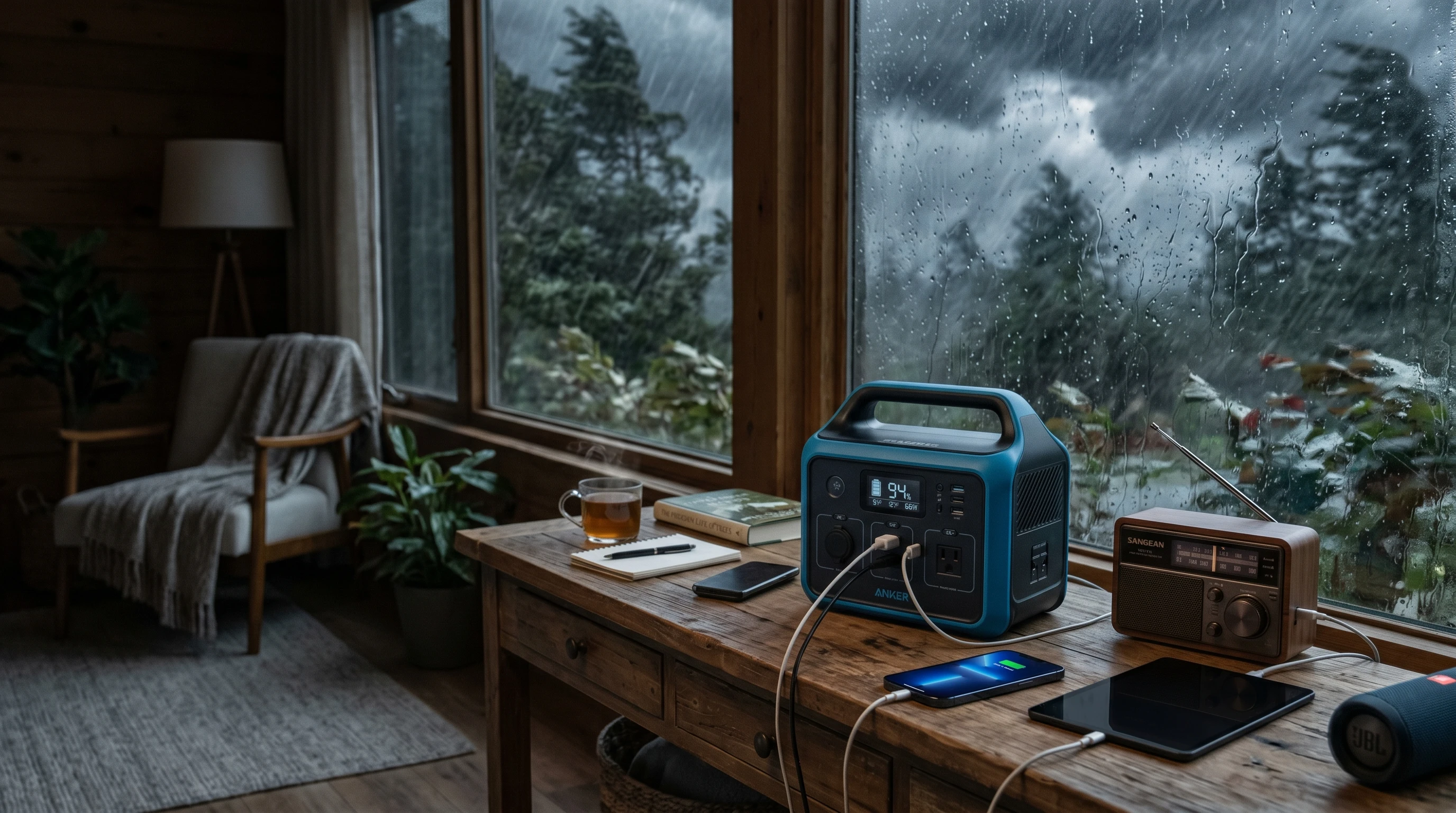
Why Portable Power Stations Work Well for Storm Preparedness
Portable power stations can be useful during storm-related outages because they store electricity in batteries rather than generating power through fuel combustion.
- No combustion exhaust: Battery operation does not produce carbon monoxide or other combustion exhaust at the point of use. The unit should still be operated and stored according to the manufacturer’s instructions, including requirements for ventilation, temperature, moisture and clearance.
- No fuel storage: There is no need to store gasoline, propane or diesel for normal battery operation.
- Relatively quiet operation: Cooling fans may operate under load or while charging, but portable power stations are generally much quieter than fuel generators.
- Simple operation: Most systems provide direct AC, USB or DC outputs, although users should still understand the unit’s capacity, output limits and manufacturer instructions before an emergency.
- Useful for electronics: Suitable models can provide temporary backup for devices such as phones, routers, laptops and lighting when their power requirements remain within the system’s limits.
These characteristics can make portable power stations practical for apartments and homes where selected essential devices need temporary backup during an outage. Many models can also be used for camping, RV travel or other portable-power applications outside storm season.
What Can You Actually Power With A Portable Station During Outages?
What a portable power station can support depends on usable battery capacity, inverter output and the energy requirements of connected devices.
Lower-power backup priorities commonly include:
- Phones and tablets
- LED lighting
- Router and modem
- Laptops
- Radios and other small electronics
- Selected fans and other low-power devices
Refrigerators and other appliances with compressors require more careful planning because startup power can be considerably higher than normal running power. High-power appliances such as electric heaters, kettles and microwaves can also consume stored battery energy very quickly.
Before relying on a portable power station during an outage, compare each device’s power requirements with the station’s continuous output, surge capability and usable battery capacity. Manufacturer specifications or measured energy consumption provide a better basis for planning than generic runtime estimates.
Want to estimate your own storm-backup requirements? The Home Power Outage Planner & Runtime Toolkit can help you list essential devices and compare your available battery capacity with estimated 24, 48 and 72-hour outage needs.
How to Estimate the Battery Capacity You Need
Start with the devices you consider essential during an outage. For each device, estimate its energy consumption and how many hours per day you expect to use it.
A simple planning calculation is:
Daily Energy Need (Wh) = Device Power (W) × Hours of Use
Add the estimated energy requirements of your essential devices, then allow for conversion losses, standby consumption and some reserve capacity. Battery capacity alone is not enough: the power station’s continuous output and surge capability must also support the connected equipment.
For multi-day outages, consider how the battery could be recharged if grid power remains unavailable. Compatible solar panels may extend available backup time, but solar production depends on panel size, sunlight, weather, shading, temperature and the power station’s input limits.
What to Look for When Buying a Portable Power Station for Storms
- Battery capacity
- LiFePO4 battery chemistry
- AC output wattage
- Recharge speed
- Solar input
- Number of ports
- Weight and portability
- Warranty and brand reputation
A clear display can also be useful during an outage. Battery percentage, input and output power, and estimated remaining runtime can help users manage limited stored energy more effectively.
Before buying, compare portable power stations by battery capacity, output wattage, LiFePO4 battery type, recharge speed and solar compatibility. A slightly larger model may provide more flexibility during storm season than the smallest budget option, provided the added capacity matches your expected loads and portability needs.
Check Portable Power Station Options
How Portable Power Stations Compare With Gas Generators
| Feature | Portable Power Station | Gas Generator |
|---|---|---|
| Indoor safe | Yes (as long as the unit is kept dry, ventilated and used according to the manufacturer’s instructions.) | No |
| Noise | Very quiet | Loud |
| Produces exhaust fumes | No | Yes (dangerous indoors) |
| Ongoing maintenance | Minimal | Regular maintenance needed |
| Solar compatibility | Yes (optional) | No |
| Startup ease | One button, plug and play | May require manual choke or priming |
Portable power stations and fuel generators serve different backup needs. Battery systems are generally quieter and do not produce combustion exhaust at the point of use, but their runtime is limited by stored energy and available recharge options. Fuel generators can provide substantial continuous power while suitable fuel remains available, but they produce carbon monoxide and other exhaust and must be operated outdoors according to manufacturer safety instructions.
Common Mistakes To Avoid With Portable Power Stations
- Choosing too little capacity: Select battery capacity from expected energy requirements rather than price or physical size alone.
- Ignoring inverter output: Battery capacity determines stored energy, while continuous and surge output determine which devices the station can operate.
- Overlooking recharge capability: Compare AC charging speed, compatible solar input and other supported charging methods before an emergency.
- Ignoring storage requirements: Follow the manufacturer’s recommendations for long-term storage, state of charge, periodic checks and operating temperature.
- Assuming the unit is weatherproof: Many portable power stations require protection from rain, standing water and excessive moisture. Check the manufacturer’s ingress-protection rating and operating instructions rather than assuming outdoor use is safe.
- Buying on specifications alone: Warranty coverage, manufacturer support, safety certifications and independent owner feedback can also help when comparing systems.
Building a Balanced Storm Backup Setup
A practical storm-backup setup starts with essential loads rather than a predetermined battery size. Identify the devices that matter most, estimate their energy requirements and choose a power station with sufficient usable capacity, continuous output and surge capability.
Useful features may include LiFePO₄ battery chemistry, compatible solar charging, multiple output types, clear battery monitoring and sufficiently fast AC charging for your needs.
For longer outages, additional compatible battery capacity or solar charging may provide greater flexibility. Any expansion should remain within the manufacturer’s compatibility, voltage, current and input specifications.
Extra Practical Tips For Storm Power Preparedness
- Store the power station according to the manufacturer’s recommended state of charge and storage instructions, and check it periodically.
- Label power cords for different devices so you’re ready to plug in during an outage.
- Keep a flashlight handy—some power stations have built-in lights, but it is still useful to keep a separate flashlight nearby.
- If buying solar panels, make sure cords and connectors fit your power station’s input ports.
- Write down key emergency contacts and charging steps in a notebook in case your phone dies or WiFi goes out.
Another tip: Keep any manufacturer-approved cables and accessories accessible, and make sure household members know where the power station is stored and how to operate it safely.
Who Can Benefit From a Portable Power Station?
- Apartment residents: Battery-based backup can provide temporary power for selected essentials where operating a fuel generator may be impractical or prohibited.
- Remote workers and students: Routers, laptops and communication devices are relatively low-power loads that may be useful to prioritize during shorter outages.
- Rural households: Vehicle charging and compatible solar charging may provide additional options when grid restoration takes longer.
- Campers and RV users: Portable power stations can also serve off-grid and recreational uses outside emergency situations.
- Households preparing for storms: Anyone who wants temporary battery backup for selected essential electronics can benefit from planning loads before an outage occurs.
Related Emergency Power Guides
- How To Recharge A Portable Power Station During A Blackout
- Portable Power Station vs Solar Generator: Which Is Better for Home Backup?
- Best Portable Power Stations for Apartment Emergencies
- How Long Do Portable Power Stations Hold a Charge?
- Portable Power Station Weather Guide
- Best Portable Power Stations for CPAP Machines
- Best solar generators for home backup
Plan Your Storm Backup Before the Power Goes Out
Storm preparedness becomes much easier when you know which devices you want to keep running and how much energy they may require.
The Ecowised Home Power Outage Planner & Runtime Toolkit includes a printable planning guide and Excel runtime calculator to help you list essential devices, estimate energy needs, and compare available battery capacity with 24, 48 and 72-hour outage scenarios.
Get the Home Power Outage Planner & Runtime Toolkit — £8.99
Frequently Asked Questions
What size portable power station do I need for storm emergencies?
The right capacity depends on the devices you need to power, their energy consumption and the expected outage duration. Start by estimating the watt-hours required by your essential devices, then compare that total with the power station’s usable battery capacity. Also check continuous inverter output and surge capability for appliances with motors or compressors.
Can a portable power station run a refrigerator during an outage?
A suitably sized portable power station may be able to run a refrigerator, but compatibility and runtime vary considerably. Check the refrigerator’s energy consumption, running power and startup surge against the power station’s usable battery capacity, continuous output and surge rating. Daily energy consumption is generally more useful for estimating backup needs than running wattage alone.
Are portable power stations safe to use indoors?
Battery-based portable power stations do not burn gasoline, propane or diesel during normal operation and therefore do not produce combustion exhaust like fuel generators. They should still be used and stored according to manufacturer instructions, including requirements for ventilation, temperature, moisture, clearance and charging.
Is solar charging useful during a long storm outage?
Compatible solar panels can help replenish a portable power station when grid electricity is unavailable. Actual energy production depends on panel size, sunlight, cloud cover, shading, temperature, orientation and the power station’s solar input limits. Solar charging can extend available backup time but should not be assumed to provide continuous or unlimited power.
How should I store a portable power station for emergencies?
Follow the manufacturer’s instructions for storage temperature, recommended state of charge and periodic maintenance. Keep the unit dry and accessible, inspect it periodically, and make sure compatible charging cables and accessories are available before storm season.
Is a portable power station better than a gas generator for storms?
Neither is automatically better for every household. Portable power stations are relatively quiet and do not produce combustion exhaust at the point of use, but their runtime is limited by stored battery energy and recharge options. Fuel generators can provide substantial continuous power while fuel is available, but they produce carbon monoxide and other exhaust and must be operated outdoors according to manufacturer safety instructions.
Final Thoughts
A portable power station can provide useful temporary backup during storm-related outages, but choosing the right system starts with understanding your essential loads rather than selecting an arbitrary battery size.
Estimate the energy required by the devices you want to keep running, then compare those needs with usable battery capacity, continuous inverter output, surge capability and available recharge options.
Preparing cables, charging equipment and an outage plan in advance can make the system easier to use when grid power is actually unavailable.
How I approached this guide:
This guide focuses on practical storm preparedness rather than ranking specific products. The recommendations are based on common household backup needs, typical device power use, battery capacity ranges, indoor safety considerations and features that matter during real outages.