
Some of the links on this page are affiliate links, which means I may earn a small commission if you make a purchase through them, at no extra cost to you. This helps support the site and allows me to continue creating helpful content.
During a blackout, keeping a refrigerator cold is one of the biggest concerns for many households. A portable power station can help protect food during short and medium outages without the noise, fumes or indoor safety risks of a gas generator. As a rough guide, many portable power stations with 1000Wh or more can run a refrigerator for several hours, but actual runtime depends on the refrigerator’s wattage, starting surge, battery capacity, inverter efficiency, room temperature and how often the door is opened.
This guide explains how long a portable power station may run a refrigerator, what size battery you need, and how to stretch backup power during storms or blackouts.
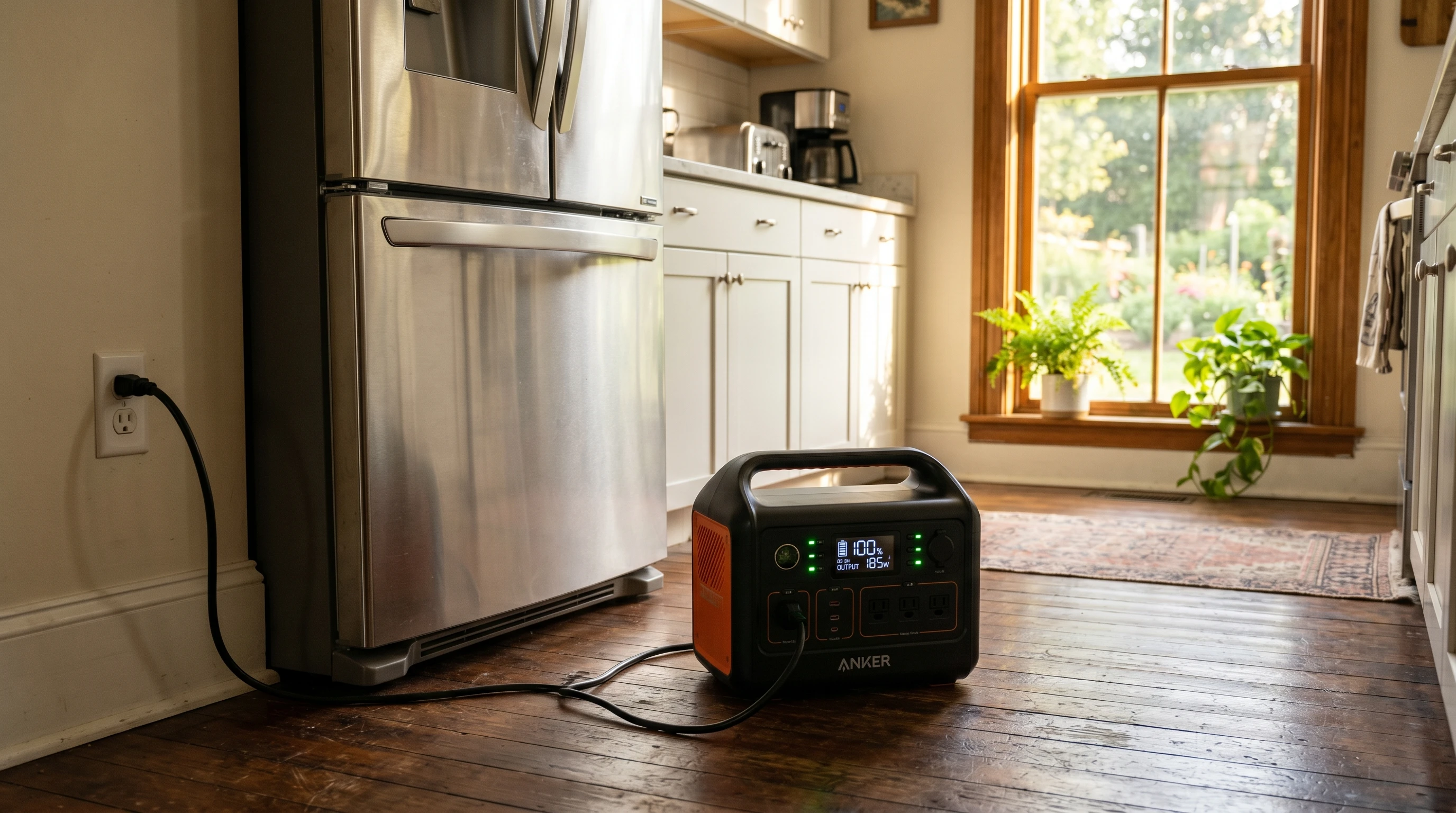
Quick Answer: Can a Portable Power Station Run a Refrigerator?
Yes, many medium and large portable power stations can run a refrigerator during a blackout, but not every model is suitable. For a regular household refrigerator, both battery capacity and output wattage matter. A small 300Wh unit is usually not a good choice for a full-size refrigerator. A 500Wh unit may handle a mini fridge or very short emergency use, while a 1000Wh or larger power station is a more realistic starting point for many standard refrigerators. Always check your refrigerator’s running wattage and startup surge before relying on a portable power station for fridge backup.
Watts vs Watt-Hours Explained Simply
Understanding the difference between watts and watt-hours helps you choose the right portable power station. Watts (W) measure the power your fridge draws at any moment, or the rate at which it uses electricity. Watt-hours (Wh) represent the total amount of energy stored in the power station. For example, if your refrigerator used 120 watts continuously and you had a 1000Wh power station, the simple math would suggest about 8 hours of runtime. In real life, refrigerators cycle on and off rather than running constantly. They may also need higher startup surge power for a few seconds when the compressor starts, and some energy is lost through inverter inefficiency. This is why real runtime is usually lower than the simple calculation suggests.
Estimated Refrigerator Runtime by Power Station Size
To help figure out how different power station sizes might keep a refrigerator running, here’s a quick table. These are ballpark estimates. Actual runtime changes based on the refrigerator’s wattage, how efficient the inverter is, and other real-life factors.
| Power Station Size | Typical Refrigerator Runtime |
|---|---|
| 300Wh |
Usually not ideal for regular refrigerators; may work briefly with a mini fridge |
| 500Wh |
Mini fridge or short emergency use |
| 1000Wh |
Better starting point for many small or medium refrigerators |
| 1500–2000Wh |
More practical for longer outages and regular fridge backup |
| 2000Wh+ with solar |
Better option for extended outages if solar charging conditions are good |
Actual runtime depends on refrigerator wattage, compressor cycling, startup surge, inverter efficiency, battery condition, room temperature and how often the door is opened.
Mini Fridge vs Full-Size Refrigerator
Running a mini fridge during a blackout is more realistic with a small or medium portable power station. Mini fridges often use less power than full-size refrigerators, so a 500Wh unit may help keep food cold for several hours in short emergency situations. A standard full-size fridge is more demanding. It may use more running power and often requires a higher startup surge that not all small power stations can handle. For regular family refrigerators, a 1000Wh or larger battery gives you a better buffer during a longer outage.
What Size Portable Power Station Do You Need for a Refrigerator?
Choosing the right portable power station size depends on what kind of fridge you need to plug in, how long you want to run it, and what other devices might need power during a blackout. For a mini fridge, a 500Wh to 1000Wh model usually works for short-term use, like getting through the night or a day without regular electricity. If you want to keep a standard household fridge running for at least half a day, a 1000Wh or larger unit is a much more comfortable starting point. For longer outages, or if you want to run other things like lights or a router, look for 1500Wh to 2000Wh or more, or add solar panels for extra charging flexibility. The more you plan to rely on the unit during an outage, the more generous you should be with battery capacity.
Before buying, compare portable power stations by battery capacity, AC output wattage, surge rating, battery chemistry and solar input. A slightly larger model is often more useful during outages than the smallest budget option.
Compare Portable Power Station Options on Amazon
How to Extend Refrigerator Runtime During a Blackout
Battery life is precious when you are running a fridge from a portable power station. Here are practical tips that can help food stay cold while putting less strain on your backup power system:
- Keep the fridge and freezer doors closed as much as possible. Every time You open the door, cold air rushes out and the compressor has to work harder, using more battery.
- Pre-chill food and drinks before a storm. If you know an outage is coming, make sure everything is already cold or frozen.
- Add frozen water bottles or ice packs to the fridge and freezer. These help hold a safe temperature longer when the power is off or if you need to cycle the fridge occasionally.
- Avoid running extra devices like TVs or large fans on the same power station.
- Consider running the fridge in cycles during very long outages. It’s not ideal, but letting the fridge rest for a few hours and turning it back on can stretch battery life, as long as the temperature stays safe.
- Recharge the power station as soon as possible, either when grid power returns or with solar panels if the blackout lasts multiple days.
Whenever possible, you can also plan ahead by freezing leftovers and perishables you won’t need immediately, so they act like thermal batteries, helping maintain a safe temperature longer without continuous power. Packing the fridge and freezer efficiently helps, too—fuller fridges lose less cold air when the door opens. These little habits can make a big difference in how long the portable power station can support your fridge during an outage.
Can Solar Panels Help?
You can recharge your portable power station with solar panels, which is a helpful way to stay powered up during an extended blackout. Solar charging lets you stretch the total time your refrigerator can run off-grid, especially when the power is out for more than a day. The usefulness of solar depends a lot on how many panels you have, their wattage, how much sun you can get where you live, and if you keep the panels clear and angled well. Charging speed also matters; most portable stations charge slower by solar than from a wall outlet, so you might only restore a few hundred watt-hours per sunny day unless you have a larger solar setup. Before relying on solar charging, check the power station’s solar input limit, compatible panel voltage range, connector type and realistic charging speed.
Portable Power Station vs Gas Generator for Refrigerator Backup
Choosing between a portable power station and a gas generator for your fridge backup depends on your living situation and preferences. Portable power stations are quiet, can be used safely indoors, and don’t produce fumes, so they’re great for apartments, condos, or anywhere you don’t want gasoline smells or loud noise. But they have limited runtime compared to gas generators, especially for big appliances. Gas generators provide plenty of backup power for long periods and can run your fridge and more as long as you have fuel, but must always stay outdoors because of carbon monoxide risk and noise. Each has tradeoffs, so You can pick what fits your needs and environment best. Having a backup charging option—like solar panels for the power station, or extra fuel safely stored for the generator—can help you stay prepared for longer emergencies.
Gas generators should never be used indoors, in garages, near open windows or in enclosed spaces because of carbon monoxide risk.
Common Mistakes to Avoid
- Buying a power station that is too small. This is probably the most common mistake people make.
- Ignoring startup surge. Even if the battery is big, the inverter must handle the refrigerator’s startup surge.
- Assuming runtime estimates are guaranteed. Always account for cycling, inefficiency, and real-world usage.
- Running too many devices at once. This cuts runtime fast and might even overload the power station.
- Not testing the setup before storm season. Practicing helps spot problems before You are in a real blackout.
- Exposing the power station to moisture. Always use indoors or in a protected location.
Related Emergency Power Guides
- Best Portable Power Stations for Storm Preparedness
- Portable Power Station vs Solar Generator
- Best Portable Power Stations for Apartment Emergencies
- How Long Do Portable Power Stations Hold a Charge
- Best Portable Power Stations for CPAP Machines
- Best solar generators for home backup
Frequently Asked Questions
Can a portable power station run a full-size refrigerator?
Yes, many portable power stations can run a full-size refrigerator, especially models with 1000Wh or more and enough AC output wattage. Before relying on one, check your refrigerator’s running wattage and startup surge, then compare those numbers with the power station’s output rating.
What size power station do I need for a refrigerator?
For a mini fridge, a 500–1000Wh portable power station may be enough for short outages. For a regular household refrigerator, a 1000Wh or larger unit is a more realistic starting point. For longer blackouts, 1500–2000Wh or solar charging can provide more flexibility.
How long will a 1000Wh power station run a fridge?
A 1000Wh power station may run an efficient refrigerator for several hours, but the exact runtime depends on refrigerator wattage, compressor cycling, inverter efficiency, room temperature and how often the door is opened. It is best to treat runtime estimates as planning guides, not guarantees.
Can I run a refrigerator and WiFi router at the same time?
In many cases, yes. WiFi routers usually use much less power than refrigerators, often under 20W. The main thing is to make sure the combined load stays below the power station’s output rating and that you still have enough battery capacity for the outage.
Is it safe to use a portable power station indoors?
Yes, portable power stations are generally safe to use indoors because they do not produce exhaust fumes or carbon monoxide. They should still be kept dry, placed on a stable surface, and used according to the manufacturer’s safety instructions.
Wrapping Up
Portable power stations can be a helpful way to keep a refrigerator running when the lights go out, especially during short or medium blackouts. Choosing a unit that fits your fridge’s power needs, and having a plan for backup charging, can make a real difference in protecting food and reducing stress. A 1000Wh or larger power station is a realistic starting point for many refrigerators, but the best results come from matching your setup to your specific appliance. Keeping the fridge well-stocked, reducing how often you open the door, and testing your power station before storm season can all help you prepare before the next outage happens.