
Some of the links on this page are affiliate links, which means I may earn a small commission if you make a purchase through them, at no extra cost to you. This helps support the site and allows me to continue creating helpful content.
Battery type is one of the most important things to check before buying a portable power station. Two common options are LiFePO4 and lithium-ion, often NMC, and they are not the same. For most home backup, storm preparedness and frequent-use situations, LiFePO4 is usually the better long-term choice because it tends to offer longer cycle life, better thermal stability and slower capacity loss over time. Lithium-ion/NMC power stations can still make sense when lighter weight, smaller size or lower upfront cost matter more.
This guide explains the difference between LiFePO4 and lithium-ion portable power stations, what each battery type is best for, and how to choose the right option for home backup, camping or emergency power.
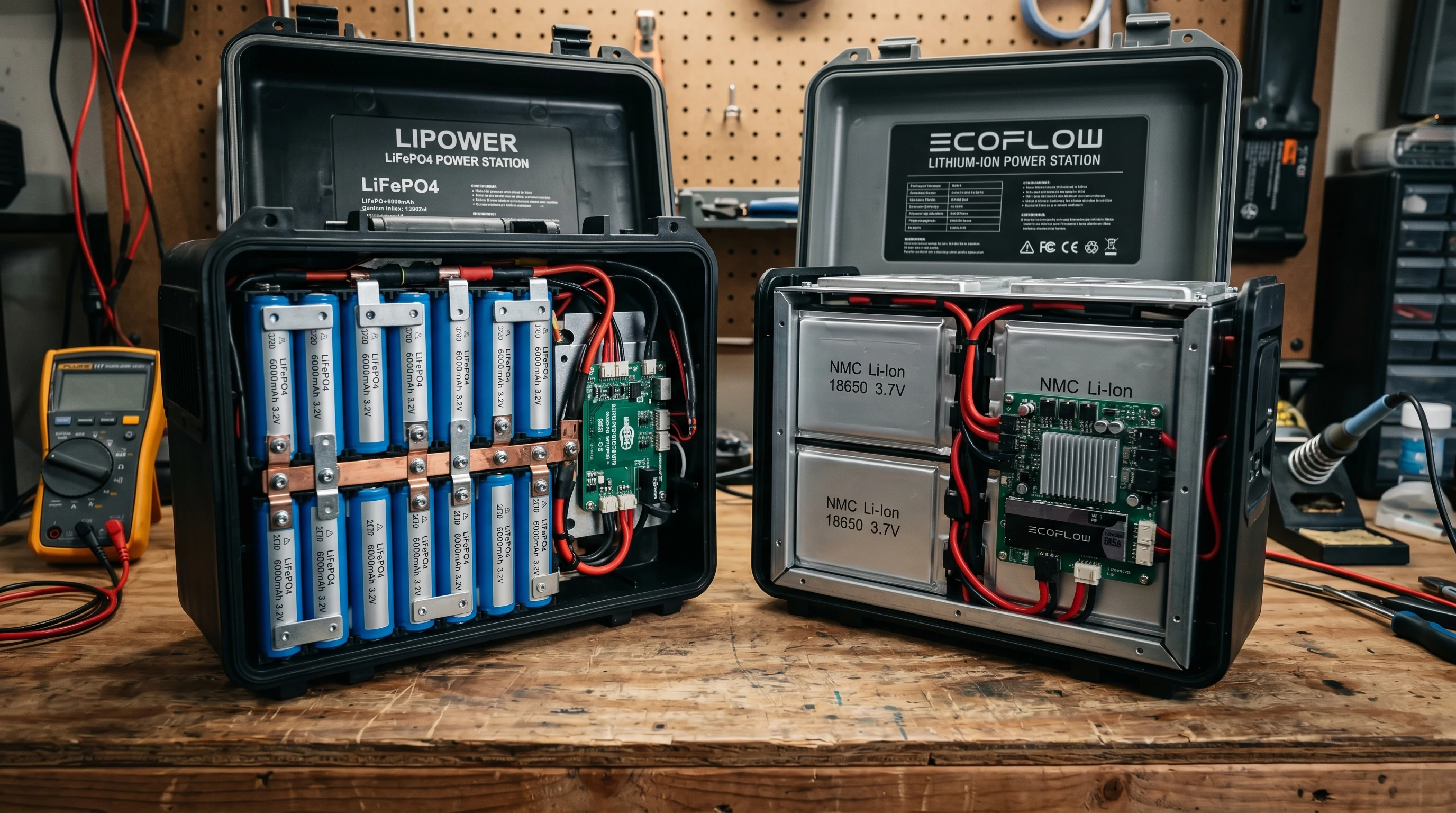
Quick Answer: Is LiFePO4 Better Than Lithium-Ion?
For most portable power stations used for home backup, frequent charging, storm preparedness or emergency power, LiFePO4 is usually the better battery type. It typically offers a longer cycle life, better long-term durability and stronger thermal stability than many older lithium-ion/NMC batteries.
Lithium-ion/NMC portable power stations can still be useful when weight and compact size matter more. They are often lighter, which can make them more practical for camping, travel or occasional portable use.
In simple terms: choose LiFePO4 for long-term backup and frequent use, and consider lithium-ion/NMC when portability and lower weight are the main priorities.
What Is a LiFePO4 Battery?
LiFePO4 stands for lithium iron phosphate. It is a type of lithium battery chemistry commonly used in newer portable power stations, especially models designed for home backup, frequent use and longer service life.
The biggest advantage of LiFePO4 is cycle life. Many LiFePO4 portable power stations are advertised with thousands of charge cycles before the battery drops to a lower percentage of its original capacity. This makes them attractive for people who expect to use and recharge their power station regularly.
LiFePO4 batteries are also known for strong thermal stability compared with many NMC-style lithium-ion batteries. That does not mean they are risk-free, but it does make them a popular choice for backup power systems where durability and long-term reliability matter.
What Is a Lithium-Ion Battery?
Many portable power stations, especially older or lighter models, use lithium-ion batteries based on NMC chemistry. NMC stands for nickel manganese cobalt oxide. These batteries usually have higher energy density, which means they can store more energy in a lighter and more compact package.
This can make them easier to handle and transport, especially for camping, road trips or situations where weight matters.
Despite their lighter weight, lithium-ion/NMC batteries tend to wear out after fewer cycles compared to LiFePO4. They can still be a good choice for travel, camping and occasional use where weight matters more than maximum cycle life. Brands may choose lithium-ion/NMC for products where compact size and lower weight matter more than long-term durability.
Lithium-ion technology continues to evolve, especially in terms of energy density. This means manufacturers can often store more energy in a smaller and lighter package, which is one reason NMC-style batteries are common in phones, tablets, electric vehicles and some portable power stations. Although they generally lose capacity quicker than LiFePO4, the lightweight construction is invaluable in many portable situations.
LiFePO4 vs Lithium-Ion: Key Differences
| Feature | LiFePO4 | Lithium-Ion/NMC |
|---|---|---|
| Cycle life | Usually longer | Usually shorter |
| Weight | Usually heavier | Usually lighter |
| Stability | Strong thermal stability | Good when well designed |
| Best for | Home backup, frequent use | Camping, travel, lightweight use |
| Upfront cost | Often higher | Often lower |
| Long-term value | Better for frequent use | Better for occasional use |
This comparison table shows the main areas where you might notice a difference when choosing a portable power station battery type. For example, if you’re concerned about carrying weight on a hike, lithium-ion/NMC’s lighter build might be the deciding factor, but if you’re setting up for storm preparedness at home, the tougher LiFePO4 could be what you want.
Which Battery Type Lasts Longer?
If you want a portable power station that will last for years, battery cycle life is one of the most important things to check. The cycle life measures how many times you can charge and discharge the battery before it starts to lose a lot of its original capacity. LiFePO4 batteries typically provide 2,000 to 4,000 full cycles, and sometimes even more, before dropping below 80% of their initial capacity.
Lithium-ion/NMC batteries are usually rated closer to 500 to 1,000 cycles. For home backup users, that means a LiFePO4 power station can survive being used and recharged every day for years, while an NMC model might start showing wear after a year or two of daily use. If you need a portable power station for regular home backup or to run important appliances, that extra life from LiFePO4 is super important. In the long run, this can make LiFePO4 units the more cost-effective choice for serious preparedness, since you won’t need to buy a replacement as soon.
Which Battery Type Is Safer?
Safety matters with any portable power station, no matter which battery chemistry it uses. Both LiFePO4 and lithium-ion/NMC units can be safe when they are well designed and include proper battery management systems, protection circuits and quality control.
LiFePO4 is generally known for stronger thermal stability than many NMC-style lithium-ion batteries. That can make it a good choice for home backup and frequent use, but it does not mean any battery is completely risk-free. Build quality, certifications, storage conditions and proper use all matter.
For any battery type, follow the manufacturer’s instructions, keep the unit away from moisture and direct heat, avoid damaged batteries, and do not open or modify the battery case. Choosing reputable brands with clear warranty support and third-party safety testing can also reduce risk.
Which One Is Better for Home Backup?
Home backup is where LiFePO4 portable power stations often prove their value. For home backup, LiFePO4 is usually the stronger choice because it is better suited to frequent charging, longer lifespan and long-term emergency readiness. The chemistry’s resistance to capacity loss over time means it will still work well after years of use and charging, which is really important if you want reliable backup power on hand for emergencies.
Lithium-ion/NMC portable power stations can do the job for an occasional outage, but you should mainly use one for backup if you only expect light or rare use. For anyone who depends on regular home backup, LiFePO4 is usually the stronger choice. To be prepared for multiple days without grid power, make sure your backup unit can be recharged easily by solar panels or wall outlets, taking advantage of LiFePO4’s ability to withstand lots of cycles.
Which One Is Better for Camping or Travel?
For hiking, car camping, road trips or short-distance carrying, a lithium-ion/NMC portable power station can sometimes be more practical. These units are often lighter and more compact than similar LiFePO4 models, which can make them easier to pack, lift and move around.
Even though lithium-ion/NMC batteries usually do not last as many charge cycles, the lower weight and smaller size can matter for occasional portable use. For short-term outdoor trips, convenience and portability may be more important than maximum long-term battery lifespan.
Recharge speed and inverter output are also worth checking. Some lightweight units recharge quickly and work well for phones, cameras, laptops, lights and small camping gear, but they may not be the best choice for frequent home backup.
What Should You Choose Before Buying?
Here is a simple way to think about the choice between LiFePO4 and lithium-ion/NMC portable power stations:
Choose a LiFePO4 portable power station if you want longer lifespan, consistent home backup, frequent use or a unit you can rely on for emergencies. It may cost more and weigh more, but the longer cycle life and better durability can make it a stronger long-term value.
Choose a lithium-ion/NMC portable power station if you care more about lightweight design, compact size, lower upfront cost or occasional portable use. These units can still be useful for camping, road trips and travel where ultra-long battery life is less important.
A practical approach is to compare battery chemistry, watt-hour capacity, cycle-life rating, AC output, solar input, warranty and brand reputation before buying. You should also check whether the station supports pass-through charging if that matters for your home backup setup.
Compare Portable Power Stations on Amazon
Common Mistakes to Avoid
- Ignoring battery chemistry: Not all portable power station battery types perform the same.Always check whether the unit uses LiFePO4 or lithium-ion/NMC chemistry.
- Only comparing watt-hours:Battery capacity matters, but cycle life and battery chemistry are just as important as the watt-hour number on the box.
- Buying the cheapest unit without checking cycle life: Lower price might mean a battery that wears out much faster.
- Assuming all lithium batteries are the same: LiFePO4 and NMC batteries have different strengths, so they should not be treated as identical.
- Forgetting weight and portability: Heavy LiFePO4 units might be tough to move, while lighter NMC designs suit travel or camping better.
- Ignoring warranty and brand reputation: Look for brands with clear warranties and good reviews because battery replacement or service can save a lot of trouble.
- Overlooking charging options: Some units offer solar, car, and wall charging. Choosing a model with flexible charging can make a difference for your specific needs.
- Not planning for real power needs: It’s easy to overestimate how much power you’ll need. Make a list of the devices you plan to use and figure out their watt requirements to select the right size.
Related Portable Power Guides
- Recharge A Portable Power Station During A Blackout
- Best Portable Power Stations for Storm Preparedness
- How Long Can a Portable Power Station Run a Refrigerator During a Blackout?
- Portable Power Station vs Solar Generator
- Best Portable Power Stations for Apartment Emergencies
- How Long Do Portable Power Stations Hold a Charge?
- Best solar generators for home backup
Frequently Asked Questions
Is LiFePO4 better than lithium-ion for portable power stations?
LiFePO4 is usually better for portable power stations used for home backup, frequent charging and long-term emergency readiness. It typically offers longer cycle life and stronger thermal stability. Lithium-ion/NMC can still be useful when lighter weight and smaller size matter more.
Do LiFePO4 power stations last longer?
Yes, LiFePO4 portable power stations usually last longer than many lithium-ion/NMC models. Many LiFePO4 units are rated for thousands of charge cycles, while many NMC-style batteries are rated for fewer cycles. Exact lifespan still depends on the model, battery management system, temperature and how the unit is used.
Are LiFePO4 batteries safer?
LiFePO4 batteries are known for strong thermal stability, which can make them a good choice for home backup and frequent use. However, safety also depends on build quality, battery management systems, certifications and proper storage. Any battery should be used according to the manufacturer’s instructions.
Why are LiFePO4 power stations heavier?
LiFePO4 power stations are often heavier because the battery chemistry has lower energy density than many NMC-style lithium-ion batteries. This means the unit may need more cell mass to store the same amount of energy. The tradeoff is usually longer cycle life and better durability.
Which battery type is best for home backup?
For home backup, LiFePO4 is usually the better choice because it is designed for longer life, frequent charging and reliable emergency use. Lithium-ion/NMC may still be suitable for lighter, occasional backup needs or portable travel use.
Wrapping Up
When choosing the best battery type for a portable power station, LiFePO4 is usually the stronger option for home backup, frequent use and long-term emergency readiness. It offers longer cycle life, strong thermal stability and better durability for people who expect to use their power station regularly.
Lithium-ion/NMC portable power stations can still make sense for camping, travel, lighter backup needs or budget-focused buyers who care more about size and weight. The best choice depends on how often you plan to use the unit, where you will store it, what devices you need to power and whether long-term battery life or portability matters more.
Before buying, compare the battery chemistry, watt-hour capacity, cycle-life rating, AC output, solar input, warranty and brand support. That gives you a much better chance of choosing a portable power station that fits your real needs instead of just picking the cheapest or lightest option.