
Some of the links on this page are affiliate links, which means I may earn a small commission if you make a purchase through them, at no extra cost to you. This helps support the site and allows me to continue creating helpful content.
Many portable power station owners want to know if they can use the unit while it is charging. This question often comes up during blackouts, camping trips, solar charging or emergency backup situations. This feature is usually called pass-through charging, but not every portable power station supports it in the same way. Some models can power devices while charging, while others limit certain outputs or recommend avoiding heavy loads during charging.
This guide explains how pass-through charging works, when it can be useful, what safety issues to watch for, and why you should always check your specific model’s manual before relying on it.
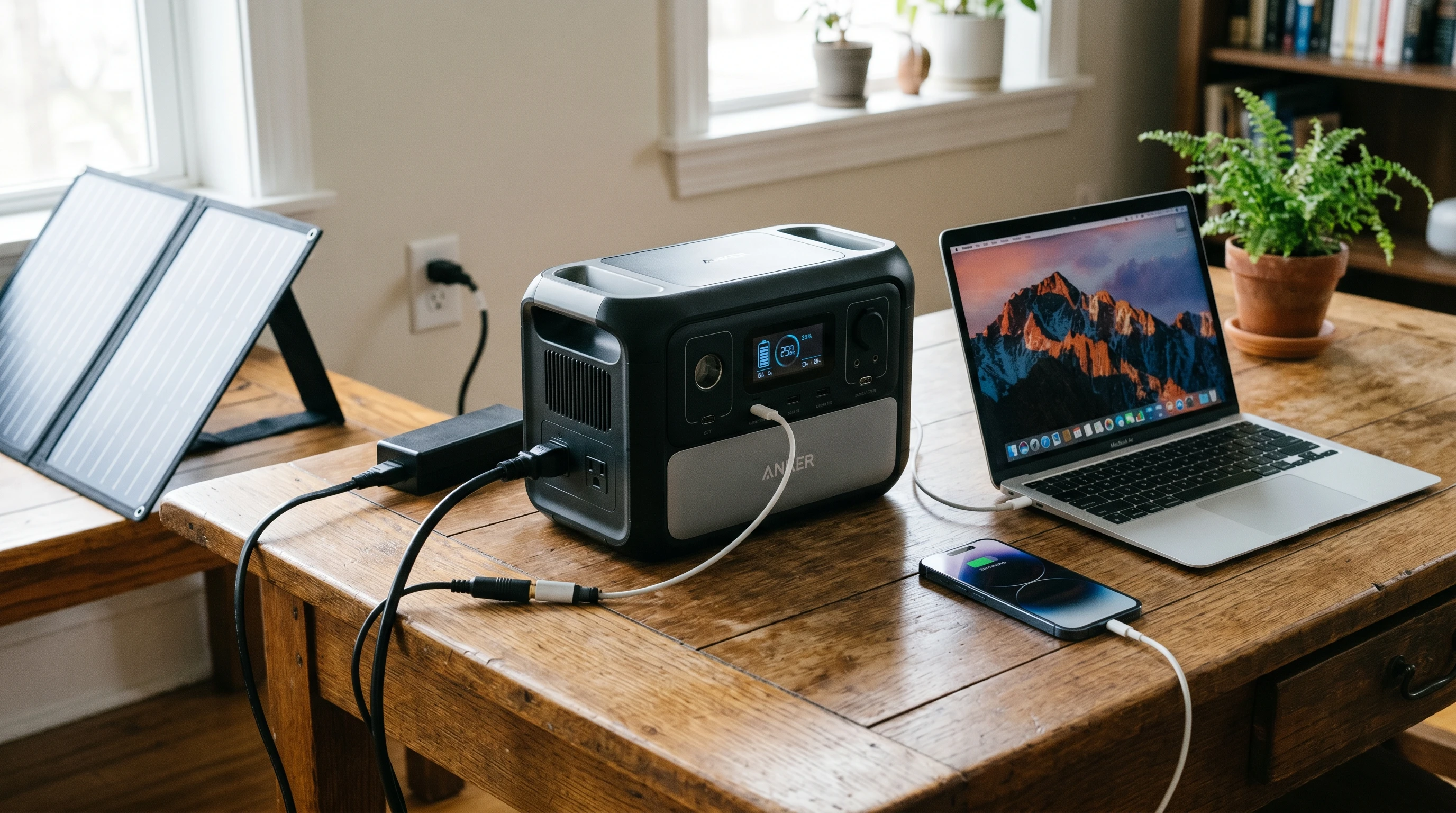
Quick Answer: Can You Use a Portable Power Station While Charging?
Some portable power stations can be used while charging, but only if the model supports pass-through charging. Always check the owner’s manual before plugging devices into the unit while it is charging.
Whether this works safely depends on the power station’s design, input source, output load, battery management system, heat control and manufacturer limits. Some models allow AC, DC and USB outputs during charging, while others may disable certain ports or reduce available power.
Pass-through charging can be useful during blackouts, camping or solar charging, but it should not be assumed to work on every unit. Avoid heavy loads, keep the power station ventilated, use undamaged cables and test the setup before relying on it in an emergency.
What Is Pass-Through Charging?
Pass-through charging means the portable power station charges its battery while also powering connected devices. In this situation, energy comes in (from your wall, car, or solar panel) at the same time that energy goes out (to your laptop, phone, or lights). Some units do this by routing the incoming power straight through the battery and out to your devices. Others have a more advanced system that splits the power between the battery and outputs, managing the flow so it stays within safe limits. The features and limits of pass-through charging vary widely, so always read about my model’s battery chemistry, inverter, and output ratings before trying it. Some models provide display screens to show input and output in real time, which helps avoid overloading your system.
Is Pass-Through Charging Safe?
Pass-through charging can be safe when the manufacturer supports it, the connected load stays within the rated limits, and the unit has enough ventilation. Extra heat is produced when both charging and discharging happen at once. That heat might shorten the battery’s lifespan or even cause the unit to shut down if it gets too hot. To stay safe, use the original charger, avoid covering the unit, and keep cables in good shape. Also make sure to keep the load within what the manual says is okay. Quality power stations have thermal shutoffs and other safety features, like alarms or indicator lights for overheating. Avoid using the unit on soft surfaces such as beds, blankets or thick carpet because they can block airflow. Some brands recommend periodic cool-down breaks during heavy pass-through charging.
When Pass-Through Charging Is Useful
|
Use Case |
Why It Helps |
|---|---|
|
Blackouts |
Keeps small essentials powered while the unit recharges |
|
Solar charging |
Allows daytime solar input while running low-power devices |
|
Camping |
Helps run lights, phones, fans or small devices while recharging |
|
Router or laptop backup |
Can keep internet or work devices running during short outages |
|
CPAP or small essentials |
May help during longer outages if the unit supports it and the setup is tested |
|
Emergency backup |
Lets you recharge and supply power at the same time when needed |
In these cases, pass-through charging basically allows your power station to work more like a small power hub, letting you keep necessary devices active even when you’re still charging up from available sources. This versatility comes in handy during unpredictable conditions, such as sudden thunderstorms, or when you need to quickly replenish power between uses.
When You Should Be Careful
- High wattage appliances: Using items like kettles, space heaters, or big power tools can quickly overload both input and output systems.
- Refrigerators with startup surges: Surge current may cause the inverter to trip, especially when charging at the same time.
- Medical devices: Medical devices need extra caution because transfer time, runtime, inverter type and heat management can all matter. Always check the device manual and test the setup before relying on it.
- Hot rooms or direct sun exposure: Heat buildup interferes with charging and can lead to early shutoff or battery stress.
- Cheap or older models: Not all budget models support safe pass-through charging, and battery design may be outdated.
- Damaged cables: Damaged cables can overheat, fail or create electrical safety risks.
- Long unattended use: Even high-quality stations should not be left running with large loads for days at a time without checking for overheating or cable problems.
It’s also best to avoid chaining power stations (running one off another) except where the manual says it’s safely supported. Using a surge protector can add another layer of safety.
Wall Charging vs Solar Charging vs Car Charging
Wall charging is usually the fastest and most stable option because it provides steady input power. Solar charging is useful off-grid, but input can change with clouds, shade and sun angle. Car charging is often slower and better for topping up smaller loads. Using a power station while charging from solar or a car charger needs extra attention to overheating, since these inputs are less stable and often much lower in wattage than a wall plug. Watching both the input and your output load prevents shutdowns or safety trips.
In real-world use, the best results come from combining wall and solar charging when available. Some models support dual input, but only use this feature if the manufacturer specifically allows it and the input limits are followed.
Does Pass-Through Charging Hurt Battery Life?
Pass-through charging makes the battery work harder, generating more heat and possibly wearing out the internal cells faster. Higher-quality power stations now use LiFePO4 batteries, which deal better with heavy cycles and higher temperatures than older lithium-ion cells. Frequent pass-through use may increase heat and cycling, which can contribute to long-term battery wear on some models. Always check if the manual says that regular pass-through use is okay. If it’s not clear, check the manufacturer’s website or support page for updated guidance. For more on this, check the LiFePO4 vs Lithium-Ion Portable Power Stations guide. For everyday use, it may be better to charge the power station first and then use it, unless pass-through charging is needed. As a rule, let the battery cool between heavy use periods, and don’t leave the station plugged in on charge 24/7.
Can You Use a Power Station Like a UPS?
Some portable power stations include UPS or EPS modes, but they are not always equivalent to dedicated computer UPS units. Transfer time varies by model, and some sensitive devices may still restart during the switch. When a power station has this feature, it can automatically switch to battery power when the grid fails. Some models advertise transfer times measured in milliseconds, but this varies by model and may not be suitable for every device. However, true UPS units designed for computers or medical devices have almost zero transfer time to prevent outages. A portable power station may not offer instant seamless switching, especially for sensitive electronics. You can use these units for routers and laptops, do not rely on UPS/EPS mode for medical devices unless the manufacturer confirms suitability and the setup has been properly tested.
Not every power station offers UPS/EPS mode, so check the specs before buying. If you’re interested in this feature, search for “UPS transfer time” in the technical specification sheet before purchase.
Safety Tips for Using a Power Station While Charging
- Check your model’s manual and online support before using pass-through charging.
- Ensure the ventilation grills are clear. Avoid placing the station on soft surfaces like bedding or carpet.
- Keep the charger and cables that came with the unit in good, undamaged condition.
- Never exceed the maximum output limit stated by the manufacturer.
- Keep away from water, especially if running appliances near tents, vehicles or outdoors.
- Don’t use outlets if they or the casing feel hot to the touch.
- Monitor the system for heat if you’ll be running gear for hours while charging.
- Test the setup before a storm or blackout to confirm everything runs smoothly under realistic loads.
- If you have pets or small kids, doublecheck that cords are tucked safely to prevent tripping or accidental unplugging.
- Unplug devices and let the unit cool if you ever notice strange smells, noises, or lights on your power station.
These precautions can reduce overheating, overload and cable-related safety risks during pass-through charging.
Related Portable Power Guides
- Recharge A Portable Power Station During A Blackout
- Portable Power Station Safety Guide
- Do You Need a Pure Sine Wave Portable Power Station?
- LiFePO4 vs Lithium-Ion Portable Power Stations
- Best Portable Power Stations for Storm Preparedness
- How Long Can a Portable Power Station Run a Refrigerator?
- Best Portable Power Stations for CPAP Machines
- Solar Generator Sizing Guide
- Portable Power Station vs Solar Generator
- Best Solar Generators for Home Backup
Frequently Asked Questions
What is pass-through charging on a portable power station?
Pass-through charging means a portable power station is charging its battery while also supplying power to connected devices. Some models support this well, while others limit output ports or do not recommend using devices while charging.
Can all portable power stations be used while charging?
No, not all portable power stations support pass-through charging. Some models disable certain outputs while charging, and others may only allow low-power USB or DC output. Always check the product manual or manufacturer guidance for your specific model.
Is it safe to use a portable power station while charging?
It can be safe if the manufacturer supports pass-through charging, the connected load stays within the rated limits, and the unit has good ventilation. Avoid damaged cables, blocked vents, wet conditions and high-wattage appliances during pass-through use.
Can pass-through charging damage the battery?
Pass-through charging does not automatically damage the battery, but frequent heavy use can create extra heat and cycling, which may affect long-term battery health on some models. Follow the manufacturer’s guidance and avoid unnecessary pass-through use if the manual warns against it.
Can a portable power station work like a UPS?
Some portable power stations offer UPS or EPS modes, but they are not always the same as a dedicated UPS. Transfer time varies by model, and sensitive devices may restart if the switch is not fast enough. Check the technical specifications before relying on this feature.
Can you use solar panels while powering devices?
Some portable power stations allow solar charging while powering devices, but this depends on the model. Make sure the unit supports solar pass-through charging, follow the solar input limits and keep the connected load within the power station’s output rating.
Compare Portable Power Stations With Pass-Through Charging
Some portable power stations can be used while charging, but only if the model is designed to support pass-through charging. Before relying on this feature, check the manual, output limits, input source, ventilation requirements and any warnings from the manufacturer. Pass-through charging can be useful during blackouts, camping trips and solar charging, especially for low-power essentials such as phones, routers, lights or laptops. For CPAP machines, refrigerators, medical devices or high-wattage appliances, extra caution is needed. The safest approach is to test the setup before an emergency, avoid overload, keep the unit cool, use undamaged cables and follow the manufacturer’s guidance for your specific power station.