
Some of the links on this page are affiliate links, which means I may earn a small commission if you make a purchase through them, at no extra cost to you. This helps support the site and allows me to continue creating helpful content.
Portable power stations can be very useful during power outages, camping trips, road travel and emergency backup situations. They are quieter than fuel generators and can power many everyday devices, but they still have limits. Safe use depends on knowing what you can plug in, how much power each device needs, whether the power station can handle startup surge, and whether the inverter type is suitable for sensitive electronics.
This guide explains what is usually safe to plug into a portable power station, what you should usually avoid, and the basic electrical safety checks to make before using one at home or outdoors.
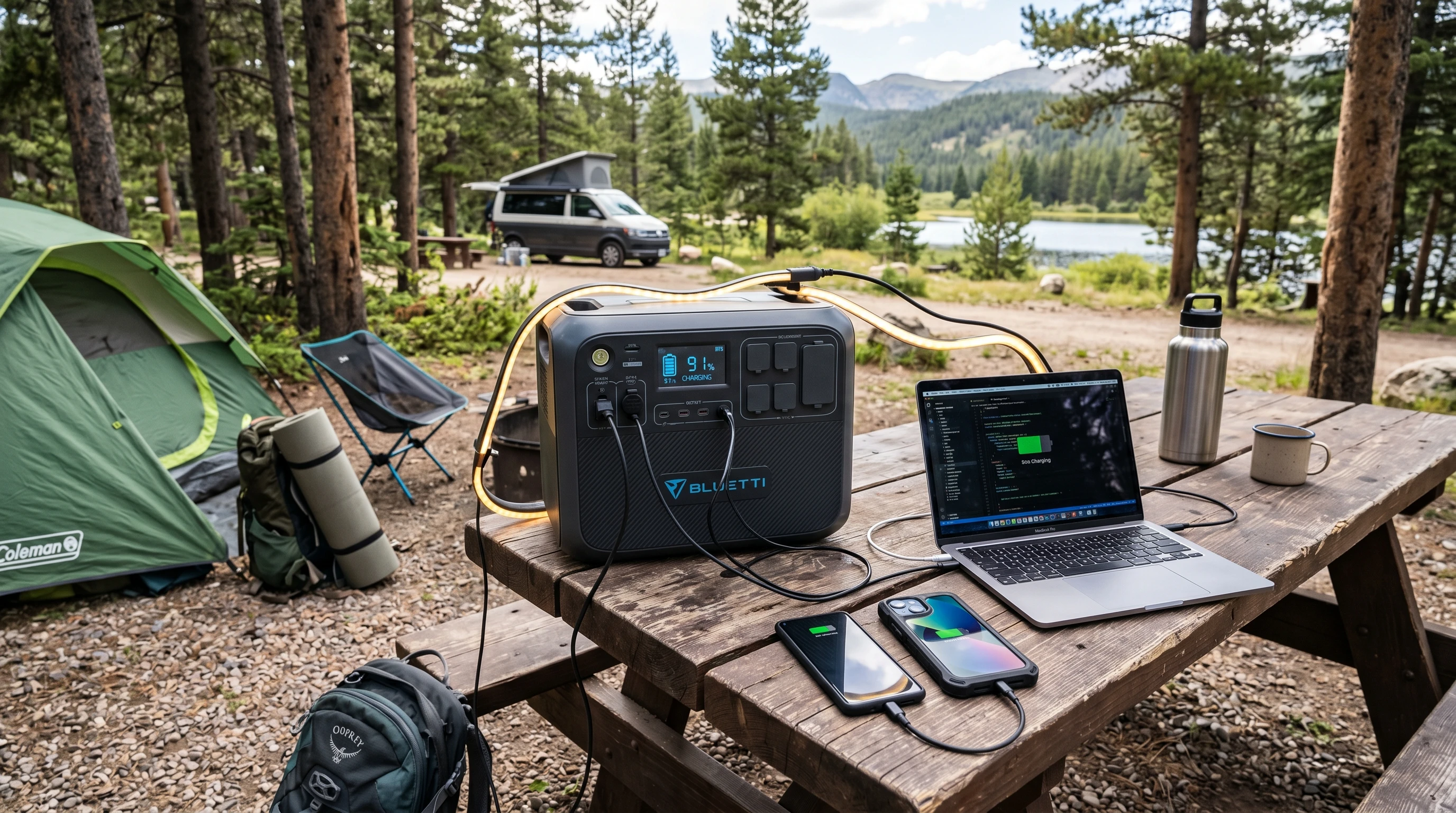
Quick Answer: What Can You Plug Into a Portable Power Station?
If you’re looking for practical advice, this table gives a quick overview of what is usually safe to plug into a portable power station and what you should check first:
| Device Type | Usually OK? | What to Check |
|---|---|---|
| Phones, Tablets, Cameras | ✔️ Yes | Check USB/AC output and charging wattage |
| Laptops, Routers, LED Lights, Small Fans | ✔️ Yes | Check total wattage and port type |
| CPAP Machines, TVs, Mini Fridges | ✔️ Sometimes | Pure sine wave may be better for sensitive devices |
| Electric Heaters, Kettles, Ovens, Hair Dryers, Microwaves, Toasters, Hot Plates | ❌ Not usually | Usually exceed the output of smaller portable units |
It’s always a smart move to double-check if your power station can handle a device by looking at wattage, surge demands, and inverter type in the manual.
Check Wattage Before Plugging Anything In
Every appliance or device uses a certain amount of power, measured in watts (W). Portable power stations list their maximum AC output as running watts, rated power or continuous output. If the total load goes above that limit, the power station may overload or shut down automatically. For example, if a portable power station is rated for 500W, the combined wattage of all connected devices should stay below that limit.
A 300W mini fridge and a 250W TV would already exceed a 500W output rating if they were running at the same time. Before plugging in several devices, check the label, manual or power adapter for each item and add up the total wattage.
Surge Wattage Matters for Motors
Anything with a motor—like refrigerators, freezers, pumps, and some power tools—draws extra power when it first turns on. This is known as “surge wattage” or “starting watts.” Most power stations list both a continuous output (running watts) and a surge or peak output for short-lasting startup loads.
For example, even if a mini fridge draws just 80W while running, it might need a brief 300W surge when the compressor kicks on. If the power station’s surge rating isn’t high enough, the fridge might not start or could trip the unit’s overload protection. Always check the device label or manual for surge (starting) wattages and confirm the power station can handle it. Manufacturer websites often break down these numbers too.
Pure Sine Wave and Sensitive Devices
Power stations use inverters that turn the battery’s DC juice into the AC electricity our gadgets are expecting. There are two main types: modified sine wave and pure sine wave. Sensitive gear like CPAP machines, laptops, high-end TVs, refrigerators, and many smart gadgets work best—or sometimes only—on pure sine wave AC. Modified sine wave can make them misbehave or not run at all.
Always look out for pure sine wave output before connecting CPAPs, quality audio gear, or anything fragile. For more info, check out: Do You Need a Pure Sine Wave Portable Power Station?
Basic Electrical Safety Tips
- Don’t use cables that are damaged, frayed, or have busted plugs.
- Make sure hands are dry when plugging in or unplugging anything.
- Keep the station away from water, rain, and wet ground.
- Never open or try to change the station. Doing so is risky and cancels the warranty.
- Avoid stacking up low-quality extension leads or power strips—overloading those is a real fire hazard.
- Never wire a portable power station directly into your home’s electrical system or main panel unless a transfer switch has been professionally installed. This protects you and utility crew during outages.
- If you notice any sparks, burning smells, loud buzzing, or overheating, disconnect everything and contact the manufacturer right away.
These are general safety tips, not professional electrical advice. For home wiring, transfer switches or permanent backup setups, contact a qualified electrician.
Can You Use an Extension Lead or Power Strip?
A good-quality extension lead or power strip may be used if it is rated for the load and the total wattage stays below the power station’s output limit. Avoid daisy-chaining multiple extension leads or power strips, and do not use damaged cables. For higher loads, keep extension leads fully uncoiled to reduce heat buildup.
Spread out heavy-draw gadgets and only plug in what you actually need. Keeping the total below the limit keeps things safe and extends the power station’s usable time.
What You Should Not Plug Into a Portable Power Station
High-wattage heating appliances are usually poor matches for smaller portable power stations because they can draw 1000–1800W or more and drain the battery very quickly. Trying to use them with an undersized station can trip overload protection or even damage both the device and the power station.
If you think about running a high-power device, make sure to check both the station’s manual and the appliance’s power label first. In most cases, portable stations just aren’t meant for heavy kitchen gear or heating elements.
Medical Devices, CPAP Machines and Refrigerators
Running medical equipment, CPAP machines, or fridges from a portable station is do-able, but these special devices need extra care:
- Check the manual for wattage needs, surge draw, and required runtime.
- Pure sine wave output is usually the better choice for CPAP machines, modern refrigerators and many medical devices, but you should always check the device manual or manufacturer guidance. Some devices may not work properly or may not be recommended for modified sine wave output.
- Always do a practice run before relying on your setup. Make sure the device stays powered for as long as you’ll need it and test alarms if needed.
- For CPAP and sine wave questions, see Portable Power Station CPAP Guide.
For refrigerator runtime tips, see the Portable Power Station Refrigerator Runtime Guide.
It’s smart to plan ahead when a medical device is involved. If you’re not sure, ask the device’s manufacturer or speak to a qualified technician.
Charging and Ventilation Safety
Even while just charging my power station, keep safety top of mind. Only use the original or recommended charger brick or compatible solar panel. Using the wrong charger can overheat the battery or damage its battery management system (BMS).
Never cover the power station while using it. Batteries and inverters heat up in use and need airflow.
Keep the station out of direct sun and away from anything hot during operation and charging.
Don’t use the station with damaged or frayed charging cords. Get official or high-quality replacements if anything wears out.
When charging with solar, make sure the panels’ voltage, polarity, and plugs fit the requirements in the manual. Exceeding the solar input voltage limit can damage the power station.
Common Safety Mistakes
Forgetting to add up the total wattage and missing overload warnings
Overlooking startup surge needs for fridges, pumps, and similar gear
Using sketchy extension cords or power strips
Trying to run big appliances (like a kettle or heater) on a small power station
Plugging one extension cord into another to make a long chain
Blocking fan vents or putting a blanket over the station while it runs
Using the unit outside in rain or on wet ground without weather protection
Connecting the station right into home wiring (without a pro-installed transfer switch)
Avoiding these mistakes can reduce overload risk and help the power station operate more safely.
Related Portable Power Guides
- Do You Need a Pure Sine Wave Portable Power Station?
- How Long Can a Portable Power Station Run a Refrigerator?
- Best Portable Power Stations for Storm Preparedness
- LiFePO4 vs Lithium-Ion Portable Power Stations
- Portable Power Station vs Solar Generator
- Solar Generator Sizing Guide
- Best Solar Generators for Home Backup
Frequently Asked Questions
What can you safely plug into a portable power station?
Low-power devices such as phones, tablets, laptops, LED lights, WiFi routers and small fans are usually suitable for many portable power stations, as long as the total wattage stays below the unit’s output rating. TVs, CPAP machines, mini fridges and some tools may also work if the power station has enough running watts, surge capacity and the right inverter type.
Can a portable power station overload?
Yes, a portable power station can overload if the connected devices draw more power than it is rated to supply. Many units have overload protection and may shut down automatically, but it is still important to check wattage before plugging in multiple devices.
Can you plug a power strip into a portable power station?
A power strip can usually be used if it is in good condition, rated for the load and the total wattage stays below the power station’s output limit. Avoid daisy-chaining multiple power strips or extension leads.
Can you run a refrigerator from a portable power station?
A refrigerator can often be run from a portable power station if the unit has enough battery capacity, AC output wattage and surge rating. Pure sine wave output is usually recommended for refrigerators with compressors. Always test the setup before relying on it during an outage.
Can you connect a portable power station to your house?
A portable power station should not be connected directly to home wiring or an electrical panel unless a properly installed transfer switch or approved connection system is used. For any home wiring setup, contact a qualified electrician.
Are portable power stations safe to use indoors?
Portable power stations are generally suitable for indoor use because they do not produce exhaust fumes like fuel generators. However, they still need ventilation and should be kept away from water, heat, damaged cables and covered spaces. Always follow the manufacturer’s instructions.
Compare Portable Power Stations for Safe Home Backup
Portable power stations can be very useful for camping, home blackouts and emergency backup, but they work best when used within their limits. Before plugging in a device, check its wattage, startup surge needs, inverter requirements and the power station’s output rating.
For low-power electronics, many units are simple to use. For refrigerators, CPAP machines, medical devices or anything with a motor, extra checking is important. High-wattage heating appliances are usually best avoided unless the power station is specifically rated for them.
Choosing the right model and using it safely comes down to matching the power station to the devices you actually need to run, following the manual and avoiding overloaded cables, wet conditions or unsafe home wiring setups.