
Some of the links on this page are affiliate links, which means I may earn a small commission if you make a purchase through them, at no extra cost to you. This helps support the site and allows me to continue creating helpful content.
Portable power stations and UPS (uninterruptible power supplies) both provide backup electricity during blackouts, but they are built for different purposes. A UPS is designed to prevent sudden shutdowns of electronics during short outages or power dips. A portable power station is usually made for flexible backup, potentially longer runtimes, and powering several small devices at once. If you are deciding which is right for your home backup needs, understanding how each one works can help you make a better choice for your situation.
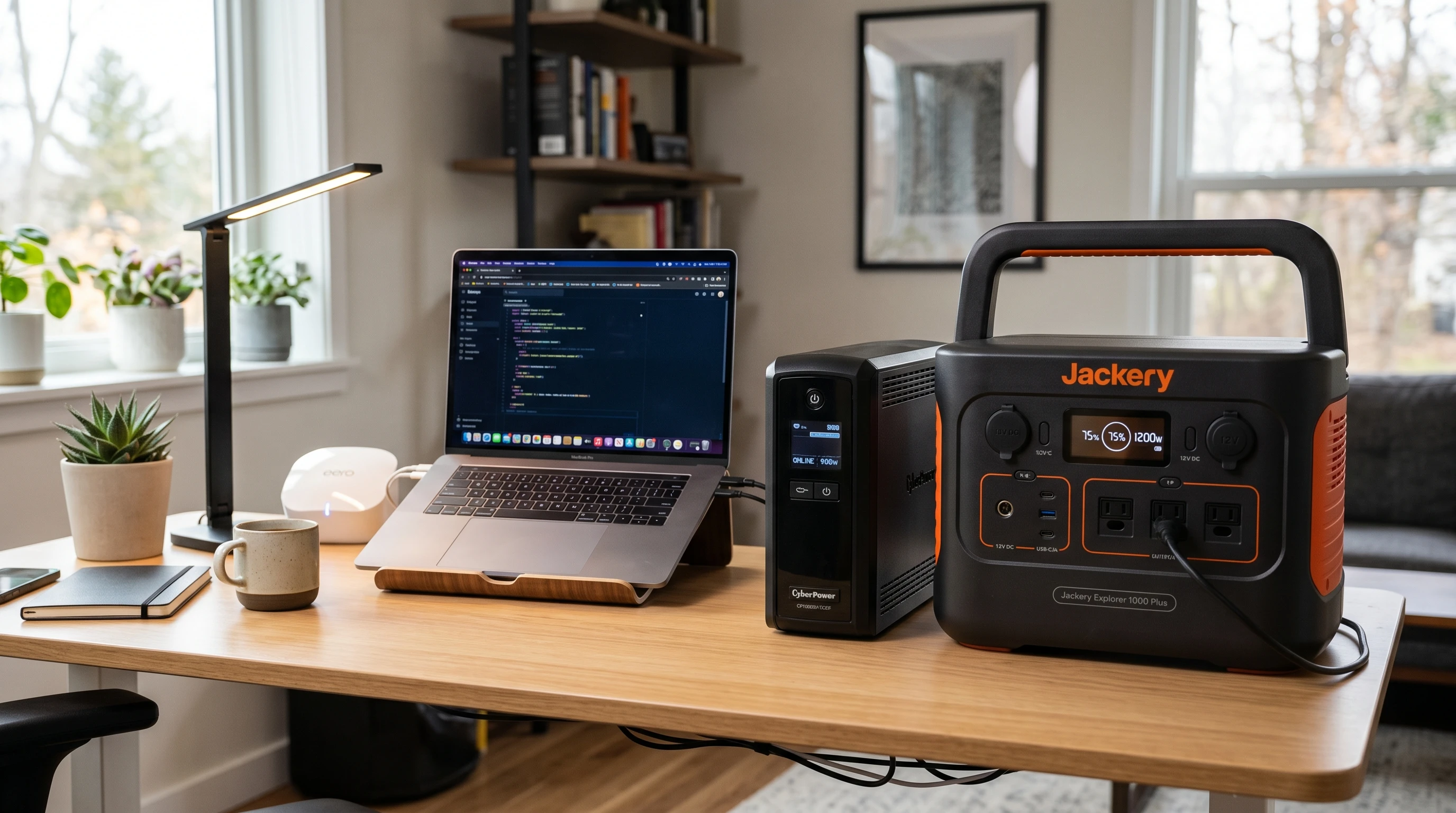
Quick Answer: Portable Power Station vs UPS
A UPS is best when you need your computers, modems, or router to stay on instantly without interruption during a power flicker or short blackout. A portable power station usually gives you more power for a longer time, lets you move it around, and can run a variety of devices. This can be useful if you want backup power for longer outages, camping, travel or several small devices.
| Feature | Portable Power Station | UPS |
|---|---|---|
| Automatic Switchover | Some models can (varies), most have a delay | Near-instant (milliseconds) |
| Runtime | Often larger battery capacity | Usually short term runtime |
| Portability | Easy to move | Meant to stay put |
| Device Protection | Some protection | Designed for surge and voltage protection |
| Solar/Car Recharge | Usually possible | Usually not designed for solar/car charging |
| Best For | Longer outages, several small devices, flexible use | Short outages, computers, routers |
What Is a UPS?
A UPS, or uninterruptible power supply, is a plug-in device that provides backup power almost instantly when your power goes out. The main job of a UPS is to keep sensitive devices from shutting off suddenly so you don’t lose unsaved work or reduce the risk of problems caused by sudden shutdowns or unstable power. A typical UPS is used for desktop computers, modems, routers, home servers, or other electronics that can be damaged by sudden outages or power surges. Most UPS units have built-in surge protection and will automatically switch to battery mode in under a second. This quick response is especially helpful for equipment that must not lose power, even for a moment.
Most UPS devices also have visual or audio alarms to alert you when they kick in. Some can connect to your computer through a data port, allowing automatic safe shutdown if the battery drains too far. Their compact design fits easily under a desk, and they usually require little maintenance aside from replacing the battery every few years. While a UPS cannot provide hours of backup like a bigger battery, it is a key piece of tech for preventing instant data loss or damage to important electronics.
What Is a Portable Power Station?
A portable power station is a large, rechargeable battery with built-in AC outlets, USB ports, and sometimes 12V or DC ports. You plug it in to charge it up, then use it to power or recharge devices during an outage or when away from the grid. Some portable power stations also accept solar panels for recharging, so you can keep them topped up during long emergencies. Many modern portable power stations provide pure sine wave AC output, but this should always be checked before buying. People use portable power stations for laptops, phones, lights, CPAP machines, and sometimes even small appliances like fans or some low-power medical devices, if the manufacturer allows this and the unit is correctly sized
Because of their versatility, portable power stations are also used when camping or traveling off-grid. They can recharge via wall plug, vehicle socket, or solar panels for longer-term use. These power stations come in many sizes, from small units good for phones and tablets to large models with enough capacity for small refrigerators or power tools. The added bonus of portability means you can move them from room to room as needed, or even use them in your backyard, garage, or RV.
LiFePO4 vs Lithium-Ion Portable Power Stations: Which Battery Type Is Better?
Main Differences Between a UPS and a Portable Power Station
- Automatic Switchover: A UPS switches to battery mode in milliseconds, so your connected devices don’t lose power. Some portable power stations have UPS or EPS mode, but transfer time varies by model and may not be fast enough for sensitive equipment.
- Battery Size and Runtime: UPS units generally have smaller built-in batteries to keep laptops or routers running just long enough for a safe shutdown (often several minutes to around an hour, depending on load and UPS size). Portable power stations come in many sizes, and some can run small devices for several hours or more.
- Portability: Portable power stations usually have handles and can be carried outside or around the house. UPS units are meant to stay plugged in near the equipment they protect.
- Output Ports: Portable power stations offer USB, AC, 12V, and sometimes car charging. UPS units usually only have AC outlets for computers and network gear.
- Solar Charging: Many portable power stations can be recharged from compatible solar panels. This is helpful for long blackouts or camping. UPS units don’t offer this option.
- Device Protection: A UPS gives great surge and over-voltage protection for sensitive gear. Portable power stations may offer some protection, but are not as advanced for surges.
- Use Cases: UPS is best for desktop computers, modems, home security DVRs, and routers you need to keep on during short interruptions. Portable power stations are best for flexible backup, longer emergencies, road trips, medical devices, and running small appliances.
Which Is Better for a WiFi Router?
If you want your WiFi router or modem to stay online during a brief power flicker or short outage, a UPS is usually the better choice. It switches to battery power quickly and works automatically in the background.
For longer outages, a portable power station may be more useful if the router and modem can be safely connected and the power station has enough capacity. However, some networking equipment may restart if the backup source has a noticeable switchover delay.
Always check the router, modem and backup power manuals before relying on either option for internet access during an outage.
Which Is Better for a Home Office?
For keeping your computer and router running through a short outage, a UPS can save you from losing files due to a sudden shutdown. It handles that instant switchover so you can finish your work or shut down safely. If you want to work during a longer blackout, a portable power station is the winner. It can run your laptop, monitor, lighting, and even charge your phone or tablet. If you need both instant protection and longer power, using both can make sense for some home office setups.
Remember, if you use both, you can plug your router and other instant-needs devices into the UPS, while plugging items you wish to use for extended periods into your portable power station. This combination helps you stay online and productive even during hours-long power outages.
Which Is Better for CPAP Machines?
Both a UPS and a portable power station may be able to support some CPAP machines, but the right option depends on the CPAP model, power draw, humidifier use, required runtime and manufacturer guidance.
A portable power station is often more practical for longer overnight backup because it usually offers more battery capacity than a small UPS. However, CPAP users should check whether pure sine wave output is required and confirm that the backup power source is suitable for their specific machine.
If the CPAP is medically essential, do not rely on any backup setup without checking the manufacturer’s instructions and testing the system before an outage.
Best Portable Power Stations for CPAP Machines
Runtime and Battery Capacity
Most UPS units are meant to keep computers, monitors, or networking gear running just long enough for a safe shutdown or getting through a brief outage. This usually means a runtime of several minutes to maybe an hour, depending on how much equipment you plug in. Their batteries are sized for short but instant backup. A portable power station can provide more hours of power, but how long they run a device is affected by battery size, the wattage the device uses, and the battery’s efficiency. Don’t expect the same small unit to power everything for hours. Always check the specs, and add up the wattage of the devices you plan to run.
When planning your backup power, it helps to list out all the devices you want to run, their wattage, and add up the total power draw. Many portable power stations have a display showing output and remaining hours. Pay attention to the rated continuous and peak wattage when considering appliances with motors, heating, or surge startup requirements.
Safety and Compatibility
Safety comes first with any backup power setup. Never plug a UPS or portable power station into your wall wiring to run your home without proper isolation and a qualified electrician. Only connect the devices recommended by the manufacturer. Check the wattage limit, surge and overload rating, AC output type (pure sine wave output is usually preferred for sensitive electronics), ventilation, and charging rules for whichever device you choose. Follow user manuals closely, and keep both units in cool, dry spots whenever possible.
Also, ensure cords are in good shape, avoid running cords under rugs or in high-traffic areas, and never expose your backup unit to moisture. Regularly inspect these devices and perform any recommended battery checks or replacements to keep your backup ready when you need it.
Portable Power Station Safety Guide
Can You Use a Portable Power Station as a UPS?
Some portable power stations include a mode called “UPS” or “EPS” (Emergency Power Supply), which lets you plug in your device and switch to battery if the power cuts out. The catch is most are not as fast or seamless as a dedicated UPS. Some have a switchover delay that could cause sensitive equipment to lose power or restart. So, if you want to protect a desktop PC or home network server instantly, a dedicated UPS is usually the safer choice.
If just keeping devices powered during an outage matters and some delay is fine, then a portable power station with UPS/EPS mode can be enough.
Which One Should You Choose?
- If your main concern is automatic, instant protection for computers, WiFi routers, or network gear, a UPS is a smart first choice.
- For flexible, multi-device backup, camping, longer blackouts, travel, or emergency situations, a portable power station is often a better fit.
- Combining both gives you quick protection from the UPS and extra hours of power from the portable power station. This is especially handy if you often experience outages.
Keep in mind the kind of appliances you want to support and consider how much mobility and runtime you need. For some homes, using both can offer a good balance: instant protection from a UPS and longer backup from a portable power station.
Compare Portable Power Stations for Longer Home Backup on Amazon
Related Backup Power Guides
- Portable Power Station vs Home Battery Backup
- Can You Use a Portable Power Station While Charging?
- Do You Need a Pure Sine Wave Portable Power Station?
- Portable Power Station Safety Guide
- Best Portable Power Stations for CPAP Machines
- How to Recharge a Portable Power Station During a Blackout
- Best Solar Generators for Home Backup
Frequently Asked Questions
Is a portable power station the same as a UPS?
No, not exactly. A portable power station is a rechargeable battery with AC and USB outlets, built mainly for flexible backup and outdoor use. A UPS is made for instant, automatic backup for electronics when the power goes out. This is true even during a very brief power interruption. Some portable power stations do have a “UPS” mode but may not switch over as fast as a real UPS.
Can a portable power station replace a UPS?
For some devices, possibly, but usually not for computers or sensitive equipment that need instant switchover. If your backup needs are mostly about longer use or portability, a portable power station is a better fit. But a computer, server, or critical network gear that can’t lose power even for a second needs a dedicated UPS.
Which is better for a WiFi router?
A UPS works well for keeping routers and modems up during short outages. If you want WiFi for several hours with no power, a portable power station is better. Just make sure the router doesn’t need to restart during switchover.
Which is better for a home office?
A UPS keeps your computer and equipment safe from sudden shutdowns. For working through a longer blackout or running more devices at once, a portable power station is a better choice.
Can a UPS run devices during a long blackout?
Usually not. Most UPS units run for several minutes to about an hour, depending on the load. They’re made to give you enough time to save and shut down your equipment.
Should you use both a UPS and a portable power station?
Using both can make sense if you want instant switchover and longer backup. A UPS can provide quick protection for sensitive electronics, while a portable power station can provide ongoing power during a longer outage.
Conclusion
A UPS and a portable power station can both help during power outages, but they solve different problems. A UPS is best for short, automatic backup when computers, routers or network equipment need instant protection from shutdowns. A portable power station is usually better for longer outages, flexible backup and running several small devices.
For many homes, the best choice depends on outage length, device sensitivity, runtime needs and whether automatic switchover matters. A UPS may protect your most sensitive equipment, while a portable power station can provide extra backup power during longer disruptions. Always check device requirements, wattage limits and manufacturer instructions before relying on either option.