
Some of the links on this page are affiliate links, which means I may earn a small commission if you make a purchase through them, at no extra cost to you. This helps support the site and allows me to continue creating helpful content.
If you want backup power during outages, it helps to understand the difference between a portable power station and a home battery backup system. Both can supply electricity when the grid goes down, but they are built for very different situations. A portable power station is smaller, movable and usually simple to set up without permanent installation. A home battery backup system is larger, professionally installed and designed to support selected home circuits or larger backup needs.
This guide compares both options so you can decide which one makes more sense for your home, apartment, budget, outage risk and essential devices.
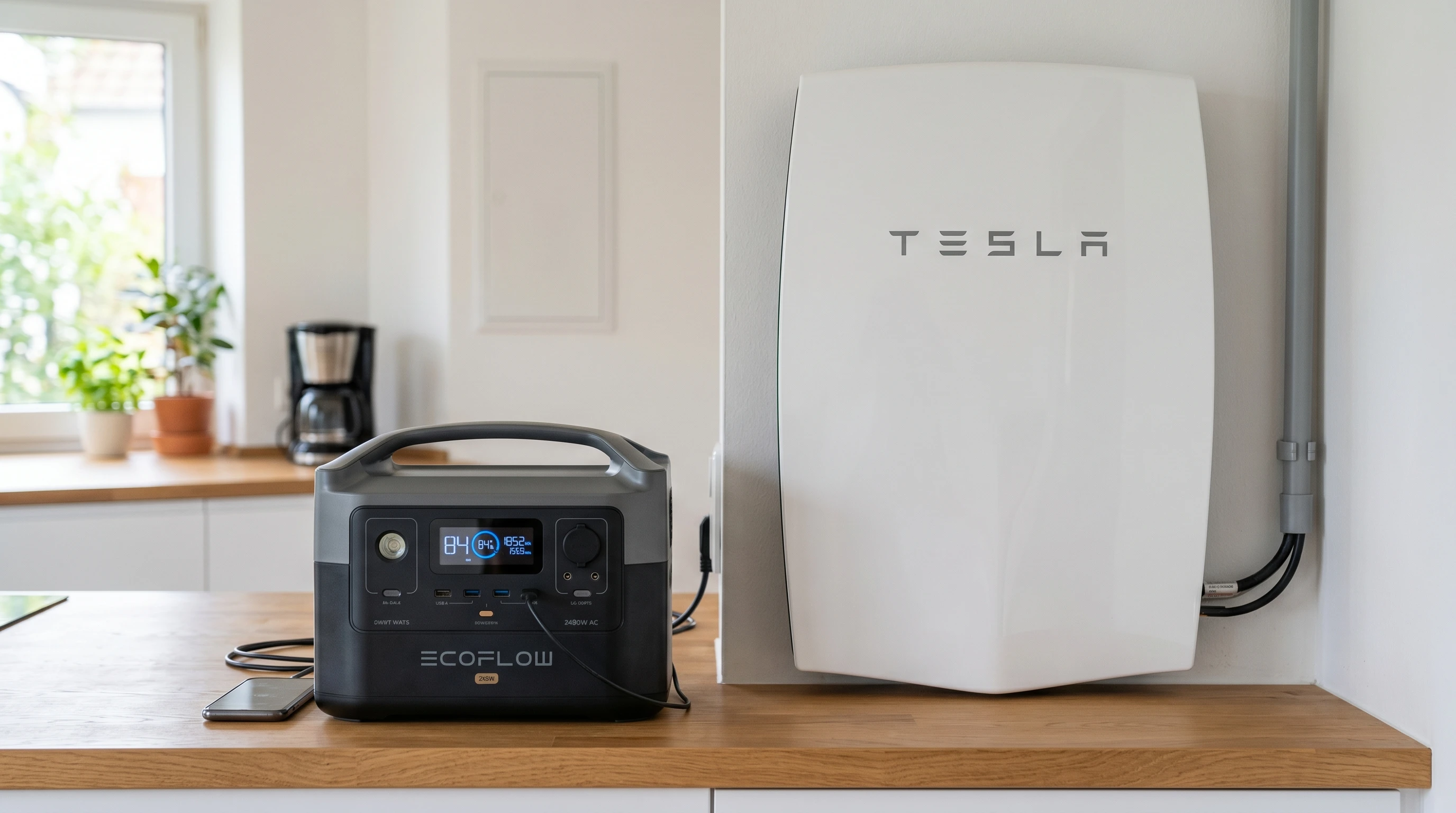
Quick Answer: Portable Power Station vs Home Battery Backup
When deciding between a portable power station and a home battery backup system, the main difference comes down to your living situation and power needs. A portable power station is usually better for renters, apartments, short outages and essential devices. A home battery backup system is usually better for homeowners who want larger capacity, automatic backup, solar integration or support for selected home circuits. Here’s a quick breakdown:
| Feature | Portable Power Station | Home Battery Backup |
|---|---|---|
| Size & Portability | Small, movable, easy to move and store | Large, fixed installation |
| Capacity | Up to a few thousand watt-hours | Larger installed capacity |
| Installation | Plug and play | Requires professional installation |
| Best Uses | Essentials, small appliances, mobile power | Selected circuits or larger home loads |
| Ownership | Renters, apartments, camping, emergency kits | Designed for homeowners |
What Is a Portable Power Station?
A portable power station is a rechargeable battery that comes in a box, usually with a handle. Inside, it has a battery, an inverter, and multiple types of outlets, such as AC, DC, USB, and often high-powered outlets for small appliances. A portable power station can charge phones, keep a WiFi router running, power a laptop, or run small devices such as LED lights, fans and some medical devices if the unit is correctly sized. Some larger models will power a CPAP machine or, for short periods, even a small refrigerator. The bigger the battery and higher the inverter wattage, the more (and larger) devices you can run. These devices don’t need installation. Just plug them into the wall to recharge, use solar panels if they’re compatible, or even charge from your car. You only need to carry them where you need backup power. Most models are built with tough casings and are perfect for camping trips, road adventures, or providing extra backup power during storms. Some even have special smartphone charging pads and app control features that make them super convenient for all ages.
What Is a Home Battery Backup System?
A home battery backup system, also called a residential energy storage system, is a permanently installed unit that can store large amounts of electricity. These systems are often paired with rooftop solar panels. They are often installed in garages, utility rooms, basements or other approved locations, depending on the system and local code requirements. They connect directly to your home’s electrical system, automatically powering selected essential circuits, and in some cases larger parts of the home if the system is designed for that purpose.
This setup typically includes one or several large batteries, a battery management unit, and an inverter that converts stored DC power to the AC power your home needs. Installation is handled by professionals, and the system must follow local codes and safety laws. Many modern systems allow you to monitor energy usage through an app, get real-time status alerts, and participate in grid programs—offering extra savings or even letting you sell stored power back to the utility in some areas.
Cost and Installation Differences
Portable power stations usually have a lower upfront cost than installed home battery systems. The final price depends on battery capacity, inverter output, battery chemistry, charging speed, solar compatibility and included accessories. Some buyers also add portable solar panels, which increases the total cost.
Home battery backup systems are usually a much larger investment because they may require battery modules, inverter equipment, electrical work, permits, a transfer switch or backup gateway, and professional installation. Costs can vary widely depending on home size, backup goals, location, installer pricing and whether the system is paired with rooftop solar.
The main difference is simplicity. A portable power station is usually plug-and-play, while a home battery backup system is a permanent home energy project that should be planned and installed by qualified professionals.
What Can Each Option Run During an Outage?
The main purpose of both systems is to keep things running when the power goes out, but each option covers a different range of devices based on its capacity and output. Let’s talk about what’s possible with each:
- Portable Power Station: Handles essentials like phones, routers, laptops, tablets, lights, fans, and small medical devices such as a CPAP. Larger units may run a minifridge (for a while), a TV, or a microwave if you choose the right model. Runtime depends on both battery size and device wattage.
- Home Battery Backup System: Can power lights, refrigerators, freezers, sump pumps, some well pumps, kitchen outlets, medical equipment, and even HVAC or central air (if correctly sized). Whole-home systems seamlessly power everything, often automatically. You choose what it covers during setup.
A well-sized home battery system can make outages much easier to manage, especially if it supports the circuits you rely on most. However, runtime still depends on battery capacity, household energy use, weather, solar production and system design.
Best Option for Apartments and Renters
For anyone renting or living in an apartment, a portable battery vs home battery decision comes down to practicality. Landlords usually do not allow electrical modifications or wallmounted systems. A portable power station is a great fit because you can keep it in a closet, pull it out only when needed, or take it with you when you move. You don’t need permits or special approvals. Many renters prefer portable power stations because they are simple, movable and do not require permanent changes to the property. The same unit can also be used for camping, road trips or outdoor activities, which adds flexibility.
Best Option for Homeowners
Owning your home lets you invest in bigger solutions for backup power for home. Homeowners benefit most from a home battery backup system if they want a setup that automatically switches on, has a much larger storage capacity, and might be paired with rooftop solar. Homeowners with larger backup needs may want to support refrigerators, sump pumps, medical equipment, internet, lighting or selected HVAC loads. In these cases, a dedicated home battery system fits their needs best, especially if they want the peace of mind of supporting selected home loads for several hours or longer, depending on system size and energy use. Many home batteries support remote monitoring through smartphone apps, so you always know your backup status. There’s even the possibility of participating in timeofuse energy programs to save on monthly bills while boosting your energy resilience.
Safety and Home Wiring
It’s really important to use portable power stations and home batteries safely. Portable power stations are not designed to connect directly to your home’s wiring unless you have a professionally installed transfer switch or approved inlet. Plugging a power station straight into a wall outlet to “backfeed” power is dangerous, risks fire, and breaks electrical code. Use properly rated cords, avoid daisy-chaining power strips and never exceed the manufacturer’s output limits. Read and follow the manual, and never overload your station by plugging in more than it’s rated for.
Home battery backup systems must be installed by qualified electricians who know local codes. This keeps your home safe and ensures the system won’t damage electronics or endanger utility workers. Look for systems with all the required safety certifications, and follow the installer’s maintenance and inspection guidance. Smart homeowners also install surge protection and monitor their systems during major weather events for added safety.
Solar Charging and Solar Compatibility
Solar can work with both types of systems, but with key differences. Many portable power stations come with ports for connecting folding or rigid solar panels. These portable solar panels can be useful for camping, outdoor use or extended outages when sunlight is available. Charging is slower compared to plugging into the wall, but it can keep the basics running if there’s sunshine. Some advanced units even support dual charging—solar plus wall or car input at the same time—to speed things up significantly.
Residential home battery systems usually connect directly to rooftop solar arrays. They can absorb solar power during the day, store the excess, and automatically power your home at night or through lengthy outages. In areas with frequent outages or time of use power pricing, this setup is popular for how can reduce reliance on the grid during outages, depending on battery size, solar production and household energy use. Some utilities offer incentives or rebates for installing battery storage alongside solar, making the investment more affordable in the long run.
Which One Should You Choose?
Choose a portable power station if you rent, live in an apartment, want flexible backup power, or only need to run essentials such as phones, lights, a router, laptop or small medical device. Choose a home battery backup system if you own your home, want automatic backup, have rooftop solar plans, or need to support larger home loads through professionally installed equipment. Some households may use both: a home battery for selected circuits and a portable power station for smaller devices, travel or emergency flexibility.
Related Backup Power Guides
- Best Solar Generators for Home Backup
- Portable Power Station Safety Guide
- How to Recharge a Portable Power Station During a Blackout
- Best Home Battery Storage Systems for Residential Use
- Solar Generator Sizing Guide
- LiFePO4 vs Lithium-Ion Portable Power Stations
- Understanding Solar Battery Storage Systems
Frequently Asked Questions
Is a portable power station the same as a home battery backup?
A portable power station is a standalone battery pack that’s easy to move and mainly powers smaller essentials. A home battery backup system is a large installed unit that can run multiple or all home circuits. Both use lithium batteries but serve different roles, and are not the same.
Which is better for power outages?
It depends on how much you need to power and for how long. A portable power station works best for essentials, brief blackouts, or for renters. A home battery backup system covers more items and is best for homeowners during longer or more frequent outages.
Can a portable power station power a whole house?
Most portable power stations are not designed to power an entire house. They’re made for essential electronics and a few small appliances only. To cover whole-home needs, you need a large installed backup battery or a generator, but that takes more investment and setup.
Is a home battery backup worth it?
A home battery backup can be worth it for some homeowners especially if your area experiences long blackouts, you want emergency preparedness, or you have solar panels for extra savings. Keep in mind the upfront costs and make sure the system matches your home’s needs before buying.
Can renters use a home battery backup system?
Usually, no. Home battery backup systems require significant installation and electrical work, which landlords rarely allow. Portable power stations are much more practical for renters.
Can you use both?
Yes, it’s common for people to use both. A home battery backup system can run the larger load and selected home circuits, while a portable power station is useful for moving around, travel, camping or keeping extra backup power for critical small devices in an emergency.
Conclusion
Both portable power stations and home battery backup systems can help you get through outages, but they work best in different scenarios. A portable power station is a good choice for simple, flexible backup of a few important items and offers the most freedom for apartments, renters, and those with lighter needs. Home battery backups cost more and require installation, but can support bigger appliances, longer outages, and solar integration, especially for homeowners looking for a long-term solution. Your best fit will depend on your power priorities, home setup, and budget.
For more practical backup power tips, explore the related guides above.