
Some of the links on this page are affiliate links, which means I may earn a small commission if you make a purchase through them, at no extra cost to you. This helps support the site and allows me to continue creating helpful content.
A 5 kW vertical wind turbine for home use can sound like an attractive renewable energy upgrade, especially for homeowners looking for backup power or lower grid reliance. However, real-world wind turbine performance depends on much more than the rated power number.
Average wind speed, tower height, site exposure, nearby obstacles, local permits, installation quality and maintenance all affect whether a 5 kW wind turbine makes sense for a home. This guide explains what the 5 kW rating really means, where vertical wind turbines work best, and what to check before buying one.
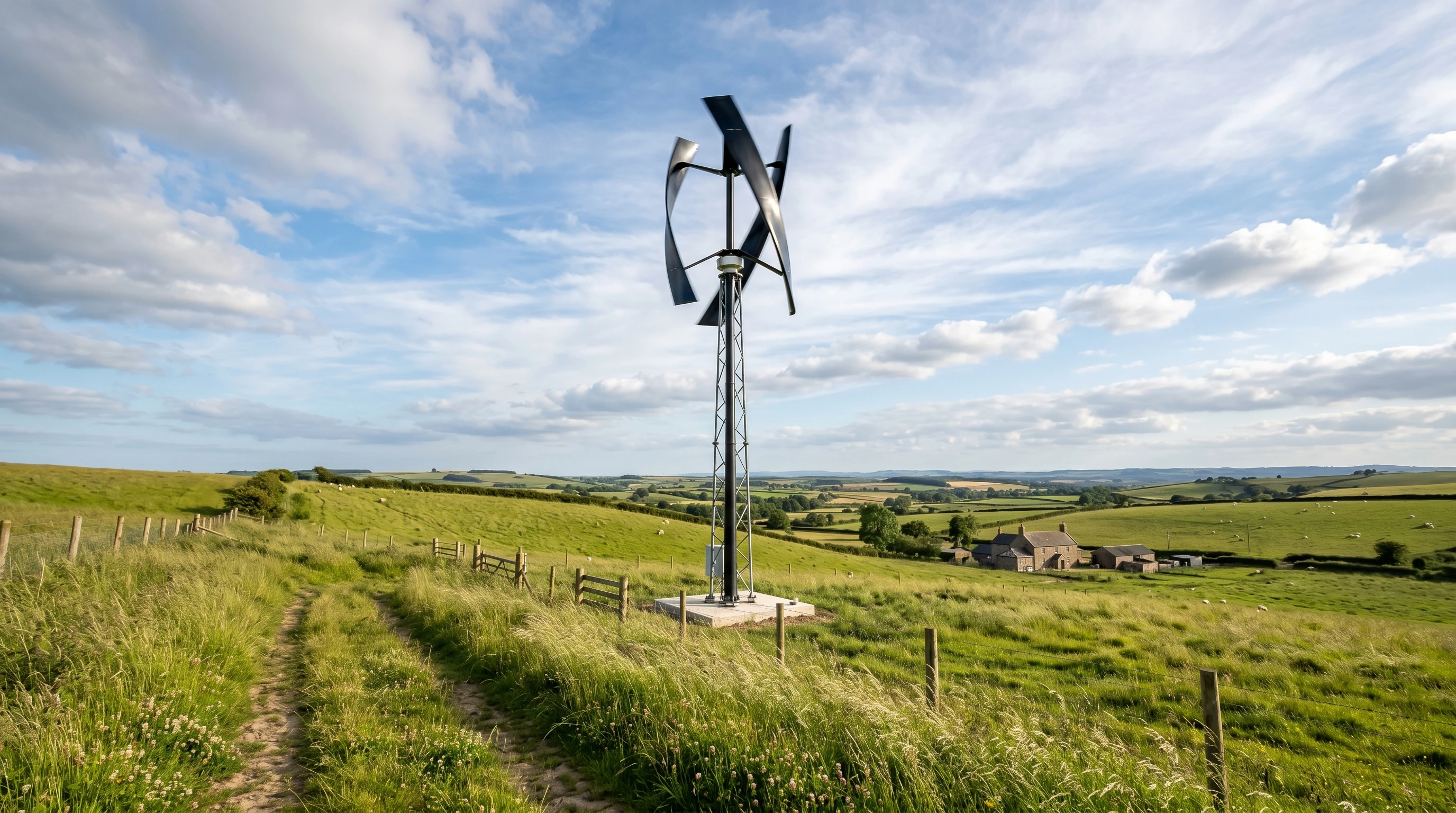
Quick Answer: Is a 5 kW Vertical Wind Turbine Worth It?
For many homeowners, a 5 kW vertical wind turbine is only worth the investment if you have consistent, strong, unobstructed wind at your site. If your property is ringed by trees, buildings, or sits in a gentle breeze zone, the turbine likely won’t deliver anywhere near its claimed output. For places like rural, coastal, or off-grid homes with abundant open space and great wind, a 5 kW model could help offset part of your electricity use—especially if you combine it with solar or battery backup.
Check out this useful table to see why certain factors are crucial and what to double-check before before investing in a home wind turbine:
| Factor | Why It Matters | What to Check |
|---|---|---|
| Average Wind Speed | Wind speed has major effect on output | Measure wind speed at the planned tower height |
| Site Obstructions | Blocks wind, causing turbulence and lower output | Scout for clear land, unshielded by trees or buildings |
| Tower Height | Tall towers catch stronger wind | Follow manufacturer guidance and local rules |
| Permitting | Local rules could restrict use | Check planning rules, zoning, permits and HOA limits |
| Budget and Extras | Whole system needs more than just the turbine | Include tower, foundation, wiring, inverter, controller, installation and maintenance |
What Does 5 kW Mean on a Wind Turbine?
When a wind turbine is rated at “5 kW,” that rating means under specific conditions—usually at a specific rated wind speed set by the manufacturer—the turbine can deliver up to five kilowatts of power. Reality is rarely that perfect. At most residential sites, wind speeds like these don’t happen very often throughout the year. Most of the time, your actual output will be a fraction of that figure—often much lower than the rated 5 kW output, all depending on your local wind and how you set up your equipment.
Many people believe the turbine will produce five kilowatts round the clock. In practice, that rating represents the maximum output, only reached under rare, ideal wind. To figure out if a 5 kW vertical wind turbine will pull its weight at your house, you need to know what kind of wind resource you actually have, not just what the manual claims.
How Much Power Can a 5 kW Wind Turbine Produce?
How much power your home wind turbine produces changes moment by moment. Wind speed, gusts, frequent shifts in direction, turbulence, tower height, and blade design all play important roles. Even changes in temperature and air pressure can add or subtract a little from day-to-day output.
Typically, power production is described by the “capacity factor”—the ratio of the average actual output to the maximum possible output over the course of a year. For most home wind turbines, capacity factors land somewhere between 10% and 25%. In other words, a 5 kW turbine may average far less than 5 kW over the year, especially at sites with weak or turbulent wind. That’s still a solid help for a portion of your power bill, but it’s a lot less than the marketing might lead you to imagine.
Before you settle on a purchase, always take time to examine the manufacturer’s power curve. This is a graph showing how much power the turbine actually makes at different wind speeds. Match this up with your measured average wind speed at home to predict your likely production. A little bit of homework here saves you from a major headache later.
Vertical vs Horizontal Wind Turbines
Vertical-axis wind turbines are often marketed for residential use. They catch wind from multiple directions and often make a bit less noise compared to classic horizontal-axis turbines (HAWTs). Plus, they can look more modern and less like the typical farm windmill, which some might prefer for their backyard or field.
But VAWTs have downsides. Usually, they aren’t as efficient—you need more wind to produce the same amount of electricity as a comparable horizontal unit. Horizontal setups often deliver more energy per dollar spent because their blades work better in clean, steady winds. For gusty winds, a vertical turbine might cope better and they are sometimes installed lower than horizontal-axis turbines, but lower wind is usually weaker and more turbulent. Deciding between vertical or horizontal comes down to your available space, the character of your local wind, and how much you care about looks and sound.
Where Can You Install a 5 kW Vertical Wind Turbine?
Fitting a 5 kW wind turbine into your landscape requires plenty of room and open airflow. The top sites are wide open, elevated, and far away from trees, homes, or ridges that could mix up the wind.
- Spacious rural properties
- Coastal zones with regular winds
- Farms or larger country homesteads
- Offgrid cabins in blustery regions
If wind is blocked by forests, buildings, or rough terrain—think suburban backyards, valleys shaded by tall trees, or crowded city roofs—a 5 kW turbine will struggle. Some companies market smaller turbines for rooftop use in cities, but turbulent, unpredictable flows can offset output, stress components, and nudge up maintenance. For many residential installations, a properly designed ground-mounted tower in open airflow is more realistic than rooftop mounting.
Why Wind Speed Matters More Than Turbine Size
Bigger isn’t always better with home wind. Wind power jumps up dramatically as wind speed increases. Small increases in wind speed can significantly increase potential output. That’s why a small turbine in a strong, steady breeze can sometimes outshine a larger one in a so-so location.
If you’re thinking seriously about wind power, invest in a few months of wind measurement with an anemometer set at the same height you plan to install your turbine. That data is much more useful than relying only on turbine marketing claims.
Can a 5 kW Vertical Wind Turbine Power a House?
Some households, especially those with modest energy use or in extra windy spots, could see a 5 kW wind turbine providing a significant chunk of their electricity needs. Household electricity use varies widely by country, home size, heating system and lifestyle. A combination of wind, solar, and efficient appliances can chip away at that total—in some suitable setups, reducing grid reliance or at least lower your bills.
Just remember, you’ll also need plenty of extras, like batteries, inverters, a charge controller, cabling, and likely a pro electrician to connect wind energy to your house safely. And unless your setup is perfect, you’ll probably still draw some power from the grid, especially when the wind is calm or fluctuating.
Costs, Permits and Safety
The sticker price for a 5 kW vertical wind turbine only tells part of the story. You’ll want to budget for:
- The turbine itself, with blades included
- A tall mounting tower for best performance
- A concrete foundation and secure anchors
- A charge controller for battery setups
- A grid-tie or off-grid inverter
- Wiring, cables, and electrical installation
- Batteries if you want energy storage
- Permits, engineering checks, and site surveys
Noise concerns, neighbor complaints, zoning laws, or HOA guidelines can all put up roadblocks. Always check local ordinances, zoning laws, and HOA rules or local planning restrictions before ordering any major wind system. Permits are often necessary, and sometimes special engineering reviews or sound studies are required too.
When it comes to safety, do not cut corners. A wind turbine needs to be properly anchored and checked regularly to avoid risks like toppling towers or loose blades in a storm. Regular inspections and occasional maintenance are just part of the package when you own a wind energy system.
Common Mistakes to Avoid
- Picking a system based only on the biggest wattage rating—more watts on paper doesn’t always translate to more power at home.
- Skipping wind measurements—get good local data before making decisions.
- Setting the turbine too low—short towers mean weaker, more chaotic wind.
- Choosing a turbulent, blocked location—output drops a lot if wind can’t flow freely.
- Mounting directly on the roof without consideration—vibration and turbulence can reduce output and harm structures.
- Neglecting to check permits—zoning or associations may delay, restrict, or prevent installation.
- Overlooking the power curve—look at actual performance, not just marketing pitches.
Better Alternatives to Consider
Wind turbines aren’t perfect for every house. Depending on your goals, you may achieve bigger benefits from:
- Going with a smaller wind turbine (under 2 kW) to supplement your energy rather than cover it all
- Trying a horizontal unit if your setting favors it
- Adding solar panels, which are often simpler and provide steady output in most areas
- Installing home battery storage to use with solar or wind
- Mixing wind and solar for a more balanced year-round setup
For many homeowners, starting with a small system or hybrid solution can be the more practical route. Weigh your site’s natural resources, the amount of electricity you need, installation and maintenance effort, plus your longterm payback versus upfront cost before you decide what’s best for you.
Related Wind and Backup Power Guides
- Best Home Wind Turbines for Residential Use
- Installing a Home Wind Turbine Step-by-Step
- Home Wind Turbine ROI
- Wind Turbines at Home: Noise Levels and Their Impact on Residents
- Best Home Battery Storage Systems for Residential Use
- Understanding Solar Battery Storage Systems
- Portable Power Station vs Home Battery Backup
Frequently Asked Questions
Is a 5 kW vertical wind turbine enough for a house?
A 5 kW vertical wind turbine may help offset household electricity use in a windy location, but it should not be assumed to power an entire home all year. Real output depends on average wind speed, tower height, site quality, turbine efficiency and household energy use.
How much wind does a 5 kW vertical turbine need?
A 5 kW vertical wind turbine needs consistent, unobstructed wind to perform well. The most useful figure is the average wind speed at the planned tower height, not just general regional wind data. Always compare local wind measurements with the manufacturer’s power curve.
Can you install a 5 kW vertical wind turbine on a roof?
For most homes, rooftop installation is not ideal. Roofs often create turbulent wind, vibration, noise and structural concerns. A properly designed ground-mounted tower in open airflow is usually a better option, but local rules and engineering advice should be checked first.
Are vertical wind turbines better for homes?
Vertical wind turbines can handle changing wind direction and may have a lower visual profile, but they are not automatically better for homes. Horizontal-axis turbines often produce more energy in clean, steady wind. The best choice depends on the site, wind quality, space and installation design.
Do you need batteries with a 5 kW wind turbine?
Batteries may be needed if you want backup power, off-grid use or energy storage when the wind is not blowing. Grid-connected systems may not always need batteries, but this depends on local rules, equipment design and whether export credits are available.
Is a 5 kW vertical wind turbine worth it?
A 5 kW vertical wind turbine can be worth considering on open, windy properties with enough space, local permission and realistic expectations. In sheltered suburban areas, low-wind sites or turbulent rooftop locations, performance may fall well below expectations.
Wrapping Up
A 5 kW vertical wind turbine for home use can make sense in the right location, but it is not a simple plug-and-play solution for most homes. The rated 5 kW figure only shows what the turbine may produce under specific wind conditions, not what it will generate every hour.
Before investing, focus on the factors that matter most: average wind speed at the planned tower height, open airflow, tower design, permits, safety, maintenance and the manufacturer’s power curve. For many homeowners, solar panels, battery storage or a smaller wind system may be more practical than a large vertical turbine in a weak or turbulent wind site.