
Many people keep portable power stations charged for power outages, home office backup, camping, storm preparedness, or emergency use. Because these units use rechargeable batteries, it is important to understand whether leaving one plugged into the wall is safe and how it may affect battery life.
The answer depends on the power station model, battery chemistry, charger design, battery management system, temperature, ventilation, and the manufacturer’s instructions. Some units are designed to stay plugged in for longer periods, while others may be better unplugged after charging.
Quick Answer
In many cases, a portable power station can be left plugged in for short periods if the manufacturer allows it and the unit has a proper battery management system. However, leaving a power station plugged in all the time is not ideal for every model.
Long-term plugged-in storage depends on the battery chemistry, charging design, temperature, ventilation, and manufacturer guidance. For battery health and safety, always check the manual, use an approved charger, avoid heat and moisture, and do not assume every portable power station is designed to work like a UPS.
Why Battery Chemistry Matters
Portable power stations commonly use lithium-ion or lithium iron phosphate (LiFePO4) batteries. Battery chemistry affects charging behavior, storage recommendations, cycle life, and how the battery handles long periods at a high state of charge. LiFePO4 batteries often offer longer cycle life and may handle regular use well, but storage and charging habits still matter. Other lithium-ion batteries may age faster when kept at 100% charge for long periods, especially in warm conditions. Because recommendations vary by brand and model, the safest approach is to follow the manufacturer’s storage and charging instructions.
What the Battery Management System Does
Most modern portable power stations include a battery management system, or BMS. This is a built-in protection system that helps monitor charging, discharging, temperature, and battery safety. A BMS can help reduce risks such as overcharging, overheating, over-discharge, and unsafe charging conditions. But even with a BMS, the unit isn’t always designed for a permanent “plugged in” setup. A BMS can reduce certain risks, but it does not remove the need to follow charging and storage guidance. Always rely on manufacturer guidance for everyday habits, rather than just trusting the BMS to solve every risk.
When Leaving It Plugged In May Be Useful
Keeping a portable power station charged may be useful in some situations, especially when short-term readiness matters. Here are a few scenarios where you might want to keep one on charge:
- Home office backup: If you’re working remotely and need your modem, router, or laptop to stay running during short outages, keeping your power station topped up can be useful.
- Storm preparedness: In areas where storms and outages are common, it’s smart to keep a power station plugged in and ready so you aren’t unprepared if the power gets cut.
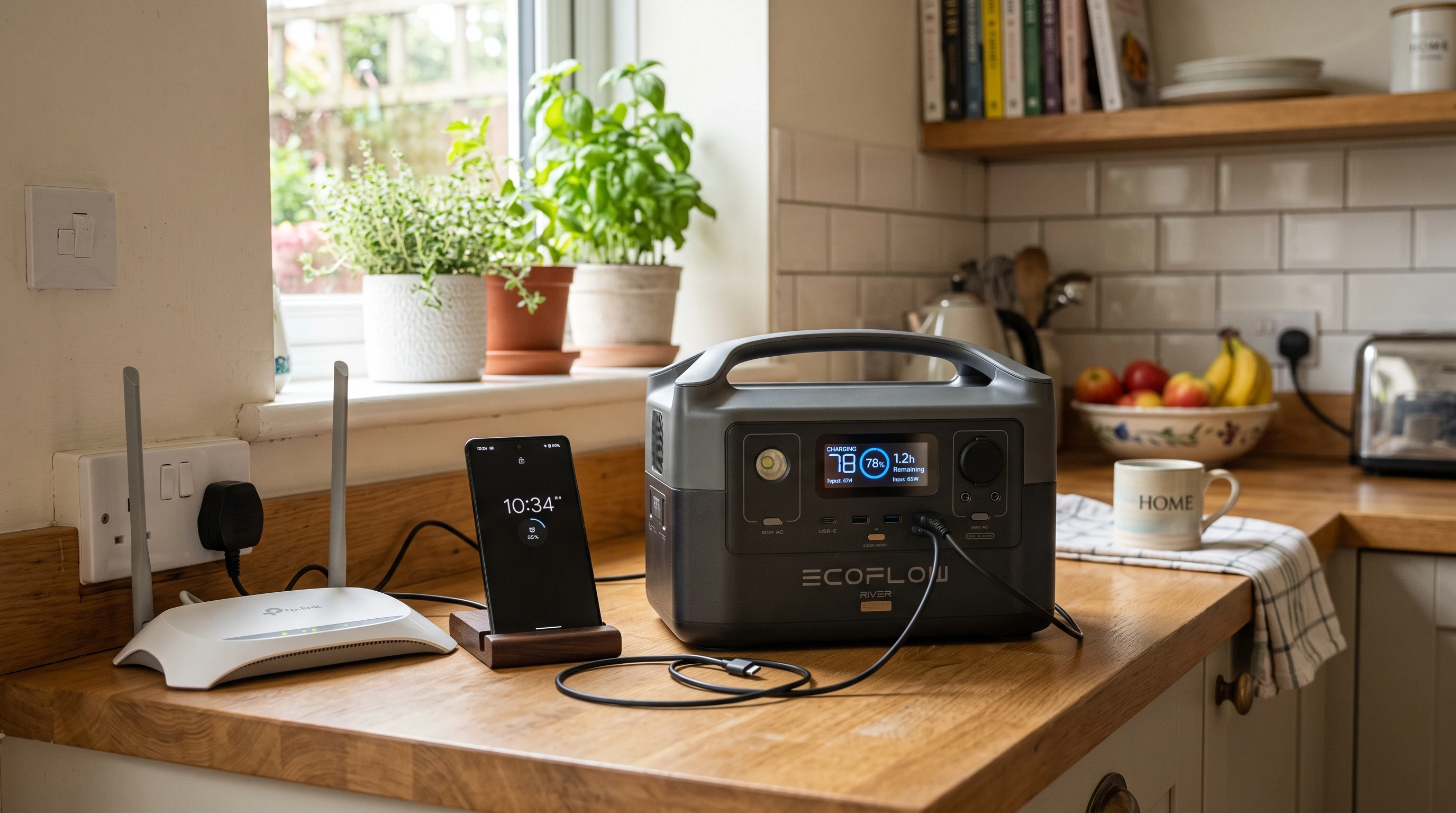
- Keeping internet equipment ready: Many people use portable batteries to keep their WiFi going during blackouts. This usually means plugging in both the power station and your internet gear so it’s always ready.
- Charging before a camping trip: Charging up the night before or over a couple days ensures you’re set for your trip.
- Short-term readiness for predicted outages: If there is a storm or rolling blackout expected, keeping the unit charged until needed can be practical.
For these uses, short-term charging while plugged in usually won’t cause problems, as long as your power station is designed for it and stays in a safe, cool spot.
Why Long-Term Plugged In Storage Can Be a Problem
Leaving a portable power station plugged in for weeks or months at a time can create a few issues, even with a newer battery and a decent BMS:
- Heat buildup: Chargers and batteries generate some heat, especially if the power station is charging after use or running devices while charging through pass-through mode. Heat can shorten battery life and reduce long-term performance.
- Charger wear: Some chargers aren’t meant for non-stop use. Extended plugged in time can add a lot of wear to the charger, and sometimes the charger will fail before the battery does.
- Battery stress and aging: Holding most lithium batteries at 100% for a long time makes them age quicker, especially if the temperature runs hot. Some battery types handle this better than others, but constant full charge isn’t ideal unless the brand says so.
- Poor ventilation: If your power station sits plugged in inside a hot cabinet or behind furniture, heat builds up faster and causes issues. Batteries last longer with a bit of air flowing around to keep things cool.
- Model differences: Not all portable power stations use the same chargers or tolerate constant plugging the same way. Some cut off charging when full and “top up” automatically, others may trickle charge and wear the battery more. Always check how your specific model behaves in the manual or ask the brand if unsure.
A single extended charging session may not cause immediate problems on many models, but repeated long-term plugged-in storage can contribute to battery wear if the manufacturer does not recommend it.
Best Charging Habits for Portable Power Stations
- Follow the manual: Your model’s manual or support page is the place for the most accurate advice. If the manual says to unplug the unit after charging, follow that guidance. If it’s fine to leave it plugged in, still pay attention to temperature, ventilation, and charging conditions.
- Use the original or approved charger: Using non-branded adapters might be convenient but can supply the wrong voltage or current. This can lower battery life, or damage the BMS.
- Keep it cool and dry: Charging batteries in a cool, ventilated spot is key to getting a long battery life. Heat, humidity, and sunlight can all cause problems.
- Don’t cover while charging: Avoid putting blankets, pillows, or anything else on the power station when charging so the heat has a way out.
- Avoid moisture: Water and electronics don’t work well together. Indoor, climate-controlled spots are usually best for charging or storing.
- Check charge every few months: If you’re putting the power station away for a bit, set a reminder every 3 to 6 months to check and recharge. Letting it sit empty isn’t good for battery health.
- Store as the brand suggests: Some recommend keeping the charge between 50 and 80% for storage, others ask you to keep it topped up. Go with your manual’s direction.
- Don’t let it drain to zero for long: Avoid letting it sit at 0% for more than a few days. Some lithium batteries can “sleep” too deeply at zero, making them impossible to wake up with a normal charger.
Should You Store It at 100%?
Whether you store your power station fully charged really depends on your brand and model. Some companies say to keep it topped up just in case, others prefer you store it at 50 to 80% if you won’t use it for a while. LiFePO4 batteries are more forgiving about being stored full, while most lithium-ion batteries prefer a lower charge for sitting long-term. Your manual has the final say. Before predicted outages or severe weather, charging the unit according to the manufacturer’s guidance can help keep it ready for use.
Can You Use a Portable Power Station While Charging?
Some portable power stations support pass-through charging, which means devices can be powered while the unit is also charging. This feature should only be used if the manufacturer specifically allows it.
Pass-through charging may increase heat and may contribute to extra battery wear over time, especially if used frequently or in a warm environment. Check the manual for limits, ventilation requirements, and whether the feature is intended for regular use.
Portable Power Station vs UPS for Always On Backup
A portable power station isn’t always the same as an uninterruptible power supply, or UPS. Most UPS systems are built to stay plugged in and instantly switch to battery in a blackout. Portable power stations usually don’t swap over that quickly, and not all are set up for continuous backup. If you need nearly instant switchover (to keep a computer or modem up with no gaps), a dedicated UPS could be the right move. For a deeper comparison, see Portable Power Station vs UPS.
Safety Mistakes to Avoid
Even a well-made portable power station can become unsafe if it is charged, stored, or used incorrectly. Avoid these common safety mistakes:
- Leaving the unit in sunshine or near a heat source, like a heater.
- Covering the battery or charger while plugged in so heat can’t escape.
- Using damaged or off-brand cables that can fail or spark.
- Plugging in chargers with the wrong voltage or amperage.
- Storing or charging in damp places where moisture can get inside.
- Ignoring warning lights, strange smells, or error messages.
- Assuming every power station works like a UPS.
- Using a portable power station for medical equipment without checking the device manufacturer’s guidance and speaking with a qualified professional or healthcare provider.
Related Guides
- Portable Power Station Safety Guide
- Portable Power Station Runtime Explained
- What Size Portable Power Station Do You Need for a Home Office?
- Portable Power Station vs UPS
- Best Portable Power Stations for Storm Preparedness
- How to Keep WiFi Running During a Power Outage
- Best Solar Generators for Home Backup
Frequently Asked Questions
Can you leave a portable power station plugged in all the time?
Some portable power stations are designed to stay plugged in for longer periods, but others are not. Always check the manufacturer’s instructions. If a unit is not designed for continuous charging or standby use, leaving it plugged in all the time may increase heat, battery wear, or charger stress.
Does leaving a power station plugged in damage the battery?
Leaving a portable power station plugged in does not automatically damage the battery, but long-term plugged-in storage can contribute to battery aging on some models. Battery chemistry, charging design, temperature, ventilation, and battery management all affect the result.
Should a portable power station be stored fully charged?
Storage recommendations vary by manufacturer. Some brands recommend a full charge for emergency readiness, while others recommend a partial charge, often around 50–80%, for long-term storage. The safest approach is to follow the manual for your specific model.
How often should you charge a portable power station?
Many portable power stations should be checked and recharged every few months when not in use, but the exact schedule depends on the model. Some manufacturers recommend checking the battery every 1–3 months, while others suggest 3–6 months. Do not leave the battery empty for long periods unless the manual specifically says it is safe.
Can you use a portable power station while it is charging?
Some portable power stations support pass-through charging, but not all models do. If the manufacturer allows it, the feature may be useful for short-term use. However, pass-through charging can create extra heat and may increase battery wear if used frequently.
Is it safe to charge a portable power station overnight?
Charging overnight may be acceptable for some modern models with proper battery management, but it should still be done carefully. Use the approved charger, place the unit on a flat and well-ventilated surface, keep it away from heat and moisture, and follow the manufacturer’s instructions.
What is the best way to store a portable power station?
Store a portable power station in a cool, dry, ventilated place away from direct sunlight, moisture, and heat sources. Follow the manufacturer’s recommended storage charge level, check the battery periodically, and avoid leaving it fully drained for long periods.
Can a portable power station replace a UPS?
A portable power station can help with backup power, but it does not always replace a UPS. A UPS is usually designed for automatic switchover and standby use, while many portable power stations are designed for manual backup and longer runtime. If automatic switchover matters, check whether the power station specifically supports UPS or EPS functionality.
Bottom Line
Whether you can leave a portable power station plugged in depends on the unit’s design, battery chemistry, charger, battery management system, temperature, ventilation, and manufacturer instructions. Some models can stay plugged in for longer periods, while others are better unplugged after charging.
For safe charging and better battery life, use approved chargers, avoid heat and moisture, keep the unit uncovered while charging, check the battery periodically, and follow the storage guidance in the manual.
A portable power station is most reliable when it is charged, stored, and tested before an outage happens. If you need automatic switchover for computers, routers, or network equipment, compare the unit carefully with a dedicated UPS before relying on it for always-on backup.