
Hotter summers, longer heatwaves, storms, and rising electricity demand can make backup power planning more relevant for some households. A solar generator may help keep essential devices running during short outages, especially when fuel-powered generators are not practical.
However, a solar generator is not a magic solution for every home. It may be useful for phones, WiFi, laptops, LED lights, fans, and some small appliances, but running large air conditioners or whole-home loads usually requires a much larger system.
This guide explains when solar generators may be worth considering for heatwaves and power outages, what they can realistically power, how ROI should be viewed, and why sizing matters more than hype.
Quick Answer: Are Solar Generators Worth It for Power Outages and Heatwaves?
Solar generators can be worth considering for heatwaves and power outages if you need backup power for essentials such as phones, WiFi, laptops, LED lights, fans, or a small fridge.
They are usually less realistic for running large air conditioners, electric heaters, ovens, or whole-home loads for long periods. A larger system may run a small portable AC unit for a limited time, but runtime depends on battery capacity, inverter output, startup surge, heat, solar input, and the specific appliance.
For many households, the value is not only bill savings. It can also be backup power, flexibility, quiet operation, and keeping basic devices running when the grid is unavailable.
Why Heatwaves Make Backup Power More Relevant
During hot weather, electricity use can increase because more homes use fans or air conditioning. In some areas, storms, high demand, or local grid problems may lead to short power interruptions.
A backup power plan can be useful if you want to keep basic devices running, such as phones, lights, WiFi, a fan, or a small fridge. Not every household needs a solar generator, but it can be worth considering where outages, heatwaves, or storm-related disruptions are a concern.
The key is to plan for realistic loads rather than expecting a portable solar generator to power an entire home during extreme heat.
For smaller spaces, see our guide to the best solar generators for apartments.
What a Solar Generator Can Realistically Power
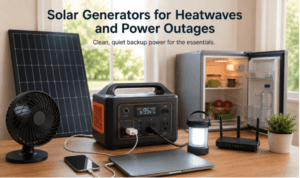
A solar generator, especially the portable kind, is basically a battery with an inverter and solar panel inputs. The most common devices powered during outages or heatwaves include:
- Phones: Charging smartphones and tablets is possible for several cycles.
- Laptops: Most generators can handle several hours of work or study.
- WiFi Router: Running your internet router can be helpful for staying connected, especially if your service provider is not affected by the outage.
- LED Lights: These draw little power, so basic lighting is manageable and can last through the night depending on battery size.
- Fans: Many box or desk fans use low wattage and can provide cooling for hours. Using multiple fans is also possible if you balance the overall output.
- Small fridge: Some solar generators can run a small fridge for a limited time if the wattage, surge power, and battery capacity are suitable. This may help reduce the risk of food spoilage during short outages.
- Medical devices: Only rely on a solar generator for medical devices if the device manufacturer, healthcare provider, or qualified professional confirms that the setup is suitable.
To see more about what you can run, check What Can You Run on a Portable Power Station? and read about device compatibility at Portable Power Station Wattage Explained. Consider the total wattage of your devices and add a buffer to ensure your backup system can keep everything powered during extended outages.
Can a Solar Generator Run Air Conditioning?
Air conditioning uses a lot of electricity, especially central AC and many window units. Most portable solar generators cannot realistically run whole-home air conditioning for long periods.
A larger solar generator may run a small portable AC unit for a limited time, but this depends on the AC wattage, battery capacity, inverter output, startup surge, room conditions, and solar recharging. Running other devices at the same time will reduce available runtime.
For many households, fans and low-power cooling devices are more realistic backup loads than air conditioning. Fans, shade, hydration, curtains, and insulation can also help reduce cooling needs during an outage.
Solar Generator ROI: Savings vs Backup Value
Solar generators typically do not offer a straightforward return on investment (ROI) strictly from electricity bill savings, unless they are used very frequently and paired with a lot of available sunshine. Most users get value from convenience, the ability to run essentials during outages, flexibility, quiet operation, and the ability to power small essential devices without storing fuel, and sometimes reducing grid dependence on sunny days. In areas where the power grid is reliable, a solar generator may mostly sit in storage as a just-in-case tool—though peace of mind and comfort during emergencies can be worth the upfront cost.
Any bill savings depend on local electricity rates, patterns of use, the size of the battery, amount of solar input, and how often you discharge and recharge the system. Losses in the inverter (when power is converted for devices) and charging inefficiencies matter as well. If you use your solar generator for outdoor adventures or regular off-grid tasks, you may get more financial value from it. For many users, the main value is backup power and flexibility rather than major electricity bill savings.
If you are comparing backup options for home outages, see our guide to the best solar generators for home backup.
Why Sizing Matters
When considering a solar generator, pay close attention to both the wattage (how much power you can draw at once) and the watt-hours (how much energy the battery stores). For example, a small unit may be perfect for keeping phones, lights, and a fan going for a few hours, but it will not handle a large appliance or run electronics all through the night. A larger solar generator with more capacity and bigger solar panels may keep more devices powered longer but will cost more and weigh considerably more.
Knowing your needs in advance and adding up the wattage of the devices you want to run will help you pick a suitable backup power station. It is important to check these numbers before buying. For those who want to run multiple devices, consider models that allow expansion batteries or additional solar panels, making it easier to scale up your system later. For details, see Portable Power Station Runtime Explained and Portable Power Station Overload.
Who Should Consider One?
A solar generator may make sense for:
- Apartment users who need backup for phones, fans, lights, or WiFi.
- Remote workers who need laptop and router backup.
- Households in areas with occasional outages.
- Van, cabin, RV, or camping users.
- People who want backup for essential low-power devices.
- Users who can place solar panels safely during sunny periods.
- People who want a quiet backup option without storing fuel.
Who May Not Need One?
Solar generators are not always the right choice for everyone. They may not fit people who:
- Expect to run whole-home air conditioning for many hours at low cost.
- Have very high overall power needs, like large electric ovens, laundry machines, or well pumps.
- Lack a sunny outdoor space for solar panels, such as apartments with no accessible balcony or outdoor area.
- Need permanent, whole-home automatic backup (in which case, a whole-house generator or battery system may be required).
- Anyone relying on medical devices without confirmation from the device manufacturer, healthcare provider, or qualified professional.
- People who live off-grid full-time and need to power many appliances consistently throughout the day.
Related Guides
- Best Solar Generators for Home Backup
- Best Solar Generators for Apartments
- Best Portable Power Stations for Home Office Backup
- What Can You Run on a Portable Power Station?
- Portable Power Station Wattage Explained
- Portable Power Station Runtime Explained
- Can You Use a Portable Power Station Indoors?
- Portable Power Station Overload
Frequently Asked Questions
Are solar generators worth it for power outages?
Solar generators may be worth considering if you want backup for essential devices like phones, lights, WiFi, or a fan during short outages. They are most useful for powering a few basics during grid failures and do not replace a whole-house generator in most cases. For those living in multiunit buildings or places where fuel-powered generators aren’t possible, solar generators may offer a gas-free, quieter option for powering small essential devices during short outages.
Are solar generators useful during heatwaves?
Solar generators can help keep small fans or cooling devices on during heatwaves, as long as the total power use fits the system’s ratings. They do not substitute for large air conditioning in most homes, but they do keep communication and comfort devices running if the grid goes down. Using fans, shade, curtains, hydration, and other cooling steps can make backup power more useful during a heatwave.
Can a solar generator run an air conditioner?
Running most air conditioners requires a large battery system and high inverter output. Portable solar generators may power small portable AC units for a short window, but it is important to check the exact power draw compared to your generator’s capabilities. Most users choose to power fans instead, as the runtime is usually much longer and more practical for overnight cooling.
Can a solar generator run a fan all night?
If the fan is efficient and the battery size is large enough, a solar generator can often run a fan through the night. Runtime depends on the specific fan wattage and the size of the power station.
How long does it take for a solar generator to pay for itself?
The payback period varies and depends heavily on usage, the cost of electricity, solar input, and how frequently the generator replaces grid use. Most people buy solar generators for backup, not for regular savings, so payback is not always straightforward. Calculate your needs and how often you’d otherwise rely on grid power or fuel to get a sense of potential savings.
What size solar generator do I need for heatwaves?
The best size depends on your essential loads. Add up the power ratings of all devices you want to run and look for a generator with enough wattage output and battery storage to cover the combined usage for the expected outage length. If unsure, compare several sizes and leave some headroom, especially for startup surge and longer outages.
Is a solar generator better than a gas generator?
This depends on your priorities. Battery-powered solar generators do not produce exhaust fumes like gas generators, but they should still be used and charged according to the manufacturer’s indoor safety instructions. Gas generators may provide more sustained backup for high-power devices but require ventilation, maintenance, and fuel storage. For apartments or places where fuel-powered generators are not practical, a solar generator may be easier to use for small loads.
Bottom Line
Solar generators can be worth considering for heatwaves and power outages when the goal is to keep essential low-power devices running. Phones, WiFi routers, laptops, LED lights, fans, and some small appliances are usually more realistic backup loads than large air conditioners or whole-home systems.
They are not a guaranteed cheap way to run high-wattage appliances for long periods. Their value often comes from backup power, flexibility, quiet operation, and reduced dependence on fuel-powered generators for small loads.
Before buying, calculate your essential wattage needs, compare battery capacity, check surge output, confirm solar input, and follow the manufacturer’s safety guidance.