
Some of the links on this page are affiliate links, which means I may earn a small commission if you make a purchase through them, at no extra cost to you. This helps support the site and allows me to continue creating helpful content.
How long a solar generator will last during a power outage depends on a few key factors. These include the size of the battery (measured in watt-hours, Wh), the total power draw of the devices you’re using (measured in watts, W), how efficiently the solar generator turns stored energy into usable power, and whether you have solar panels available for recharging. Environmental conditions, battery health, and any extra settings can also affect performance.
Quick Answer
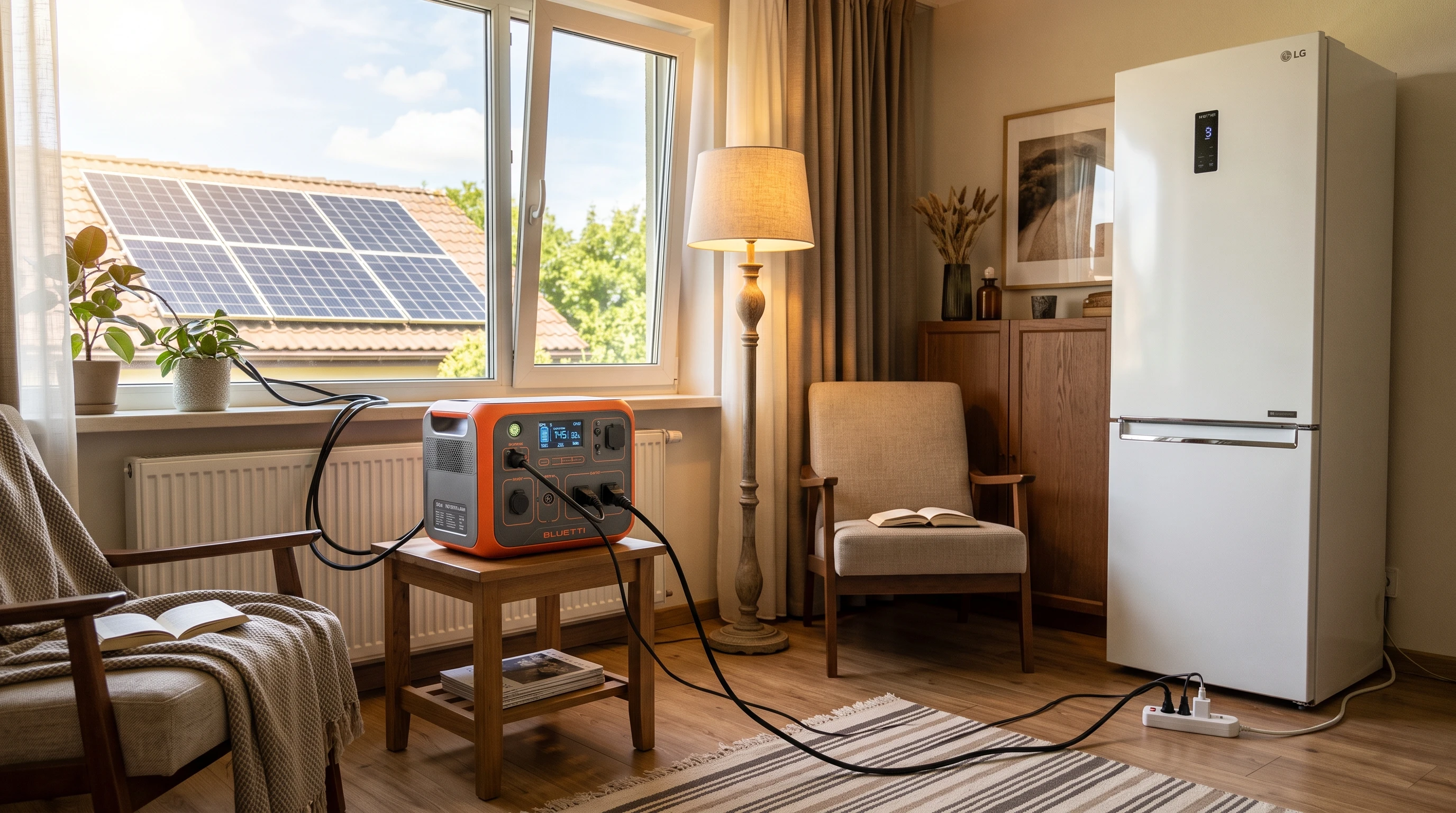
Solar generator runtime depends primarily on usable battery capacity and the total energy consumed by connected devices. Low-power essentials such as phones, LED lights and networking equipment may use relatively little stored energy, while refrigerators and high-power appliances can reduce runtime much faster. Compatible solar panels may extend available backup time during an outage, but charging performance depends on sunlight, panel output and the solar generator’s input limits.
What Determines Solar Generator Runtime?
A 1,000Wh battery stores a nominal 1,000 watt-hours of energy, but not all of that energy will necessarily be available to connected AC devices. Several points make a difference:
- Appliance Load: Add together all wattages of the devices you’re running.
- Usable Capacity: The energy available to connected devices may be lower than the battery’s advertised capacity because of system limits, conversion losses and reserve settings.
- Inverter Losses: Converting stored DC energy into AC power introduces losses, and efficiency can vary with the power station and connected load.
- Temperature: Cold can reduce battery performance, and very hot conditions can sometimes cut output, too.
- Battery Condition: Available capacity can gradually decline as a battery ages and accumulates charge cycles.
- Solar Recharging: Daytime sunlight with panels plugged in can give more runtime if conditions are right.
For additional info, see our guide to portable power station runtime.
How to Estimate Runtime
It’s easy to estimate your expected runtime. Divide usable battery capacity in Wh by the total wattage in use.
Formula: Estimated Runtime (hours) ≈ Usable Battery Energy (Wh) ÷ Average Load (W)
Example : If 1,000Wh of usable energy were available to support an average 100W load, the simple calculation would give approximately 10 hours. Actual runtime may be lower because of conversion losses, standby consumption and changing device loads.
These rough estimates help, but always look in your user manual for usable battery capacity and also account for conversion losses and variable device consumption rather than treating the calculated result as a guaranteed runtime.
How Long Can It Run Common Devices?
Runtime varies significantly between devices and usage patterns, so the most reliable approach is to use the power rating or measured energy consumption of your own equipment.
- Phones and small electronics: Generally require relatively little energy compared with household appliances, making them easier to prioritize during an outage.
- Router and modem: Networking equipment can often be treated as a relatively low-power continuous load, but actual consumption varies by equipment.
- LED lighting: Efficient LED lights can provide useful emergency lighting without consuming as much stored energy as many larger household loads.
- Refrigerator: Refrigerators cycle on and off and may require substantially more power during compressor startup. Check both energy consumption and startup requirements when estimating backup runtime.
- Fans: Energy consumption varies considerably with fan size, speed and design.
High-power appliances such as electric heaters, kettles, microwaves and large air conditioners can consume stored battery energy very quickly and may exceed the output capability of smaller solar generators.
Why High-Power Appliances Drain Batteries Quickly
Appliances that produce significant heat or cooling generally require much more power than phones, lighting or networking equipment. Electric heaters, kettles, microwaves, hair dryers and air conditioners can therefore consume a large amount of stored battery energy in a short period.
Some appliances also have startup or surge requirements above their normal running power. Always compare both the appliance requirements and the solar generator’s continuous and surge output ratings before connecting high-power equipment.
Read our related guides: Portable Power Station Wattage Explained and What Can You Run on a Portable Power Station?
Can Solar Panels Extend Runtime?
Compatible solar panels can help replenish stored energy during an outage. Under suitable conditions, incoming solar power may reduce the rate at which the battery is depleted or recharge it when connected loads are low.
- Number of sunlight hours and brightness; cloudy days slow charging.
- How much wattage your solar panels output, and how many you can hook up.
- Your solar generator’s supported voltage, current and maximum solar input.
- Sunlight consistency through the blackout period; even open shade can slow things.
Solar charging can extend available backup time, but it should not be treated as unlimited power. Actual solar production varies with weather, season, shading, panel orientation, temperature and available daylight. Charging is also limited by the solar generator’s supported voltage, current and maximum solar input.
During an outage, compare expected daily energy consumption with realistic solar energy production rather than relying only on the panels’ advertised wattage.
See more: How to Recharge a Solar Generator During a Power Outage
How to Make the Battery Last Longer
- Prioritize essential devices and avoid unnecessary loads.
- Turn off or unplug electronics and lights when not being used.
- Go for energy-saving options—use LEDs instead of older bulbs or a fan instead of full AC.
- Unplug chargers or items that still draw a little power in standby.
- Check your battery status regularly—either on display or in the app.
- Recharge with compatible panels during the day if weather and safety allow.
How Much Battery Capacity Do You Need?
Start by listing the devices you want to keep powered during an outage. For each device, estimate its energy consumption and expected daily operating time.
Estimated Daily Energy (Wh) = Device Power (W) × Hours of Use
Add the estimated energy requirements of all essential devices, then allow for conversion losses, standby consumption and some reserve capacity. Also make sure the power station’s continuous and surge output can support the connected equipment.
A larger battery can provide additional flexibility, but sizing should be based on your expected loads rather than an arbitrary capacity target.
Reference: Best Solar Generators for Home Backup
Calculate Your Own Outage Backup Needs
Instead of relying on generic runtime estimates, the Ecowised Home Power Outage Planner & Runtime Toolkit helps you list your own essential devices and estimate how much battery capacity you may need for 24, 48 and 72-hour outage scenarios.
It includes a printable planning guide and Excel runtime calculator so you can compare your estimated energy needs with the capacity of your existing or planned backup system.
Get the Home Power Outage Planner & Runtime Toolkit — £8.99
Multi-Day Power Outages
Longer outages require more careful energy management because stored battery capacity may need to last until grid power or another reliable charging source becomes available.
Prioritize essential loads, switch off unnecessary devices and monitor remaining battery capacity regularly. If compatible solar charging is available, use favorable daylight conditions to replenish stored energy while recognizing that production may fall substantially during cloudy or poor weather.
Additional compatible battery capacity or alternative charging options can provide more flexibility, but multi-day backup planning should account for periods when little or no solar energy is available.
More tips: Are Solar Generators Worth It for Heatwaves and Power Outages?
Battery Health and Runtime
Battery condition can affect the amount of energy available during an outage. Battery capacity gradually declines with age and use, although the rate depends on battery chemistry, operating conditions and charging history.
Follow the manufacturer’s recommendations for storage temperature, storage state of charge, charging and periodic maintenance. Avoid exposing the power station to temperatures outside its specified operating or storage range.
Periodically checking battery status and charging the unit according to manufacturer guidance can help ensure that it is ready when backup power is needed.
For maintenance, see: Portable Power Station Battery Care and Portable Power Station Maintenance Checklist
Frequently Asked Questions
How long will a solar generator last during a power outage?
Runtime depends on usable battery capacity and the energy consumed by connected devices. Lower-power essentials may operate much longer than appliances with high or variable power requirements. Solar charging may extend available backup time when suitable sunlight and compatible panels are available.
How long will a 1,000Wh solar generator last?
There is no single runtime for a 1,000Wh solar generator because the result depends on usable battery energy and connected load. As a simple example, 1,000Wh of usable energy supporting an average 100W load would provide a theoretical runtime of about 10 hours. Actual runtime may be lower because of conversion losses, standby consumption and changing loads.
Can a solar generator run a refrigerator overnight?
A suitably sized solar generator may be able to support a refrigerator, but runtime depends on the refrigerator’s energy consumption, compressor cycling and startup requirements. Compare both the refrigerator’s consumption and surge requirements with the solar generator’s usable capacity, continuous output and surge rating.
Can solar panels extend solar generator runtime?
Yes. Compatible solar panels can replenish some or all of the energy consumed during an outage, depending on available sunlight, panel output, weather and the solar generator’s input limits. Solar charging can extend runtime but should not be assumed to provide unlimited power.
What drains a solar generator battery fastest?
High-power appliances such as electric heaters, kettles, microwaves, hair dryers and air conditioners can consume stored battery energy quickly. Multiple smaller devices running continuously can also create a significant combined load.
How can I make a solar generator last longer during an outage?
Prioritize essential devices, switch off unnecessary loads, use energy-efficient equipment where practical and monitor battery status regularly. Compatible solar charging may also replenish some stored energy when weather and operating conditions allow.
Final Takeaway
Solar generator runtime during a power outage depends primarily on usable battery capacity, connected loads and available recharge options. Instead of relying on generic runtime claims, estimate the energy requirements of your own essential devices and compare them with the battery capacity and output capability of your backup system.
Planning those loads before an outage makes it much easier to decide what to power, what to prioritize and whether additional battery or solar charging capacity may be useful.