
Some of the links on this page are affiliate links, which means I may earn a small commission if you make a purchase through them, at no extra cost to you. This helps support the site and allows me to continue creating helpful content.
Portable power stations have become a popular choice for powering devices during blackouts, storms, or whenever a reliable home backup is needed. Many people use them indoors to keep essentials like laptops, phones, WiFi routers, LED lights, and small fans running. If you’re considering one for your home, you might be asking: can you use a portable power station indoors, and if so, is it really safe? This guide explains when indoor use may be suitable, what safety steps matter, what to avoid, and how to use a portable power station more carefully during home backup situations.
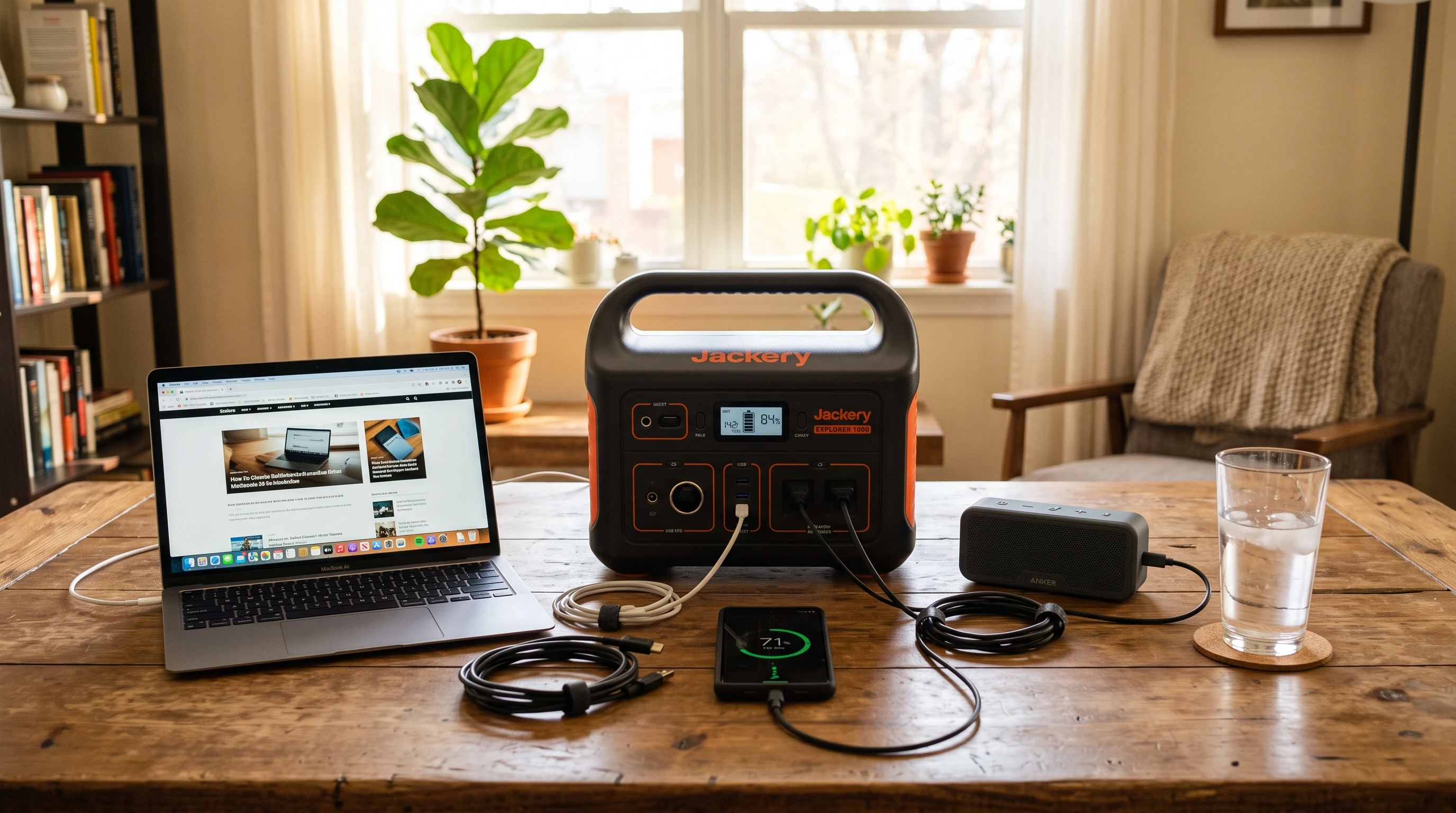
Can You Use a Portable Power Station Indoors? Quick Answer
Many battery-powered portable power stations can be used indoors when they are in good condition and used according to the manufacturer’s manual. Basic safety steps still matter: place the unit on a stable, flat surface, keep it dry, avoid blocking vents, use the recommended charger, and do not overload it. Fuel-powered generators should never be used indoors for any reason.
Are Portable Power Stations Safe Indoors?
Many portable power stations include built-in safety features, but they still need to be used according to the manufacturer’s guidance. Unlike gas generators, they don’t emit fumes. However, you still need to watch out for damaged, hot, swollen, leaking, or malfunctioning units. Never use a device that looks or smells odd, gets unusually hot, or triggers warning lights or sounds. Always read and follow the manufacturer’s manual for your specific model. Some models may have unique safety recommendations, so check the details.
Most modern portable power stations have built-in protections to prevent overcharging, overheating, and short-circuiting. Even so, these are still high-powered electrical devices with rechargeable batteries, which means they must be respected and handled with care to avoid the risk of fire or injury. Avoid jury rigged repairs or using accessories not approved by the brand. If you’re ever unsure about the safety of your unit, check with the manufacturer or consult the product’s official guidelines.
Portable Power Station vs. Gas Generator Indoors
Battery-powered portable power stations are generally more suitable for indoor use than gas generators because they do not produce exhaust fumes during normal battery use. Here’s why:
- Gas, diesel, and propane generators create carbon monoxide (CO), a poisonous, odorless gas that can quickly cause fatal poisoning indoors. Accidental deaths and severe injuries have been reported when people use these generators inside homes, garages, or even too close to doors and windows.
- Portable power stations store electricity in batteries, most commonly lithium-ion or lithium iron phosphate. These provide silent, emission-free power with no fumes at all. However, they still need proper handling, as high-capacity batteries can be dangerous if misused, physically damaged, or exposed to water or extreme heat.
Never run any type of fuel-powered generator (gas, petrol, diesel, or propane) indoors. Even a short period of use can lead to severe illness or death from carbon monoxide poisoning. Only battery-powered units that the manufacturer allows for indoor use should be used inside.
Where to Place a Portable Power Station Indoors
Correct placement helps keep your home safe and your power station working reliably. Good locations have:
- A stable, flat surface out of reach of small children and pets
- Dry conditions, well away from sources of water like sinks, bathrooms, humidifiers, or leaky windows
- Good ventilation so air flows freely around the device, especially the cooling vents
- No covers, blankets, or items sitting on top or blocking the ventilation holes
- Placement at least several feet away from heaters, radiators, wood stoves, space heaters, or direct sunlight
- Safe cable management, so people and pets won’t trip on cords or accidentally unplug devices
Avoid placing the power station against soft furnishings (like couches, beds, or thick carpets), as these can block cooling vents and cause the unit to overheat. If possible, set the station on a hardwood floor, sturdy table, or utility shelf with enough space around it for heat to escape.
Can You Use a Portable Power Station in a Bedroom?
Some people consider using portable power stations in bedrooms for phones, lights, or small electronics. Medical devices, including CPAP machines, should only be powered from a portable power station if the device manufacturer, healthcare provider, or qualified professional confirms the setup is suitable.
- Make sure the unit is in good working order (not hot, swollen, damaged, or leaking)
- Avoid placing the station under, behind, or on top of soft bedding or pillows
- Do not cover or block any vents. Instead, leave several inches around each side
- Keep charging cables neat to prevent tripping in the dark
- Pay attention to the station’s fan noise, which can be noticeable in quiet rooms
- Check the manual for any warnings about bedroom, small space, or overnight use
Some power stations can emit a gentle hum or fan noise. If you’re a light sleeper, place it far enough away that the noise won’t disturb you. Make sure the room is dry and doesn’t have high humidity. Never place the battery near drapes, soft furnishings, or anything flammable.
Can You Use a Portable Power Station in a Garage or Shed?
Garages and sheds provide extra space but often come with different risks. Power stations should always be kept in dry environments away from dust, fumes, or extreme temperature swings. Here’s what to watch for:
- Moisture hazards: Many garages and sheds have leaks, condensation, or flooding risk. Exposure to water can damage electrical components and pose a safety risk.
- Temperature swings: Very high or very low temperatures (freezing conditions or above 104°F/40°C) can damage the batteries or affect performance.
- Dust and dirt: Excessive dust or sawdust can collect in vents, causing the unit to overheat.
- Physical damage: Garages often have tools, heavy items, or vehicles that could bump or smash the power station.
If you need to use your station in a garage or shed, store it off the floor, away from water sources, and far from any flammable chemicals like gas cans or solvents. Keep it in a temperature-controlled part of the building if possible. Don’t use or charge power stations outdoors unless the product manual lists this as safe for your model.
Charging a Portable Power Station Indoors
Charging is simple but requires basic safety habits. Follow these tips to charge your power station safely inside:
- Use only the charger provided or recommended by the product’s manufacturer
- Regularly inspect charging cables for frays, breaks, or loose connections
- Avoid using or charging the device near sinks, showers, or water leaks
- Do not cover the unit while charging, even a towel or blanket can cause overheating
- Never plug it into overloaded outlet strips or extension leads with too many devices attached
- Stop charging immediately if the unit feels very hot, smells unusual, or flashes a warning symbol
Some units have fast-charging features that draw a lot of power from your wall socket. Always check your home’s wiring capacity and avoid daisy-chaining extension cords or adding adapters, which can create a fire risk. If you need to use an extension lead or surge protector, check the power station manual and make sure the accessory is properly rated and in good condition.
What Can You Run Indoors With a Portable Power Station?
Portable power stations are designed mainly for small electronics. Indoors, typical use cases include:
- Smartphones, tablets, and laptops
- WiFi routers and modems
- LED or CFL lamps and string lights
- Small fans and USB powered devices
- Blu-ray/DVD players or small TVs
- Some portable monitors or low-wattage speakers
Be sure to check the maximum output (watts or amps) of your power station, and don’t plug in more devices than the total output rating allows. Each plugged-in device draws power from the battery, so total runtime depends on the wattage and the battery’s total capacity. Many brands have an online calculator or app that helps you estimate how long your setup will run.
If you are comparing indoor backup options for laptops, WiFi, phones, and small home office devices, compare current portable power stations for home office backup.
What NOT to Plug In Indoors
Some high-powered devices can quickly overload or damage a portable power station, or even create safety risks inside your home. Avoid these indoors:
- Space heaters, portable radiators, and other high-wattage heaters
- Electric kettles, microwave ovens, coffee makers, air fryers, and toasters
- Full-size hair dryers and curling irons
- Large power tools or vacuum cleaners
- Old, damaged, or suspicious appliances
- Devices with unknown or hidden wattage requirements
- Overloaded extension leads or splitters
- Medical equipment, unless approved for battery backup by a qualified professional
If you’re considering connecting a medical device, such as a CPAP machine or oxygen concentrator, consult your doctor and doublecheck the manufacturer’s suggestions. Unexpected power interruptions or surges can be risky with life-supporting equipment.
Common Mistakes When Using a Portable Power Station Indoors
Most accidents happen because people skip simple steps or don’t check the manual. Here are common things to watch for:
- Bringing a fuel-powered generator indoors (even for a minute)
- Putting the power station under blankets or covering the vents
- Charging or using the unit near a sink, bathtub, or other water source
- Plugging in too many devices and causing an overload
- Ignoring warning lights, beeps, or a hot/burning smell
- Using damaged, homemade, or offbrand charging cables or adapters
- Placing it close to heaters, fireplaces, or other heat sources
- Not testing the unit before you actually need it (for example, waiting for a blackout to find out it doesn’t work)
A quick test before an outage can help you spot problems early. Check the charge level, cables, vents, and warning messages from time to time.
Related Guides
- What Can You Run on a Portable Power Station?
- Portable Power Station Wattage Explained
- Portable Power Station Runtime Explained
- How to Store a Portable Power Station Safely at Home
- Can You Leave a Portable Power Station Plugged In?
- Best Portable Power Stations for Home Office Backup
- Portable Power Station Maintenance Checklist
Frequently Asked Questions
Understanding how portable power stations work indoors can clear up a lot of confusion. Here are straightforward answers to common questions.
Can you use a portable power station indoors?
Yes, battery-powered portable power stations can usually be used indoors when placed in a safe, dry location and operated according to the manual. Don’t use damaged or hot units indoors and avoid covering vents.
Can you use a solar generator indoors?
You can usually use the battery unit of a solar generator indoors, but solar panels normally need outdoor sunlight to charge effectively. Keep the battery unit indoors only if the manual allows it, and keep it away from moisture, heat, and blocked vents.
Can a portable power station produce carbon monoxide?
No, portable power stations that run only on batteries do not emit carbon monoxide. Only fuel-powered generators make carbon monoxide.
Can you charge a portable power station indoors?
Yes, you can charge your portable power station indoors as long as you use the official charger and keep it in a dry, ventilated space away from heat, water, and clutter. Watch for any overheating or warning signs.
Can you use a portable power station in a bedroom?
In most cases, yes. Just make sure the device is in good condition, stands on a firm surface, has no covered vents, and is far from bedding or soft materials. Pay attention to any noise it makes at night.
Can you use a portable power station in a garage?
You can, but be careful of moisture, sawdust, corrosion, and temperature extremes. Store the device where it won’t get bumped, wet, or exposed to chemicals and keep it off the ground.
What should you not plug into a portable power station indoors?
Don’t plug in high-wattage appliances such as heaters, coffee makers, microwaves, and hair dryers, damaged devices, unknown-wattage items, extension cords loaded with several devices, or medical devices unless the device manufacturer, healthcare provider, or qualified professional confirms the setup is suitable.
Is a portable power station safer indoors than a gas generator?
Battery-powered portable power stations are generally more suitable for indoor use than gas generators because they do not emit exhaust fumes or carbon monoxide during normal battery use.
Bottom Line
Many battery-powered portable power stations can be used indoors when they are in good condition and used according to the manufacturer’s manual. They do not produce exhaust fumes or carbon monoxide during normal battery use, unlike fuel-powered generators. Indoor safety still matters. Keep the unit dry, place it on a stable surface, avoid blocking vents, keep it away from heat sources, use the correct charger, avoid overloading it, and stop using it if you notice unusual heat, swelling, leaking, sparks, smells, or warning messages. Fuel-powered generators should never be used indoors. Medical devices should only be powered from a portable power station if the device manufacturer, healthcare provider, or qualified professional confirms that the setup is suitable.