
Portable power station product pages often list watts, watt-hours, continuous output, surge watts, and estimated runtime. These numbers can be confusing at first, but they help explain what the unit may be able to run and how long it may last.
Wattage matters because a power station needs enough output to run your devices safely, while the battery capacity affects runtime. A large battery is useful, but it does not help if the power station cannot supply enough continuous or surge power for the device you want to use.
This guide explains watts, watt-hours, continuous output, surge watts, runtime estimates, and common wattage mistakes to avoid before using a portable power station.
Quick Answer
Watts show how much power a device uses at one time. Watt-hours show how much energy the power station battery can store. Continuous output shows how many watts the power station can supply during normal use. Surge watts show how much extra power the unit may handle briefly when some devices start.
To choose and use a portable power station safely, compare the device wattage with the power station’s continuous output, surge rating, battery capacity, and manufacturer guidance.
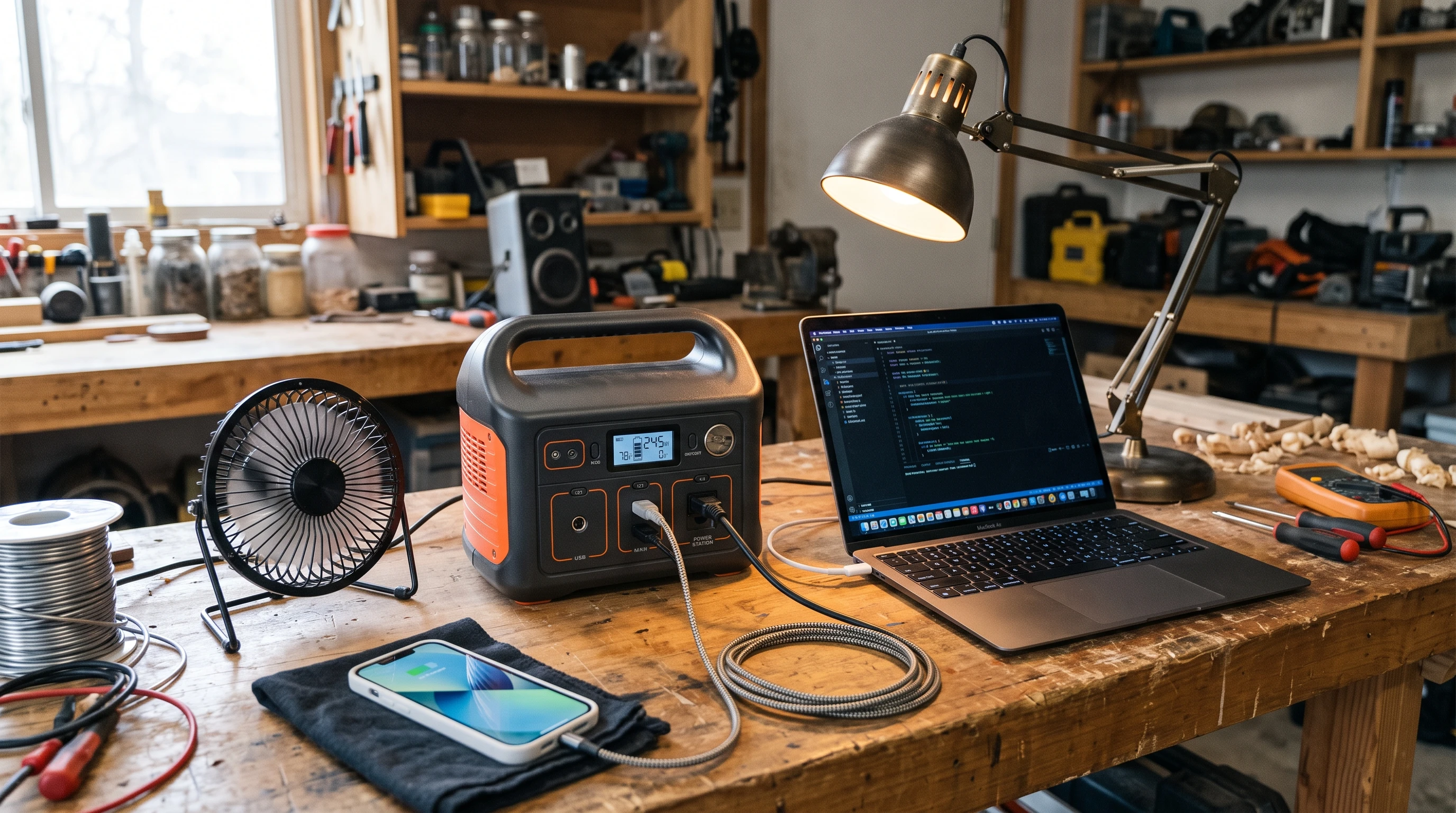
Watts vs Watt-Hours
Watts and watt-hours sound similar, but they measure different things.
- Watts (W): Watts show how much power a device uses at one time. A laptop charger, LED light, router, or TV all have wattage requirements.
- Watt-hours (Wh): Watt-hours show how much energy the battery can store. A higher watt-hour rating usually means more stored energy.
A simple way to think about it is this: watts are how fast energy is being used, while watt-hours are the size of the battery reserve.
A higher watt-hour rating can support longer runtime, but real runtime is usually lower than the simple calculation suggests. Inverter losses, battery condition, temperature, device cycling, and other connected devices can all reduce runtime.
What Is Continuous Output?
Continuous output, sometimes called rated output or continuous watts, is the amount of power a portable power station can supply steadily during normal use.
For example, if a power station has a 500W continuous output rating, the total wattage of connected devices should stay below that limit. If the connected devices exceed the rating, the unit may shut down or trigger overload protection.
Check both the power station’s continuous output and the wattage of the devices you want to run. Running close to the maximum output for long periods may not be ideal, so it is usually better to leave a safety margin.
What Are Surge Watts?
Surge watts, sometimes called peak watts, describe the short burst of power a power station may handle when some devices start.
Devices with motors or compressors may need more power at startup than during normal running. This can include refrigerators, freezers, pumps, some power tools, and similar equipment.
If the startup surge is higher than the power station can handle, the unit may shut down or trigger overload protection. Always check both the running wattage and surge requirement before connecting devices with motors, compressors, or heating elements.
Simple Runtime Estimate
A simple runtime estimate is:
Battery watt-hours ÷ device watts = estimated runtime before losses
For example, a 500Wh power station running a 50W device looks like 10 hours on paper.
In real use, runtime is usually lower because of inverter losses, battery condition, temperature, device cycling, and other connected devices. This estimate is useful for planning, but it should not be treated as a guarantee.
Common Device Wattage Examples
The table below gives a general idea of which devices are usually low, medium, or high power. Always check the actual device label, charger, or manual before plugging anything in.
| Device | Power Level | Notes |
|---|---|---|
| Phone Charger | Low | Usually easy for most power stations |
| Laptop | Low to medium | Depends on charger and laptop type |
| Router + Modem | Low | Often useful during outages |
| LED Light | Low | Usually a good match |
| TV | Medium | Depends on size and model |
| Mini Fridge | Medium to high | Check running watts and surge watts |
| Microwave (small) | High | Needs careful output and surge checks |
| Kettle | Very high | Often drains batteries quickly |
| Space Heater | Very high | Usually a poor match for most portable power stations |
Common Mistakes to Avoid
- Looking only at battery size: Battery capacity affects runtime, but output rating decides what the power station can actually run.
- Ignoring continuous output: Connected devices should stay below the rated continuous output.
- Overlooking surge watts: Refrigerators, pumps, compressors, and power tools may need extra startup power.
- Assuming runtime is guaranteed: Real runtime is usually lower than the simple calculation suggests.
- Plugging in high-heat appliances without checking: Kettles, hair dryers, toasters, and heaters can use a lot of power.
- Running too many devices at once: Several small devices can add up and exceed the output rating.
- Testing only during an emergency: Test the setup before an outage if possible.
Related Guides
- What Can You Run on a Portable Power Station?
- Portable Power Station Runtime Explained
- How Long Do Portable Power Stations Hold Charge?
- What Size Portable Power Station Do You Need for a Home Office?
- How to Keep WiFi Running During a Power Outage
- Best Portable Power Stations for Storm Preparedness
Frequently Asked Questions
What wattage portable power station do I need?
The wattage you need depends on the devices you want to run. Small devices such as phones, laptops, routers, and LED lights may only need a modest output rating, while refrigerators, microwaves, kettles, heaters, or tools may need much higher continuous and surge output. Always check the device wattage and leave a safety margin.
What is the difference between watts and watt-hours?
Watts show how much power a device uses at one time. Watt-hours show how much energy the battery can store. Watts help decide what the power station can run, while watt-hours help estimate runtime.
What does continuous output mean?
Continuous output is the steady wattage a power station can supply during normal use. Connected devices should stay below this rating to reduce the risk of overload shutdowns.
What are surge watts?
Surge watts are short bursts of power that some devices need when starting. Refrigerators, pumps, compressors, and some tools may need more startup power than running power.
Can a portable power station run devices above its wattage rating?
No. Devices should stay within the power station’s continuous and surge ratings. If a device exceeds those limits, the unit may shut down or trigger overload protection.
How do I calculate portable power station runtime?
Divide the battery watt-hours by the device watts for a rough estimate before losses. Real runtime is usually lower because of inverter losses, battery condition, temperature, device cycling, and other connected devices.
Why is real runtime lower than advertised?
Real runtime may be lower because energy is lost through the inverter and internal electronics. Battery age, temperature, device cycling, and multiple connected devices can also reduce runtime.
Is a higher-watt portable power station always better?
Not always. A higher-watt power station can run more demanding devices, but it may also be heavier, larger, and more expensive. The best choice depends on the devices you need to run and how much runtime you need.
Bottom Line
Watts, watt-hours, continuous output, and surge watts all matter when choosing or using a portable power station. Watts show how much power a device uses, while watt-hours show how much energy the battery stores.
Battery capacity affects runtime, but continuous output and surge rating decide what the unit can safely support. Large appliances, heating devices, refrigerators, pumps, compressors, and power tools need extra caution because they may use more power or require startup surge.
Before relying on a portable power station, check the device wattage, continuous output, surge rating, battery capacity, and manufacturer guidance. Real runtime is usually lower than simple estimates, so testing the setup before an outage can help avoid surprises.