
Storing a portable power station safely at home can help protect battery health, reduce avoidable damage, and keep the unit ready for outages. Poor storage conditions may affect runtime, charging performance, and long-term reliability.
The main storage risks are heat, moisture, extreme cold, blocked ventilation, damaged cables, and leaving the battery at the wrong charge level for long periods. Safe storage is mostly about choosing the right location, following the manufacturer’s instructions, and checking the unit periodically.
Quick Answer
A portable power station should usually be stored in a cool, dry, ventilated indoor location away from direct sunlight, moisture, heat sources, flammable materials, and extreme temperatures.
The best storage temperature and charge level depend on the model, battery chemistry, and manufacturer guidance. Some brands recommend partial charge for long-term storage, while others may recommend a higher charge for emergency readiness. Avoid leaving the battery fully drained for long periods, and check the unit periodically while it is stored.
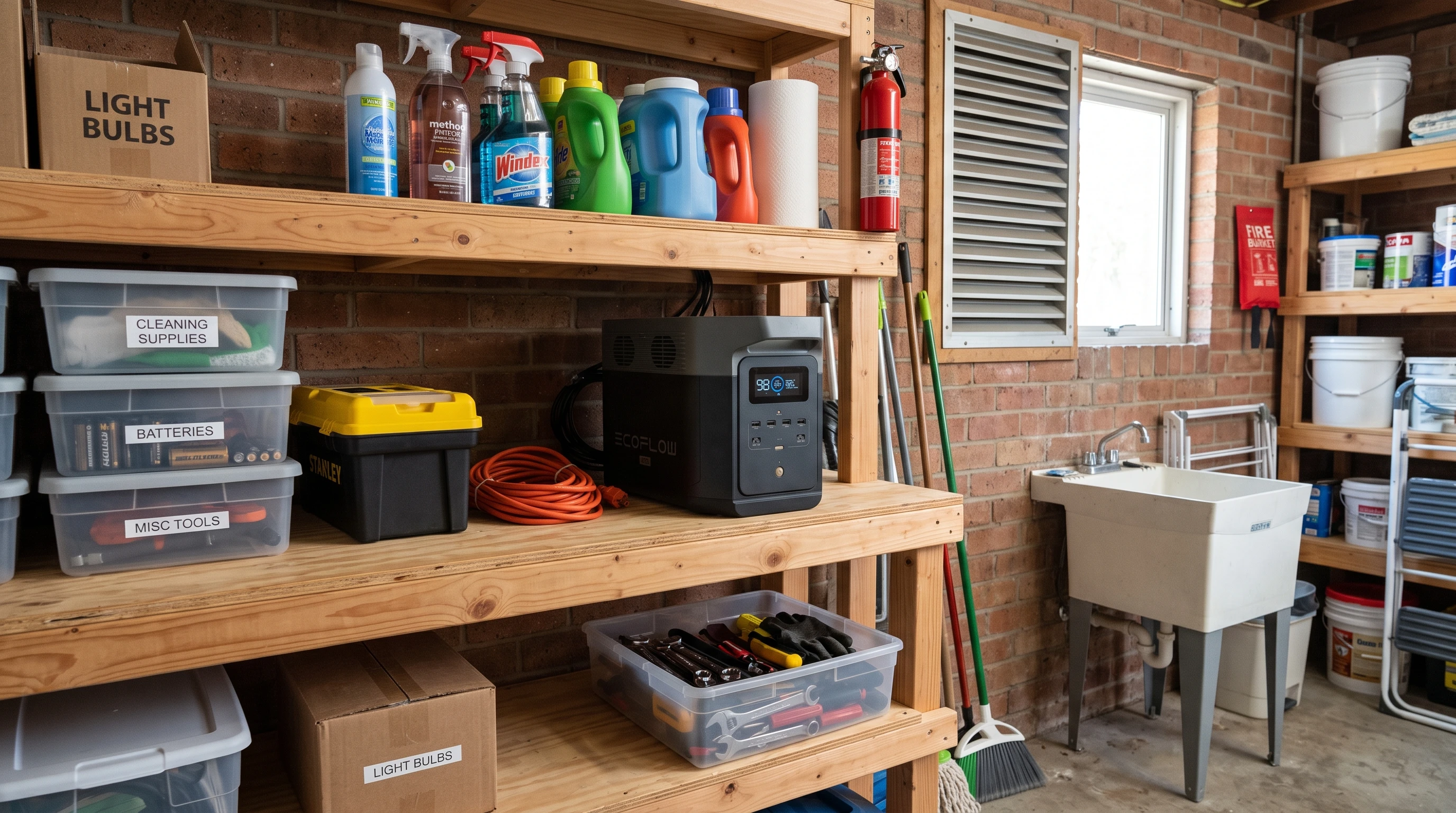
Why Storage Matters
Portable power stations usually rely on lithium-ion or lithium iron phosphate batteries, and storage conditions can affect how these batteries age and perform. If you keep one in a spot that’s too hot or humid, it will age faster and won’t deliver the power you expect during an outage. Cold temperatures may reduce runtime and can affect charging or performance, depending on the model and manufacturer limits. Physical damage, swelling, unusual heat, leaks, or strange smells should be treated as warning signs. Safe storage can help protect battery health, reduce avoidable damage, support better charge retention, and keep the unit more reliable for outage use.
Best Places to Store a Portable Power Station
A good storage spot is usually a dry indoor area with stable temperature and some airflow. Useful storage locations around the home may include:
- Emergency supply closet: Keeps the station accessible and away from many common household risks.
- Home office shelf: Offers stable room temperature and is usually high enough to stay out of kids’ or pets’ reach.
- Utility room, if dry and well ventilated: This may work only if the area stays dry, stable, and within the manufacturer’s storage temperature range.
- Emergency kit location: If you have a bin or shelf for flashlights and first-aid gear, this is usually a safe and practical home for your power station, too.
- Ventilated, lockable cabinet: Can help protect the unit from knocks, falls, curious hands, and accidental spills, as long as ventilation is not blocked.
A low, sturdy shelf can reduce the risk of the unit falling. Avoid placing the unit directly on a floor where water, dust, or impact damage could be a risk. Keep the power station away from heavy boxes, and do not stack anything on top of the unit.
Places to Avoid
Certain spots around the house can ruin a portable power station or cause safety risks. These storage locations are usually best avoided:
- Hot garages: Some garages can exceed safe storage conditions during warm weather.
- Outdoor sheds: Trouble spots because of wild temperature swings, moisture, dust, and pests.
- Damp basements: Long-term humidity may increase the risk of corrosion or electrical problems.
- Bathrooms: Steam and moisture can damage electronics and charging ports.
- Windowsills or direct sunlight: Direct sunlight can increase heat exposure and may shorten battery life.
- Cars (for long-term storage): Interiors can get unsafe both in hot summers and icy winters.
- Spaces near heaters, stoves, or ovens: Direct heat can reduce battery life and may create unsafe conditions.
- Soft or covered areas (like under clothes or bedding): Soft materials can block airflow and trap heat.
- Places near fuel, cleaning chemicals, or anything flammable: Keep the unit away from flammable materials as a basic safety precaution.
Can You Store It in a Garage or Shed?
Many people wonder if it’s okay to keep a portable power station in a garage or shed. Garages and sheds can be risky because they may have large temperature swings, humidity, dust, pests, and limited climate control. They should only be used if conditions stay within the manufacturer’s storage limits and the unit can be kept dry, ventilated, and protected. Moisture may increase the risk of corrosion, while dust and pests can affect ports, vents, fans, or cables. Dust can clog cooling systems, and pests may chew cables. If you must keep your unit in a garage or shed, monitor the temperature year-round and use a sealed, ventilated cabinet. Only use this type of storage if the conditions stay within the manufacturer’s limits.
What Charge Level Should You Store It At?
Not all batteries work best with the same storage level. Some manufacturers recommend storing a portable power station at a partial charge, often around 50–80%, for longer storage. Others may recommend a higher charge if the unit is kept for emergency readiness. Following the manual can help reduce unnecessary battery stress during storage. Some models designed with emergencies in mind might suggest a near-full charge instead, so you’re ready for any sudden outage. One important rule is to avoid leaving the battery fully drained for long periods unless the manufacturer specifically says otherwise. A calendar reminder can help you check and recharge the unit according to the manual.
How Often Should You Check It?
Portable power stations require more routine checkups than simple household batteries. Many manufacturers recommend checking stored units periodically, often every few months, but the exact schedule depends on the model. During regular checks, look at the display for charge level, make sure the lights and screen work, test charging a small device such as a phone, and inspect cables, adapters, and ports for damage. Sticking to your power station’s specific recommendation is best. Regular checks are key for catching early warning signs—like slow battery drain or display errors—before you find yourself in a blackout with no backup power.
Should You Leave It Plugged In During Storage?
It’s tempting to just leave your portable power station plugged in all the time, but doing so depends on the brand and model. Some manufacturers prefer you unplug as soon as the charge is full, while others may allow longer plugged-in periods depending on the charging design and built-in protection system. If you’re not sure, follow the manufacturer’s guidance. Constant overcharging might stress certain batteries, while others can handle it. For details on this subject, see : Can You Leave a Portable Power Station Plugged In?.
Storage Safety Checklist
- Store only in a cool, dry, indoor environment
- Make sure vents or cooling fans stay free and open
- Use only official chargers and cables from your device’s manufacturer
- Keep away from moisture, direct sunlight, and sources of heat
- Don’t pile heavy things on or near your power station
- Store far from any flammable materials or liquids
- Check the charge and overall condition every few months, especially before storm or outage season
- Look over all cables, connectors, and adapters before each charge cycle
- Stop using the unit and contact the manufacturer if you notice swelling, leaks, sparks, unusual heat, strange smells, burn marks, or new error messages.
Related Guides
- Portable Power Station Maintenance Checklist
- Can You Leave a Portable Power Station Plugged In?
- How Long Do Portable Power Stations Hold Charge?
- Portable Power Station Safety Guide
- Portable Power Station Runtime Explained
- Best Portable Power Stations for Storm Preparedness
Frequently Asked Questions
Where should you store a portable power station?
Your portable power station is best kept indoors in a cool, dry, ventilated spot. Good options may include closets, shelves, ventilated cabinets, or other indoor areas with stable conditions.
Can you store a portable power station in a garage?
Garages pose risks with their temperature swings, humidity, and dust. Only store it in a garage if temperature, moisture, dust, and pests can be controlled and the conditions stay within the manufacturer’s limits.
Can you store a portable power station in a shed?
Sheds are usually not ideal because of temperature swings, pests, dust, and moisture. Only use a shed if you’re able to make sure conditions fit the manual’s specs and the space is clean and dry year-round.
What temperature is safe for portable power station storage?
The safest storage temperature is the range listed in the product manual. In general, avoid extreme heat, freezing conditions, direct sunlight, and damp storage areas, because these can affect battery health and performance.
Should a portable power station be stored fully charged?
It depends on the battery type, model, and manufacturer guidance. Some brands recommend 50–80% for longer storage, while others may recommend a higher charge for emergency readiness. The owner’s manual should guide the storage charge level.
How often should you check a stored portable power station?
Many users check a stored portable power station every few months, but the best schedule depends on the manufacturer’s guidance. Keep an eye out for charge, visible condition, and display status.
Can you leave a portable power station plugged in while stored?
Some units are built for this. Others will benefit from unplugging post-charge. Always match your storage to the manual. For more details, see : Can You Leave a Portable Power Station Plugged In?.
What are signs a stored power station may be unsafe?
Watch for swelling, bad odors, leaks, sparks, error displays, overheating, or failure to hold charge. If you spot any of these, unplug and ask the manufacturer for further guidance.
Bottom Line
Safe portable power station storage depends on temperature, moisture, ventilation, charge level, cable condition, and manufacturer guidance. In most homes, a cool, dry, ventilated indoor location is safer than a hot garage, damp basement, outdoor shed, or car. Before storing the unit, check the manual for the recommended charge level and storage temperature range. Keep approved cables nearby, avoid covering vents, inspect the unit periodically, and do not leave the battery fully drained for long periods. A portable power station is more useful during an outage when it has been stored safely, checked regularly, and tested before it is needed.