
Some of the links on this page are affiliate links, which means I may earn a small commission if you make a purchase through them, at no extra cost to you. This helps support the site and allows me to continue creating helpful content.
If you’re trying to figure out how much battery backup you need for a power outage, it really comes down to three main things: which devices you want to keep running, how much energy those devices use, and how long the outage might last. There is no one-size-fits-all battery capacity because the right size depends on your household’s specific backup needs. Some people might only need to charge a few phones, while others might want to keep appliances like a refrigerator and home internet running for a few days. By estimating your daily energy needs and planning for a realistic outage duration, you can make a more informed decision about the battery capacity that may suit your backup plan.
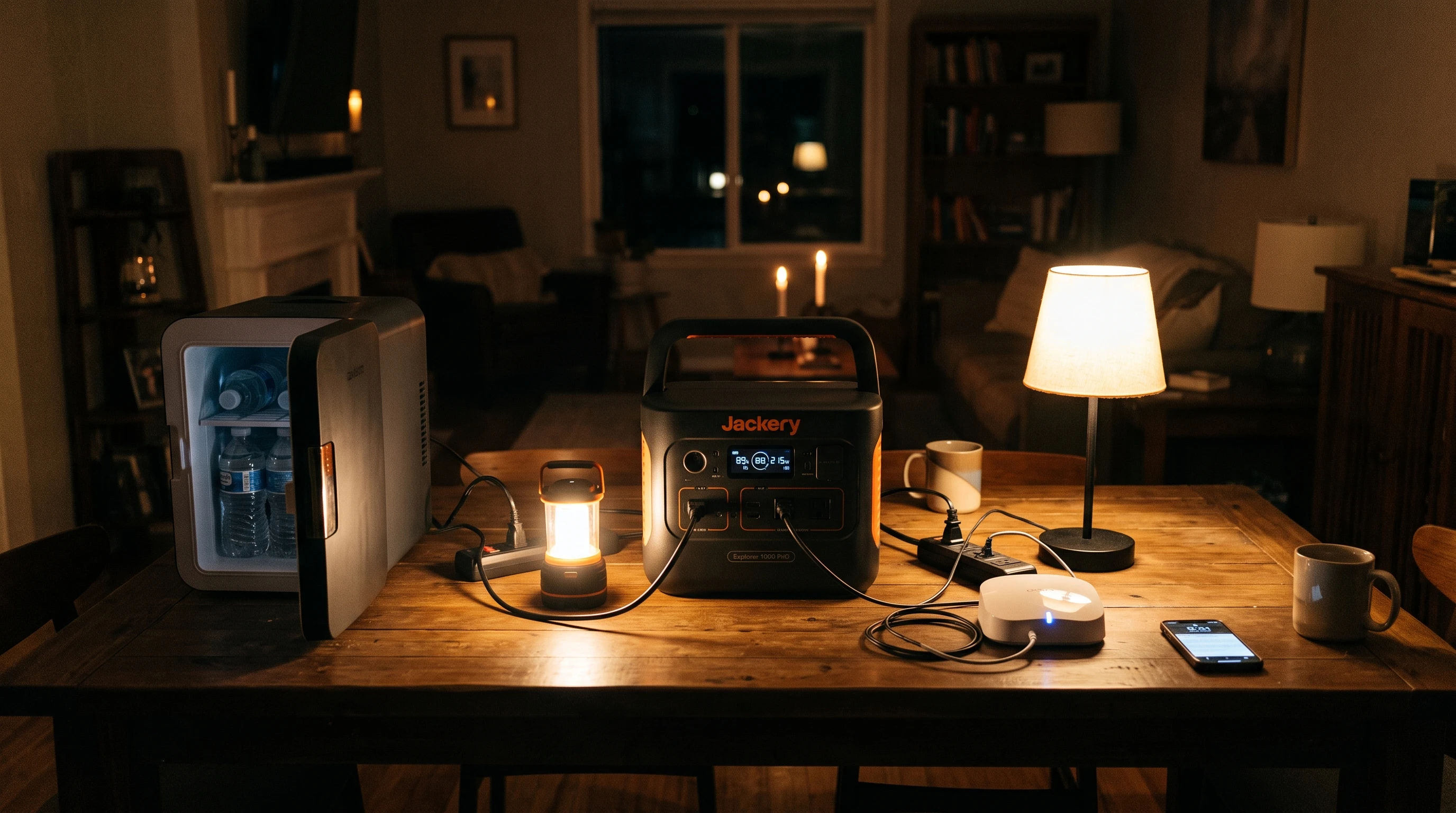
Start With the Devices You Actually Need
Start by asking a simple question: Which devices actually need to remain available during an outage? Not every household device needs backup power, and prioritizing essential loads can significantly reduce the amount of stored energy required.
A practical backup list may include:
- Refrigerator: Helps maintain safe food storage during an outage.
- WiFi router or modem: Keeps you connected for work, news, and updates.
- Lamps or LED lights: Helps everyone move around safely.
- Phone chargers: Keeps your phone ready for emergencies.
- Laptop or tablet: Lets you work or study if needed.
- Fan: Makes hot nights more manageable in summer.
Optional devices such as televisions, entertainment systems and other non-essential electronics increase total energy demand. If battery capacity is limited, prioritize the devices that are most important to the household and reduce optional loads.
Calculate Your Daily Energy Needs
Once you know which devices you want to run, it’s time to figure out how much energy they use in a day. Energy is measured in watt-hours (Wh), not just watts (W). Understanding the difference is important when matching device energy requirements with battery capacity.
- Watts (W): How much power something needs at any moment.
- Watt-hours (Wh): How much total energy something uses over time.
The math is: Watt-hours = Power (W) × Hours Used.
For example, a device drawing 50W for four hours would require approximately:
Energy Use = 50 W × 4 hours = 200 Wh
Some appliances, like refrigerators, cycle on and off. That means their wattage on the label is only part of the story. For cycling appliances, look for average energy-consumption data from the manufacturer or measure consumption with a suitable energy meter when practical. Repeat the calculation for each device and add the results together to estimate total daily energy demand.
From Daily Energy Use to Battery Capacity
Having your daily total in watt-hours gives you a rough idea of how big your battery should be, but there are a few more details to consider. Batteries don’t let you use their full stated capacity in practice. Here’s why:
- Conversion losses: Converting stored DC energy into AC power introduces losses, so advertised battery capacity does not necessarily equal the energy delivered to connected AC devices.
- Standby consumption: The inverter, display, battery-management system and other electronics may consume some energy while the power station is operating.
-
Reserve and system limits: Available energy may also depend on battery-management settings and the design of the individual power station.
Compare your estimated energy requirement with the manufacturer’s specifications for usable battery capacity when available. Leaving some additional capacity also provides flexibility for changing loads and longer-than-expected usage.
Planning for 24, 48 and 72-Hour Outages
Backup requirements increase quickly as an outage lasts longer. Start with your estimated daily energy consumption and use it as a baseline for longer scenarios.
24 hours: Prioritize essential devices and monitor how closely actual consumption matches your estimate.
48 hours: Reducing optional loads becomes increasingly useful, particularly if reliable recharging is unavailable.
72 hours and longer: Stored energy requirements can become substantial. Compatible solar charging or other appropriate recharge options may extend available backup time, but planning should also account for periods when little or no recharging is available.
A similar daily usage pattern over two or three days may require roughly two or three times the daily energy before accounting for recharging. Reducing operating time or removing non-essential loads can substantially change the required battery capacity.
Battery Capacity vs Power Output
Two specifications are particularly important when comparing battery backup systems:
- Watt-hours (Wh): Indicate how much energy the battery stores.
- Watts (W): Indicate how much power the system can deliver at a given time.
Battery capacity helps determine potential runtime, while the output rating determines whether the power station can support the connected load. Check both continuous and surge output ratings and compare them with the requirements of the equipment you intend to connect. When several devices operate simultaneously, their combined load must also remain within the power station’s supported output.
Can Solar Panels Reduce the Battery Capacity You Need?
Compatible solar panels can replenish stored energy during an outage and may reduce the amount of battery capacity needed between charging opportunities. However, solar production varies with weather, season, shading, panel orientation, temperature and available daylight.
The power station’s supported solar voltage, current and maximum input must also be considered when selecting compatible panels.
Solar charging should therefore be treated as a variable energy source rather than guaranteed backup capacity. When planning for longer outages, consider scenarios in which solar production is substantially lower than expected or unavailable for part of the outage.
Calculate Your Own Battery Backup Needs
Battery sizing is more useful when it is based on the devices you actually plan to power rather than generic household estimates.
The Ecowised Home Power Outage Planner & Runtime Toolkit helps you list your essential devices, enter their power requirements and expected operating times, and compare estimated energy needs across 24, 48 and 72-hour outage scenarios.
The toolkit includes a printable planning guide and Excel runtime calculator, making it easier to compare different device combinations and backup strategies without relying on generic battery-size recommendations.
Get the Home Power Outage Planner & Runtime Toolkit — £8.99
Common Battery Sizing Mistakes
- Choosing by Wh alone: Only looking at watt-hours without checking output wattage may result in choosing a system that has sufficient stored energy but insufficient output for the intended load.
- Confusing W and Wh: Mixing up power (W) and energy (Wh) makes it easy to get the wrong size battery.
- Ignoring surge needs: Forgetting about appliances that start with a big power spike can overload your battery and cause it to shut off.
- Assuming everything runs 24/7: Treating every device as a continuous load can substantially overestimate the battery capacity required. Use realistic operating times or measured energy consumption where available.
- Forgetting conversion losses: Not accounting for inverter efficiency and standby drain means your backup won’t last as long as the math suggests.
-
Relying on ideal solar conditions: Actual solar production may be substantially lower during cloudy weather or unfavorable conditions. Include lower-than-expected solar production in longer-outage planning rather than assuming ideal charging conditions.
Related Guides
- How Long Will a Solar Generator Last During a Power Outage?
- How to Calculate Power Station Runtime for Multiple Devices
- Best Solar Generators for Home Backup
- What Can You Run on a Portable Power Station?
- How to Recharge a Solar Generator During a Power Outage
FAQ
How do I know what size battery I need for a power outage?
Start by listing the devices you want to keep powered and estimate the energy each will consume during the expected outage period. Add those requirements together and compare the result with the power station’s usable battery capacity, while also considering conversion losses, reserve capacity and output requirements.
How much battery backup do I need for a 24-hour power outage?
There is no universal battery capacity for a 24-hour outage. Required capacity depends on the devices being powered, their energy consumption and how long each operates. Calculate the watt-hours required by your own essential loads rather than choosing a battery based only on a generic capacity recommendation.
What’s the difference between watts and watt-hours?
Watts measure power at a particular moment, while watt-hours measure energy consumed over time. Battery capacity is generally expressed in watt-hours, while continuous and surge output are expressed in watts. Both are important when sizing backup power.
Can a portable power station run a refrigerator?
A suitably sized portable power station may be able to support a refrigerator. Check the refrigerator’s energy consumption and startup requirements against the power station’s usable battery capacity, continuous output and surge rating. Refrigerator consumption varies by model, operating conditions and compressor cycling.
Does having solar panels mean I need a smaller battery?
Solar charging may reduce the amount of stored energy needed between charging opportunities, but production varies with weather, season and other conditions. Avoid sizing a battery solely around ideal solar production, particularly when planning for longer outages.
Can a portable power station be used indoors?
Many battery-based portable power stations are designed for indoor operation, but users should always follow the manufacturer’s instructions for ventilation, temperature, clearances and operating conditions. Fuel-burning generators must never be operated indoors or in enclosed spaces because they produce dangerous exhaust gases including carbon monoxide.
Final Takeaway
The amount of battery backup needed during a power outage depends on the household’s essential loads, their energy consumption and the expected outage duration. Calculate energy requirements in watt-hours and compare them with usable battery capacity while also checking continuous and surge output requirements.
Solar charging may extend available backup time, but it should be treated as a variable recharge source rather than guaranteed capacity. Building the plan around actual device requirements provides a more useful sizing estimate than relying on a generic battery recommendation.