
A home battery backup can keep selected household loads running when the grid goes down, but runtime can vary from a few hours to much longer depending on the system and how electricity is used. The main factors are usable battery capacity, household demand, which circuits are backed up, and whether compatible solar charging is available during the outage.
There is no universal runtime because every household and battery installation is different.
Quick Answer
Home battery runtime is determined primarily by usable battery capacity and the average load placed on the system. A simple estimate is:
Estimated Runtime (hours) = Usable Battery Energy (kWh) ÷ Average Load (kW)
A battery supplying only selected essential circuits will generally last longer than the same battery supporting normal whole-home electricity use. Actual runtime can also be affected by changing household loads, inverter limits, battery condition, temperature and available solar recharging.
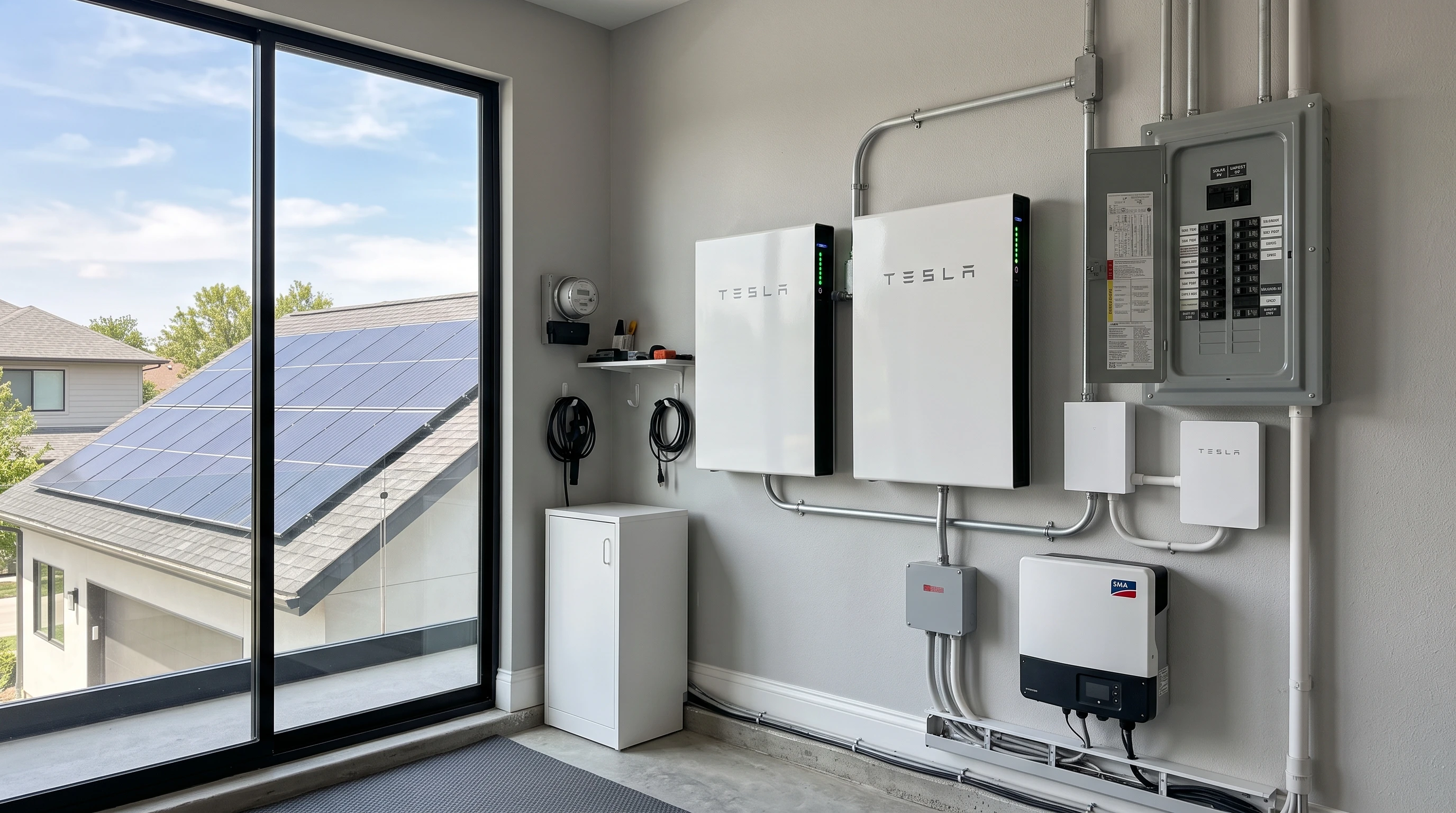
What Determines Home Battery Backup Runtime?
Every home battery backup system has a certain amount of energy it can store, usually measured in kilowatt-hours (kWh). This is called the battery’s capacity. Some of that energy might not be usable due to safety limits or how the system is designed, so manufacturers often list both the total capacity and the usable capacity. When considering how long your battery will last, it’s the usable capacity you need to focus on.
Electricity use in your house varies. Sometimes, you just want to keep the fridge, lights, and the internet running (essential loads), while other times you might want to run everything as usual (whole home backup). More devices and appliances mean more energy gets used, which drains the battery faster. There’s also a limit to how much power your system’s inverter can supply at one time. This can affect what you can run from the battery, even if there’s energy left.
If your system also has solar panels and is set up to charge the battery during a power outage, the situation changes. The battery could be recharged, adding more available energy for longer outages, but this depends on a lot of factors, like sunlight and your specific installation. Keep in mind, the size of your solar array, the weather, and your home’s energy needs all come into play.
Battery Capacity vs Household Energy Use
When talking about home batteries, there are two main terms to think about: kilowatt (kW) and kilowatt-hour (kWh). Kilowatts measure power—how fast you use energy at a specific moment, like when you turn on a big appliance. Kilowatt-hours measure energy—how much electricity you use over time.
To estimate how long a home battery could deliver backup power, a simple formula comes in handy:
Estimated Runtime (hours) = Usable Battery Energy (kWh) ÷ Average Load (kW)
This calculation is just an estimate. In real life, your home’s load goes up and down over the day and night, so the actual runtime may be shorter or longer. Keeping track of your real usage makes the estimate much more accurate. Using whole home backup usually means the battery drains faster than when only essential circuits are running. Also, remember that appliances like refrigerators and HVAC units might cycle on and off, impacting the overall calculation.
Essential Load Backup vs Whole Home Backup
Home energy storage systems can be set up to provide backup for either your whole house or just some essential circuits. Essential load backup means only the most important things in your home get power during an outage. The specific circuits selected for backup depend on household priorities, system design and available battery capacity. Because the battery is powering fewer devices, its stored energy lasts longer.
Whole-home backup is designed to support a broader range of household loads during an outage. Because more electricity may be required, the same amount of stored battery energy will generally provide less runtime than when only selected essential circuits are supported. The appropriate configuration depends on household demand, backup priorities and system capacity.
Can a Home Battery Last Through the Night?
Whether a home battery can last through the night depends on its usable capacity and the household’s overnight energy consumption. Refrigeration, lighting, networking equipment, heating or cooling systems and other loads can all affect the amount of stored energy required.
The most useful estimate comes from actual household consumption data rather than a generic overnight figure. A home energy monitor, smart meter data or battery-system monitoring may help identify typical overnight demand. Compare that demand with the battery’s usable capacity while also accounting for system losses and any required reserve settings.
What Happens During a Multi-Day Power Outage?
During a multi-day outage, stored energy must be managed across a much longer period. Reducing optional loads and monitoring battery state of charge can help preserve available energy for household priorities.
If compatible solar charging remains available during the outage, daytime generation may replenish some of the energy used. The amount recovered depends on solar production, household consumption and system limitations. Without sufficient recharging, the battery will eventually reach its minimum permitted state of charge.
Planning for 24, 48 and 72-hour scenarios can help show how different load priorities affect available backup duration.
Can Solar Recharge a Home Battery During an Outage?
Not every solar-plus-storage system is able to recharge the battery while the grid is down. To work during outages, the system must be set up for “islanding,” which means it can safely disconnect from the grid and manage charging from solar even when utility lines are out. Without this feature, solar panels usually shut off to protect utility workers when the grid is down.
If your home battery system is set up the right way, solar energy can recharge the battery during daytime hours, but solar power is not always available. Weather, shade on panels, changes in season, and the state of the battery all affect how much energy you get. On a cloudy or rainy day, or in winter, daily solar production may be much lower than needed to fully recharge a battery. Once the battery reaches its permitted maximum state of charge, additional solar generation can only be used according to the capabilities and configuration of the specific system. Consider having a way to monitor solar production and battery status so you can plan around cloudy weather and shorter days in winter.
So, reliable recharging during an outage really depends on system design and real-world conditions, not just the presence of solar panels. If you are thinking about adding solar to your storage system, check that your setup is designed for backup use during outages, not just grid-tied operation.
How to Estimate Your Own Home Battery Runtime
The quickest way to estimate how much backup time you’ll get is by using this formula:
Estimated Runtime (hours) = Usable Battery Energy (kWh) ÷ Average Load (kW)
Here’s a simple example to show how it works (keep in mind this is just an example; your numbers could be very different):
If your battery has a usable capacity of 10 kWh, and your home’s average essential load during an outage is 1 kW, then:
Estimated Runtime = 10 kWh ÷ 1 kW = 10 hours
This only works as a rough estimate because household loads are rarely steady. Some hours you might use more, other hours much less. To get the most accurate estimate, use actual data from your home electricity monitor or monthly usage figures for the appliances you plan to run. Manufacturer specifications for both your battery and inverter system are also really important when figuring out what’s realistically possible for your setup. Actual runtime can also be affected by battery condition, temperature, system losses and manufacturer-configured operating limits, so the calculation should be treated as an estimate rather than a guarantee.
Ways to Extend Home Battery Runtime
Reducing optional electricity use can extend battery runtime during an outage. Where the system allows individual circuits or loads to be managed, prioritizing the electricity needs that matter most to the household can reduce the rate at which stored energy is depleted.
Monitoring the battery system’s display or app can help identify current electricity demand and remaining stored energy. Where compatible solar charging is available during an outage, shifting some discretionary electricity use toward periods of stronger solar production may reduce the amount of stored battery energy required.
Unnecessary standby loads can also be switched off or disconnected where appropriate, particularly during longer outages.
Plan Your Own Outage Backup Needs
Home battery runtime becomes easier to understand when you calculate your own essential loads rather than relying on generic household estimates.
The Ecowised Home Power Outage Planner & Runtime Toolkit includes a printable planning guide and Excel runtime calculator to help you estimate energy needs and compare 24, 48 and 72-hour outage scenarios.
Get the Home Power Outage Planner & Runtime Toolkit — £8.99
Common Home Battery Runtime Mistakes
- Confusing kW with kWh: Power (kW) shows how much electricity you use at any moment. Energy (kWh) is how much you use over time. Mixing up these terms can lead to overestimating runtime.
- Relying on advertised instead of usable capacity: Always check how much of a battery’s total energy is actually usable.
- Assuming household demand stays constant: Energy use usually changes from hour to hour. Average demand is useful for runtime estimation, but short periods of higher power demand may also affect system operation.
- Ignoring inverter or output limits: Inverters have a maximum amount of power they can deliver at one time. If your system’s output is too low, you may not be able to run all desired devices, even if the battery has energy left.
- Assuming solar always works during an outage: Not every solar system will recharge batteries during a blackout unless it’s designed to do so.
- Thinking one battery size fits all: Suitable battery capacity depends on household energy demand, backup priorities, system design and desired outage duration.
Related Guides
- Best Home Battery Storage Systems
- Whole House Battery Backup Cost
- How Much Battery Backup Do You Need for a Power Outage?
- How to Prioritize Appliances During a Power Outage
- How Long Will a Solar Generator Last During a Power Outage?
FAQ
How do I figure out my home’s actual battery backup runtime?
Use your system’s usable battery capacity (in kWh) and divide it by your average home load (in kW) during an outage. Be sure to focus on realistic essential load scenarios, not your typical whole house usage. Actual runtime may vary based on real-time energy use and specific appliances running during the outage.
Will a home battery backup run my whole house like normal?
Some home battery systems can support whole-home backup, but capability depends on battery capacity, inverter output, system configuration and household demand. Supporting selected essential circuits generally requires less stored energy than maintaining normal whole-home electricity use.
Can my battery keep major appliances like central AC running all night?
Whether a battery system can support central air conditioning or other high-power loads depends on the system’s continuous and surge output, usable battery capacity and the appliance’s electrical requirements. Check the battery-system and appliance specifications rather than assuming compatibility from battery capacity alone.
Does every solar panel setup recharge my battery during a grid outage?
No, only solar plus battery systems specifically designed for backup will recharge the battery during utility outages. Some grid-tied solar systems shut down when grid power is lost unless the installation includes equipment and configuration designed to support backup operation.
How important is usable battery capacity?
Usable capacity is what matters for backup power. Advertised capacity may be higher, but only the usable portion is available for your household during an outage. Always check the specs or ask the installer for the usable figure.
What can I do if the outage lasts several days?
Reduce optional loads, monitor remaining battery capacity and prioritize the circuits most important to your household. If the system supports solar charging during grid outages, available solar production may replenish some stored energy. Multi-day backup capability depends on the balance between energy consumption and available recharging.
Final Takeaway
Home battery backup runtime is determined mainly by the relationship between usable stored energy and household electricity demand. Supporting selected essential loads generally extends runtime compared with maintaining normal whole-home consumption.
For a realistic estimate, use actual household energy data where available, check the battery system’s usable capacity and output limits, and account for changing loads and available recharging. The same battery can provide very different backup durations in different homes, which is why runtime should be calculated from the requirements of the individual household.