
A home battery does not necessarily require solar panels. Some residential battery systems can charge directly from the electricity grid and store that energy for later use, including backup power or time-of-use energy management where supported.
Whether battery storage is worthwhile without solar depends on the system’s capabilities, local electricity tariffs, installation costs and the household’s reason for installing it. Backup value and potential financial savings should be considered separately.
Quick Answer: Are Home Batteries Worth It Without Solar?
A home battery can be useful without solar panels if the system supports charging from the electricity grid. Depending on the installation, stored energy may be used for outage backup or to shift electricity use between different tariff periods.
Whether this is financially worthwhile depends on local electricity prices, tariff structure, system cost, efficiency and household usage. A battery without solar does not automatically reduce electricity bills, and not every battery installation provides backup power during a grid outage.
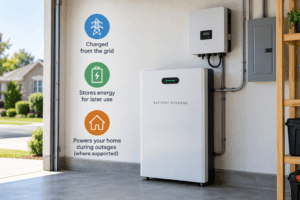
How Does a Home Battery Work Without Solar?
A compatible home battery system can charge using electricity from the grid rather than from solar panels. The stored energy can then be supplied to household loads later, depending on the battery, inverter and installation configuration.
Some systems allow scheduled grid charging, which may be useful with tariffs that vary by time of day. Others may primarily be configured for backup or different energy-management functions. Not all home batteries are designed to charge from the grid, and not all can power your home during outages. Grid-charging and backup capabilities should therefore be confirmed for the specific battery and inverter system before installation.
Why Install a Home Battery Without Solar?
People consider home batteries without solar for several reasons, which usually fall into two main categories: being prepared for electricity outages and managing home electricity bills more effectively.
Backup During Grid Outages
A compatible battery system may provide stored energy to selected household circuits during a grid outage even without solar panels. The battery must be charged beforehand, and the installation must be configured to provide backup operation when grid power is unavailable.
Available runtime depends on usable battery capacity, the backed-up loads and system output. Without another compatible charging source, a battery-only system will eventually be depleted during an extended outage.
Time-of-Use Electricity Shifting (Where Supported)
Some electricity utilities charge higher rates during periods of high demand (called time-of-use, or TOU, tariffs) and lower rates during other times. If your utility offers this, a battery can be charged when rates are low and then discharged to power your home when rates are high. This can lower your electricity charges, but the savings depend on the price difference between rate periods, the size and efficiency of your battery, and losses during storage and conversion. Where electricity prices do not vary by time of use, the opportunity to save money through simple grid-energy shifting may be more limited.
Preparing for a Solar Installation in the Future
Installing a compatible battery before adding solar may be an option for households planning a future solar installation. If solar expansion is part of the plan, confirm that the battery, inverter and system configuration support later integration.
Managing Household Electricity Use
Some battery systems include energy-management features that allow stored electricity to be used according to schedules, household demand or electricity pricing. Available features vary considerably between systems and electricity markets, so any tariff or grid-service functionality should be confirmed before purchase.
Can a Home Battery Provide Backup Without Solar?
Some home battery systems can provide backup power without solar panels if they support grid charging and the installation is specifically configured for outage operation. Depending on the system design, backup may cover selected circuits or a broader range of household loads. The amount of time this backup lasts depends on the battery’s usable capacity and how much electricity your backed-up appliances use. Without another compatible charging source, the battery cannot recharge while the grid remains unavailable. With solar (and if the system supports off-grid operation), stored energy can be replenished during daylight. So, if having extended backup is really important, keep this detail in mind.
Can You Save Money With a Battery Without Solar?
Whether you save money using a battery without solar depends on your electricity tariff and the way your system is set up. Utilities with time-of-use pricing give you a way to charge the battery when electricity is less expensive, and use that stored power when rates jump. The rate difference needs to be enough to cover the efficiency losses that happen during charging and discharging, plus offset the costs of maintaining the battery system itself.
Charging and discharging a battery involves energy losses, commonly described through round-trip efficiency. The actual efficiency varies by battery system and operating conditions, so manufacturer specifications should be used when estimating potential tariff savings. Installation cost, system lifespan and other ownership costs should also be included when considering the financial case.
Where electricity prices remain the same throughout the day, simple time-of-use arbitrage does not provide the same opportunity to benefit from charging at a lower rate and discharging at a higher one. Other tariffs, incentives or grid programs may change the calculation depending on location. For some households, backup capability may therefore be a more important reason for installing battery storage without solar than direct electricity-bill savings.
What Are the Limitations Without Solar?
Home battery systems running without solar panels present a few real limitations to think about:
- Dependence on Grid Charging: Without another compatible energy source, the battery cannot recharge while grid power remains unavailable.
- Limited Recharging During Outages: A battery-only installation normally relies on the grid for charging. If grid power remains unavailable, stored energy may be depleted without another compatible charging source.
- Conversion Losses: Charging and discharging involve energy losses, which reduce the amount of stored electricity available for later use and can affect the financial benefit of tariff shifting.
- Battery and System Cost: Home battery systems come with a significant upfront cost for the battery, inverter, and certified installation. Ongoing costs, such as battery replacement years down the line, need to be considered too.
- Tariff Dependence: The financial benefit of time-shifting depends on the applicable electricity tariff and the difference between charging and discharging periods. Suitable pricing structures are not available in every market.
- Installation and Compatibility: Not all homes have electrical systems ready for battery installation. Some battery models don’t support grid charging or don’t automatically serve as backup unless specifically wired for it.
Battery Without Solar vs Solar Plus Battery
There are important differences between a home battery system charged only from the grid and a system paired with solar panels. Each setup comes with its own pros and cons.
Battery-Only Storage: These systems draw electricity from the grid for charging and may provide backup power where configured for outage operation or support energy shifting under suitable time-varying tariffs. They cannot recharge if the grid is down for a long period. Potential benefits include outage backup where supported and electricity-cost management where suitable time-varying tariffs are available.
Solar-Plus-Battery Storage: A suitably configured solar-plus-storage system may be able to recharge the battery during a grid outage when sufficient solar energy is available. Actual performance depends on solar production, battery capacity, system configuration and household demand.
Neither setup is always better. The right choice for you depends on your electricity rates, backup needs, available space, and budget. Both battery-only and solar-plus-battery systems should be evaluated against household energy requirements, system capabilities and local electricity tariffs.
Is a Battery Without Solar Worth It for Power Outages?
The value of a battery-only system for outages should be considered separately from its potential financial return. A household may value the ability to maintain selected essential circuits even when electricity-bill savings alone would not justify the system cost. For outage planning, compare the battery’s usable capacity and output limits with the energy requirements of the circuits that need backup and the expected backup duration.
It’s wise to make a list of your essential loads and estimate how long you need them to run during an outage. The size of your battery (measured in usable kilowatt hours, or kWh) and the power draw of your chosen devices will determine total runtime. A battery-only system can’t recharge during ongoing grid failure, so managing expectations is important. If stored energy is depleted while the grid remains unavailable, backed-up circuits may lose power until a compatible charging source becomes available.
Who Might Consider Battery Storage Without Solar?
Battery storage without solar may be considered in situations such as:
- Households that place a high priority on backup power during grid outages.
- Households with suitable time-varying electricity tariffs that may allow energy costs to be shifted between charging and discharging periods.
- Homes where solar installation is currently impractical because of roof suitability, shading, planning restrictions or other site constraints.
- Households planning to add solar later but considering battery storage first for backup or energy management.
-
Households considering utility or virtual power plant programs where compatible systems and suitable programs are available.
In each case, the system’s capabilities, installation requirements, costs and applicable electricity tariffs should be evaluated against the household’s priorities.
Questions to Ask Before Buying
- Is the system designed to charge from the grid if solar is not present?
- Does the battery/inverter system provide backup power during outages, or is it only set up for daily time-shifting of grid power?
- What is the usable energy storage capacity of the battery, and how does it compare to the power needs of your essential devices?
- What are the continuous and peak (surge) output ratings of the inverter?
- Can more batteries be added later for greater capacity if your needs change?
- How would the applicable tariff affect the financial case for grid charging and discharging?
- What are the installation requirements, and will installation mean major electrical work or a panel upgrade?
- Can the battery system be connected to solar panels in the future if you expand?
Related Guides
- Best Home Battery Storage Systems
- Whole House Battery Backup Cost
- How Long Does a Home Battery Backup Last During a Power Outage?
- Can a Home Battery Power a House Overnight?
- How Much Battery Backup Do You Need for a Power Outage?
FAQ
Can you use a home battery without solar panels?
Yes. Some home battery systems can operate without solar panels and charge from the electricity grid. Compatibility and available features vary, so grid-charging and backup capabilities should be confirmed for the specific system.
Can a home battery charge from the grid?
Some home battery systems support charging from the electricity grid. This may allow stored energy to be used for backup or time-of-use energy management where supported. Check the manufacturer and installer specifications for the particular system.
Will a home battery work during a power outage without solar?
It can if the battery system is specifically configured for backup operation. Solar panels are not required for the battery to supply previously stored energy, but without another compatible charging source the battery may not be able to recharge while the grid remains unavailable.
Can a battery save money without solar?
Potential savings depend on the electricity tariff, differences between charging and discharging prices, system efficiency, installation cost and household usage. Savings are not guaranteed, even where time-of-use tariffs are available.
Can solar panels be added to a battery system later?
Some battery systems can be integrated with solar panels later, while others may require additional or different equipment. If future solar expansion is planned, confirm compatibility before choosing the battery and inverter system.
What happens when a home battery runs out during an outage?
If the battery reaches its configured minimum state of charge during an outage, it may stop supplying backed-up circuits. Operation can resume when grid power returns or another compatible charging source becomes available, depending on the system configuration.
Final Takeaway
Home battery storage can provide practical benefits without solar panels, particularly where backup power or time-of-use energy management is the main objective. However, the value of a battery-only system depends on its capabilities, local electricity tariffs, installation costs and household requirements.
Potential financial savings should be calculated separately from the value of outage backup. Before choosing a system, confirm grid-charging capability, backup functionality, usable capacity, output limits and whether future solar integration is supported.