
Wind turbines work best in rural windy areas.
Solar panels are better for most homes because they are easier to install and maintain. Choosing between a home wind turbine and solar panels comes down to your site conditions. For most homes, solar is cheaper, easier to permit, and more predictable. Wind can win on large rural properties with steady 10–12+ mph average wind, and it can generate at night—especially useful for off-grid or hybrid systems. Local weather, property layout, and even your personal energy needs all play a big part in figuring out what’s actually practical. In this article, I’ll cover the biggest differences between home wind turbines and solar panels. My focus is on cost, how they work, what you need for installation, maintenance needs, and how they stack up for the long haul. Choosing between a home wind turbine and solar panels depends mainly on your property, climate, and energy goals. For most homeowners, solar panels are easier to install, require less maintenance, and provide more predictable energy production. Wind turbines can be more effective in rural areas with strong and consistent wind, especially for off-grid living. Understanding the differences in cost, installation, maintenance, and long-term return helps you decide which renewable energy system is the best investment for your home.
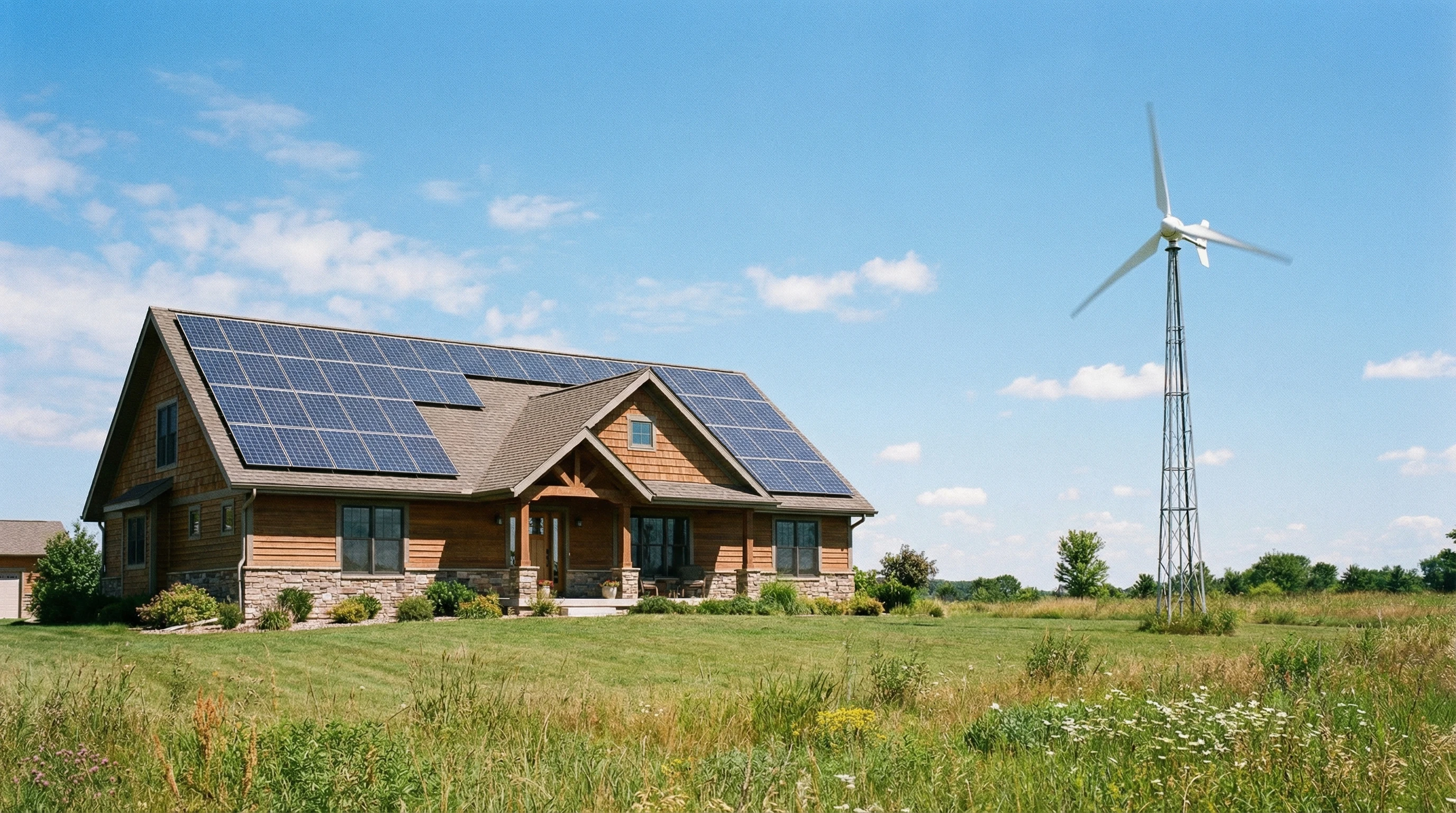
Quick Comparison: Wind Turbine vs Solar Panels
- Best for most homes : Solar panels
- Best for rural windy areas : Wind turbines
- Lower maintenance : Solar
- Works at night : Wind
- Easier installation : Solar
- Best ROI average : Solar
- Best for off-grid windy sites : Wind or hybrid
How Home Wind Turbines Work
Residential wind turbines turn kinetic energy from the wind into electrical energy that you can use in your home. The basic design is pretty straightforward: you’ve got a rotor (with blades) mounted up high on a tower, and as wind spins those blades, a generator inside produces electricity. Most home turbines range in size from about 1 kW to 10 kW—enough for supplemental power or, in some locations, full offgrid living.
Wind energy systems have moving parts that need to rotate smoothly and safely, so they come with bearings, pitch controls, and sometimes small computers to shut them down during storms. Height plays a big role; a wind turbine works a lot better when it’s 30 to 100 feet above the ground because wind speed usually increases the higher you go.
The effectiveness of a wind turbine depends on your local wind resource. Areas with consistent, average wind speeds of 10 mph or more are ideal. If you don’t know your area’s typical wind speed, there are online wind maps and digital anemometers you can use to get a good sense before you invest. (For more, check out my guide on measuring wind speed.)
In addition to the basics, residential wind turbines often come with monitoring systems that let you keep tabs on your energy production. Some models can even send alerts when maintenance is needed. Tower design is also crucial; guyed towers, monopoles, and lattice towers are each made to suit different land types and budgets. The higher the tower, the steadier and stronger the wind exposure, which means more energy for you.
How Solar Panels Work
Solar panels harness energy from sunlight using photovoltaic (PV) cells, which turn photons from the sun into direct current (DC) electricity. That DC electricity gets converted into the AC power your home appliances use by a device called an inverter. Daytime is when solar panels do all the work; no sun, no power generation. Some homeowners opt for east-west panel arrays to extend morning and evening production.
Panels are usually mounted right on a south- or west-facing roof, but groundmounted setups are an option if you’ve got the space. A typical install includes the panels, inverter, mounting hardware, and wiring. One thing I find really appealing about solar is that the panels are solid state (no moving parts), so there’s less stuff that can wear out over time.
Solar is a steady performer in most parts of the country, but homes shaded by big trees or buildings or areas with a ton of cloudy days won’t see the same returns as properties with wideopen, sunny exposure. If your area has a net metering policy, you can even get credit for sending excess solar power back to the grid, which further boosts your savings.
Upfront Costs: Wind vs Solar
Costs matter a lot when choosing between wind and solar setups. Both options can be big investments upfront, but once installed, your monthly energy savings start kicking in.
Wind Turbine Costs
- Equipment: The main cost is the wind turbine itself. You also need a strong tower, foundation, and cabling.
- Tower: Taller towers catch more wind, but they cost more. Installation often requires cranes or specialized contractors.
- Installation: Labor is usually a big chunk, since professionals handle the electrical work, tower mounting, and safety checks.
- Permits: Many areas require permits or engineering reviews, especially for taller towers. These can add to permit costs and wait time.
Solar Panel Costs
- Panels: The panels themselves are the bulk of the cost. Pricing depends on total wattage and efficiency.
- Inverter: You need an inverter to use solar electricity in your home.
- Installation: Mounting and wiring are handled by professionals, but usually with less heavy equipment than wind turbines need.
- Battery Storage (Optional): You can add home battery storage like the Tesla Powerwall, but it’s not required unless you want backup during outages or are going fully offgrid.